



Influencer News & Resources
The go-to brief for ambitious marketers.
Creator-economy insights, benchmarks, and original reports. Straight to your inbox.
By subscribing, you agree to our Privacy Policy.
You're in.
Watch your inbox for the next brief.
 RE.
RE.Reports
Original research and benchmarks from our creator-intelligence platform — deeper than the blog, built for planning.
-
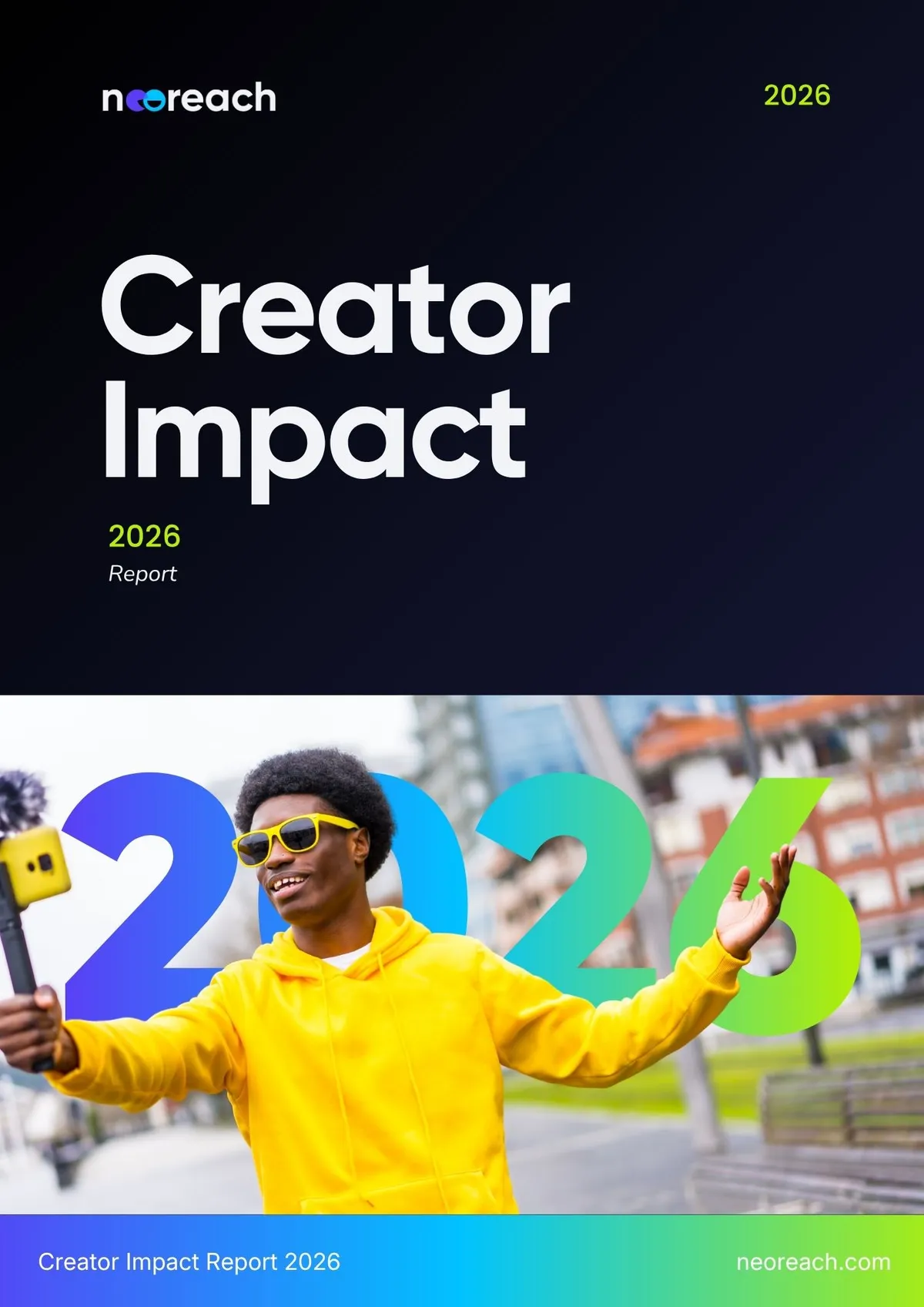
Creator Impact Report 2026
55% of consumers take action from creator content and nearly half make purchases monthly. This report breaks down how influencer marketing actually drives conversions, and what brands need to change to see real ROI.
By Steph Payas Download Now -
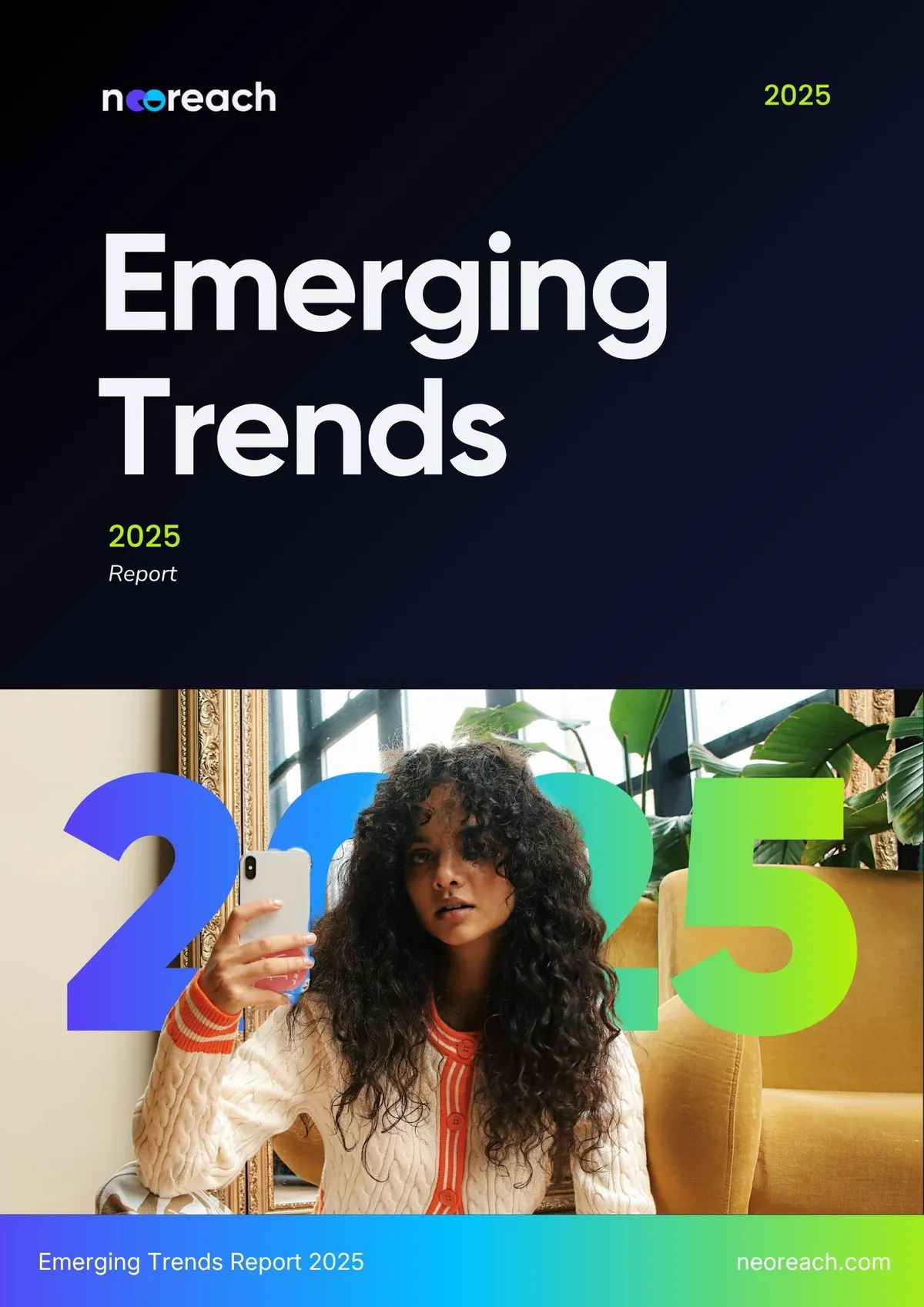
Emerging Trends Report 2025
Stay ahead of the curve with the emerging trends shaping social media and influencer marketing in 2025. From TikTok’s uncertain future to AI-driven content and offline engagement, this report uncovers the key shifts brands need to know.
Download Now -
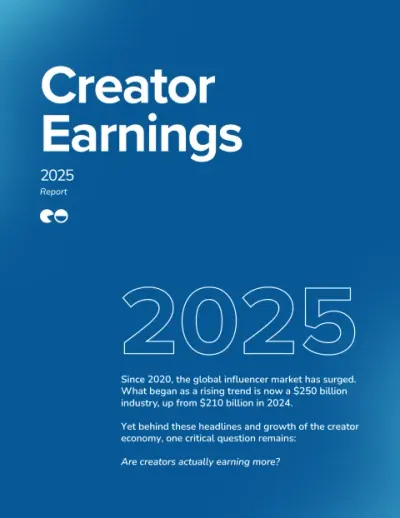
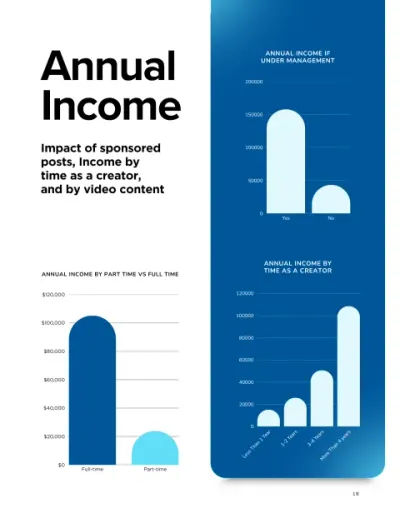
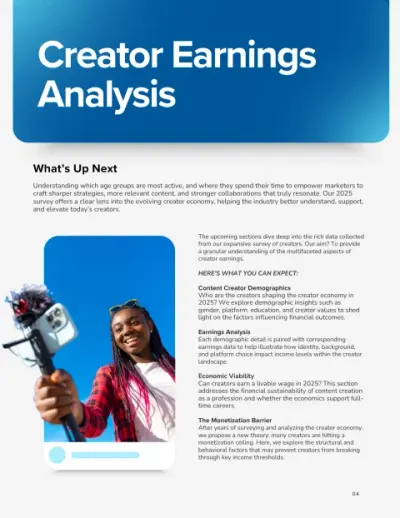
Creator Earnings Report 2025
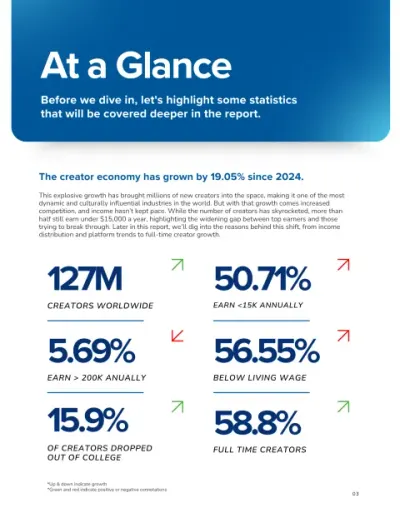
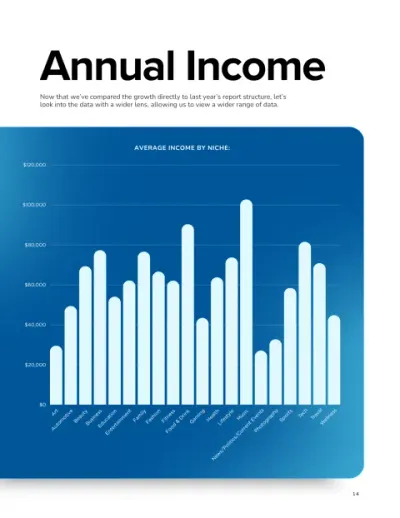
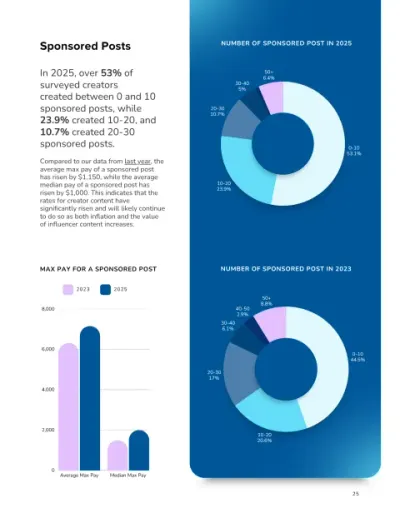
How much creators actually earn across platforms, tiers, and formats.
By Steph Payas Download Now -
Creator Earnings Report 2023
The global influencer market has grown tremendously since 2019 and is now worth over $21 billion in 2023! Influencer marketing and user-generated content are at the forefront, while traditional marketing techniques, once go-to strategies, have taken a back seat. NeoReach conducted and distributed a time-sensitive survey to gather information on creator monetization, sentiments toward generating income, and other statistics to help predict future trends. Download this NeoReach 2023 creator earnings report to learn everything you need to know about the current state of the creator economy.
Download Now -
Creator Earnings Report 2022
In an open survey, we contacted our network of creators to collect information on the creator economy, covering creator monetization and their sentiment towards making money through their content. Partnering with hoo.be to collect creator link in bio survey results, we combined our findings to analyze statistics surrounding creator earnings. The term “creator” refers to any individual with an audience that supports their content through engagement or monetary support. Creators play an integral role within the creator economy, as they are directly in its center and are necessary to its very existence. By analyzing their varying practices and earnings, we are not only able to better understand the creator economy, but to better understand the ultimate power of the creator.
Download Now -
Creator Earnings Benchmark Report 2021
The Creator Economy has emerged as the leading marketing and business leader. $800 million in industry growth was recorded from only 31 startup capital investments since October 2020. That type of cash injection into the Creator Economy is sending strong signals confirming the Creator Economy is not only legit, but a force to be reckoned with. And the creator earnings for influencers reflect that. We estimate the total Creator Economy market size to be around $104.2 Billion and on par with a substantial growth trajectory similar to the Gig Economy. That’s a future valuation of TRILLIONS of dollars.
Download Now -
Top 100 Creator Brands 2022
The data presented in this report was collected from 100 brands owned by content creators. After collecting data on each of these creator brands, we filtered through them by their revenue, website traffic, ad spend, year founded, and social media reach across platforms. By utilizing NeoReach’s proprietary data, we collected each brand’s growth rate and audience demographics, in addition to conducting a trending analysis to predict future growth. This analysis allowed us to provide a comprehensive overview of the creator brand landscape. In this report, we will identify the most successful creator brands, the top industries and products, which brands are growing/slowing down, and which brands will continue to grow.
Download Now -
The Rise of User-Generated Content (UGC)
Discover the dynamic world of User-Generated Content (UGC) where creativity knows no bounds. Uncover the secrets of UGC creators, their career dynamics, financial success stories, and their perspectives on this digital revolution. Dive deeper into this transformative force shaping the digital landscape. Download now for insights into the future of content creation.
Download Now -
From Posts to Polls: The Power of Social Media and Creators in U.S. Elections
Discover how social media creators shaped political engagement and voter turnout in the 2024 U.S. presidential election. With over 100 million election mentions on social platforms, creators are driving discussions and encouraging voter registration.
Download Now -
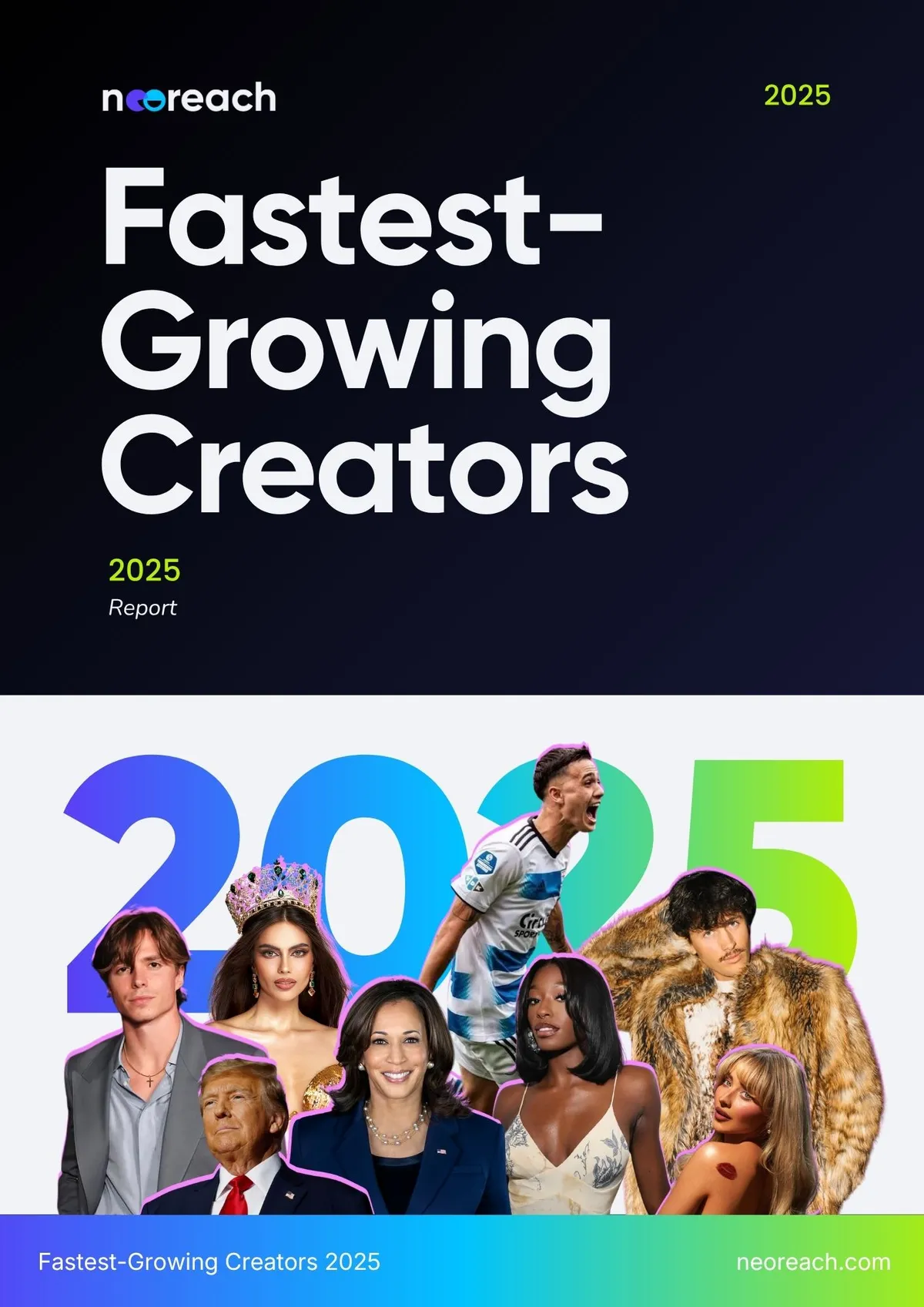
Fastest-Growing Creators 2025
Discover the fastest growing creators of 2025 and see who is dominating the digital space. This exclusive report dives into the breakout stars experiencing explosive audience growth across music, fashion, sports, politics, and more. From viral sensations to cultural powerhouses, it explores the trends fueling their rise and the strategies making them unstoppable in the Creator Economy. Whether you’re an aspiring influencer, brand strategist, or just love staying ahead of the game, this report is your ultimate guide to the fastest growing creators shaping 2025. Download now to stay ahead of the trends.
Download Now -
Super Bowl Ads vs. Influencer Marketing: A Cost-Effectiveness Analysis
Super Bowl ads command massive audiences but come at a steep cost. Influencer marketing offers higher engagement, precise targeting, and better ROI at a fraction of the price. This report compares both strategies, showing how brands can maximize impact by leveraging influencers for sustained engagement and cost efficiency. Let's play ball!
Download Now -
2024 Rewind: The Creator Economy Year in Review
Explore the internet's wild ride through 2024 in this comprehensive Creator Economy 2024 rewind report! From TikTok's viral moments to unhinged marketing campaigns, groundbreaking platform updates, dive deep into the memes, trends, and digital chaos that defined the year. Discover how brands, creators, and even Olympic athletes captivated audiences, reshaped culture, and kept us endlessly scrolling. Relive the highlights, laugh at the absurdity, and get ready for 2025's next chapter of online adventures!
Download Now -
Swipe to Buy 2024: How Creators Shape Online Buying Decisions
In today's digital realm, the creator economy , valued at $250 billion, reigns supreme. Unveiling insights into audience engagement, purchasing behavior, and the creator-audience relationship is crucial for driving revenue and loyalty. Our report investigates pivotal questions, from the influence of "swipe to buy" dynamics to the trustworthiness of sponsored content. Unlock the power of personalized connections—swipe to download the report now.
Download Now -
Olympic Gold in the Digital Age: Paris 2024
With influencers and athletes alike leveraging this global stage, we've been privy to the success they've achieved -- from growing their platforms, to expanding their reach, to harboring unprecedented engagement rates. Alongside unparalleled marketing brand exposure and growth for niche content creators, the 2024 Paris Olympic Games has changed the game -- reminding everyone of the power and influence a worldly event like this can have in the marketing space. As we explore the biggest moments and these unique insights, we aim to provide a comprehensive review of the relationship between this worldly event and the industry at large. Not only should it help to provide tips for future Olympics and similar events, specifically for brands, marketing experts, and influencers, but it will also greatly capture the sentiment of community and the impact of collaboration in the space.
Download Now -
Cracking the Code: Top 2023 TikTok Campaigns
Influencer marketing is important for businesses and brands. In this report, NeoReach analyzed ways to predict and inform others about future marketing strategies. The data was collected using weekly data complications of sponsored TikTok videos that comply with FTC disclosure regulations. Over 9,700 videos were analyzed to discover trends in sponsored content for future 2023 TikTok campaigns.
Download Now -
Top YouTube Spenders 2022
The Data presented was collected using NeoReach's Social Intelligence API and weekly compilations of sponsored videos on YouTube. 29,000+ videos were analyzed to determine who the top YouTube spenders in 2022 were. The five most lucrative industries were analyzed to determine what kinds of ads and sponsorships were best. Likewise, future predictions and key takeaways are present in this report, so future campaigns can benefit from our data.
Download Now -
Social Media Study: How Strategic Ad Placement Impacts Views
The Data presented in this report was collected using our weekly data compilations of sponsored videos on YouTube and TikTok. From this, we identified the different types of campaign initiatives used by brands in their content. We then analyzed the campaign type, content type, and the call to action of each video and used diagnostics to pull averages and statistics to find what types of sponsored ads were the most successful and common on each platform. These averages and statistics allowed us to conclude the most successful ad placement choices across YouTube and TikTok.
Download Now -
Tech Brands' Future in the Creator Economy
In this report, we analyzed how tech brands participate in the influencer marketing industry to monumental success through contemporary marketing. By looking at the metrics, activated creators, and sponsored content, itself, we were able to take an in-depth look at what happens when the tech industry meets the creator economy. The tech industry is known for being innovative. Brands in this industry are always finding new ways to stand out from the competition in the rapidly evolving digital world.
Download Now -
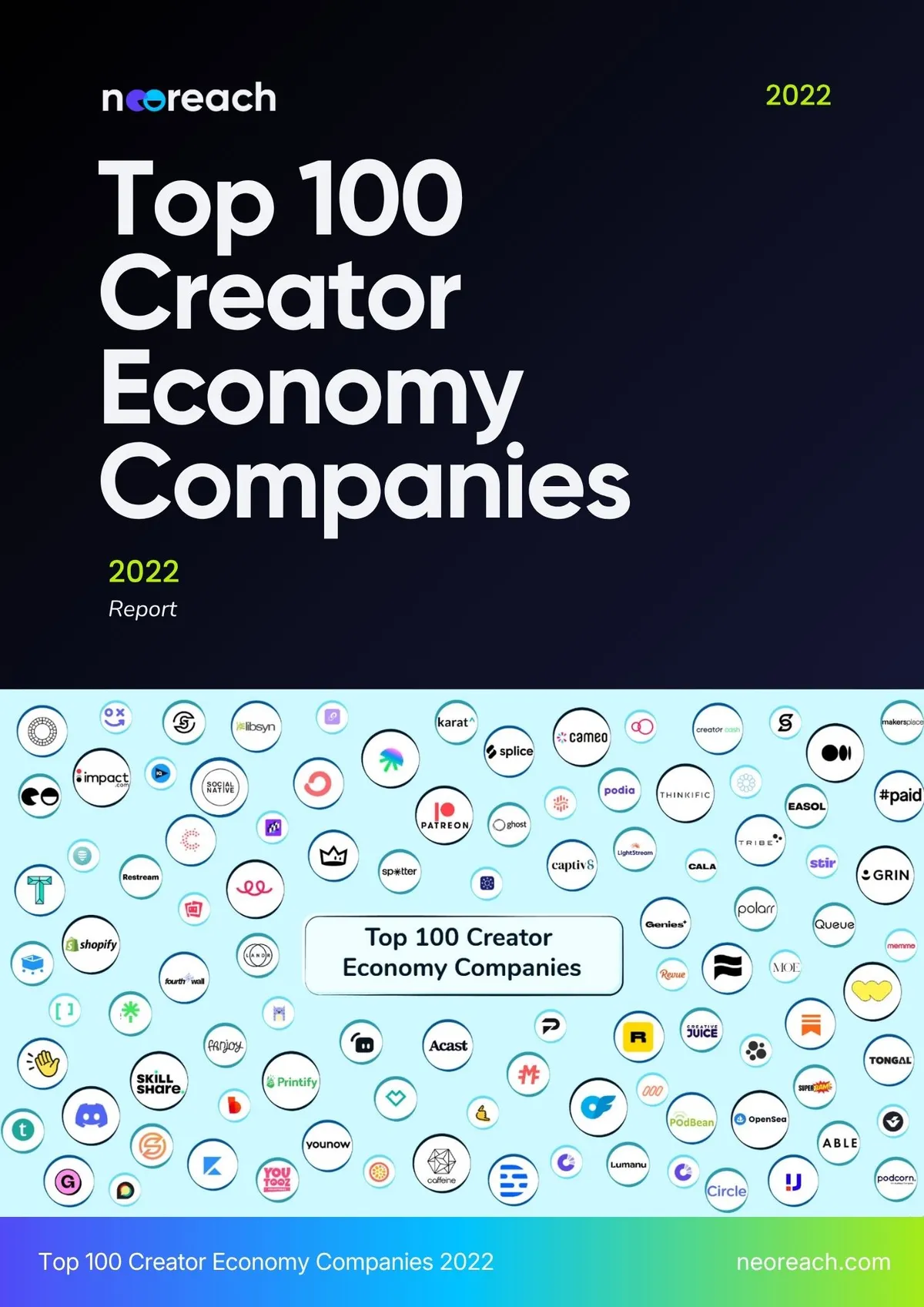
Top 100 Creator Economy Companies
This report presents data from the top 100 creator economy companies, with launch dates spanning across the 21st century. Some of these companies have grown to enormous heights, while others are standing in their shadows.
Download Now -
Virtual Creators Report 2022
Our 2022 Virtual Creators Report presents a deep dive into virtual creators and how they have grown in recent years. Ultimately, our analysis of the top virtual creators is intended to provide insight into the role virtual creators play in the Creator Economy.
Download Now -
Understanding NFTs and the Metaverse
This report gives a comprehensive overview of key terms and the chronology of the metaverse, cryptocurrency, and NFTs. Our analysis of the top NFT launches offers a deep dive into the industry, providing insight into what it takes to successfully launch an NFT collection. Ultimately, this report should generate a better understanding of the industry and how the NFTs and the metaverse work together.
Download Now -
Creator ROI Report 2022
In this report, we dive deeper into what makes a successful campaign. Through the comparison of the campaign strategies of thousands of brands, we have been able to identify exactly how TikTok and YouTube are being utilized for influencer marketing campaigns to bring in high creator ROI. Although there is no way to know the specifics of what makes a perfect campaign, the data doesn’t lie. Through this analysis of comparative campaign types, we have provided insight into how brands are driving successful influencer marketing campaigns on video platforms like YouTube and TikTok revealing a trend of industry-specific strategies, prioritizing brand awareness, and varying strategies according to platform.
Download Now -
TikTok Influencer Marketing Landscape Report 2022
The data presented in this report was collected from all sponsored TikToks posted during 2021. All of the TikTok influencer data that is contained in this report was captured by the NeoReach Social Intelligence API, analyzing t he brands and companies that activated campaigns with sponsored content achieving at least 10,000 views on TikTok. Like always, the report showcases the top brands, industries, and creators on the TikTok influencer marketing landscape for the entirety of 2021.
Download Now -
Top YouTube Spenders 2021: Year in Review
NeoReach returns with its Social Intelligence Insights Report for a 2021 Year In Review analysis. Bringing an extensive report filled with thoughtful research, industry insights, and groundbreaking analysis to dive deep into the state of influencer marketing and how it has evolved over the past 12 months. The report analyzes data from over 28,000 sponsored YouTube videos.
Download Now -
Top YouTube Spenders 2020: Year in Review
NeoReach returns with its Social Intelligence Insights Report for a 2020 Year In Review analysis. Bringing an extensive report filled with thoughtful research, industry insights, and groundbreaking analysis to dive deep into the state of influencer marketing and how it has evolved over the past 12 months. The report analyzes data from over 31,300 YouTube videos.
Download Now -
YouTube Influencer Marketing Report: Q2 2020
The 2020 YouTube Social Intelligence Insights explores the impact of COVID-19 on the influencer marketing industry. Which brands are seeing the greatest return on investment? Which creators are making waves in their industry? Where is there opportunity for your brand in your industry? The data in this report was collected from over 20,000,000 YouTube videos. All of the YouTube influencer data that is presented in this report was captured by the NeoReach Social Intelligence API. Videos were required to comply with proper FTC disclosure regulations. Our analysis included sponsored YouTube videos posted between the months March through June 2020. We further refined this data to target YouTube videos of influencers located in North America, solely in the United States and Canada.
Download Now -
Social Intelligence Insights: Top Spenders on YouTube
The brands investing hardest in YouTube creator partnerships, ranked.
Download Now -
Fastest-Growing Creators 2022
The creators who gained the most ground, and the signals that predicted it.
Download Now
Agency rankings
Independent scoring of the agencies competing for each channel and category, built on what each one publishes about its own campaigns.
- Top 11 Influencer Marketing Agencies
- Top 11 Beauty Influencer Marketing Agencies
- Top 13 Entertainment Influencer Marketing Agencies
- Top 11 Facebook Influencer Marketing Agencies
- Top 11 Fashion Influencer Marketing Agencies
- Top 11 Finance and Fintech Influencer Marketing Agencies
- Top 11 Food and Beverage Influencer Marketing Agencies
- Top 9 Gaming Influencer Marketing Agencies
- Top 11 Health and Wellness Influencer Marketing Agencies
- Top 11 Influencer Marketing Agencies in Los Angeles
- Top 11 Influencer Marketing Agencies in New York
- Top 11 Instagram Influencer Marketing Agencies
- Top 11 SaaS Influencer Marketing Agencies
- Top 11 Sports Influencer Marketing Agencies
- Top 11 TikTok Influencer Marketing Agencies
- Top Crypto Influencer Marketing Agencies
- Top Influencer Marketing Agencies for AI Companies
- Top Influencer Marketing Agencies for Tech
- Top Micro Influencer Marketing Agencies
- Top 11 Travel Influencer Marketing Agencies
- Top 12 Twitch Influencer Marketing Agencies
- Top 10 YouTube Influencer Agencies
Articles

Performance-Based Influencer Marketing
Choose the right payment model, define the result, and build a creator program your finance team can actually evaluate.
-

Influencer Marketing Strategy: 7 Steps for 2027
Research-backed guidance for audience, platform, creative, and campaign planning.
-
Influencer Marketing Statistics 2026: How Creators Influence Buying Decisions
What consumers say, what creators experience, and what brands can do next.
-
Influencer Marketing Campaign Performance 2026
You know the brief. Make it feel natural. Make the product unmistakable. Find creators who can carry the idea, keep six stakeholders happy and give the paid team something they can actually use. Then explain why it worked in a slide your CMO can
-
Phygital Marketing in 2026: Aligning Physical and Digital for ROI
Maximize your ROI in 2026 by mastering phygital marketing to bridge the gap between creator influence and physical retail conversion.
-
Top 10 Creator Economy Trends for 2026
Explore the top creator economy trends for 2026 and discover how brands and creators can adapt strategies for audience engagement.
-
The Attention Economy in 2026: Where Influencers Win
Explore how the attention economy will evolve in 2026. Learn why influencers are becoming the new media buyers and how brands should prepare.
-
Top Influencer Niches That Will Deliver the Best ROI in 2026
Discover the top influencer niches 2026 driving ROI. Learn which creators deliver trust, conversions, and measurable results for brands.
-
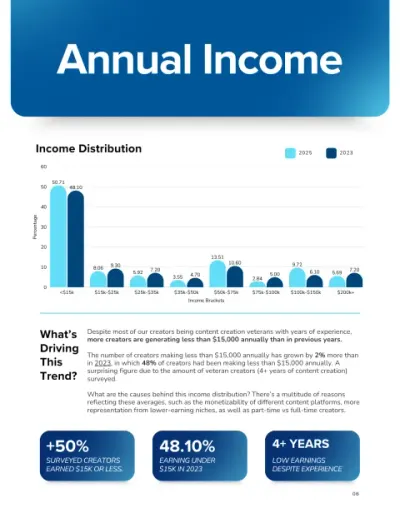
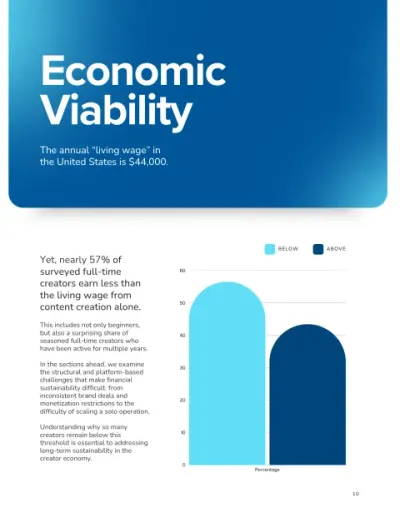
NeoReach's Creator Earnings Report Finds Over 50% of Creators Make Under a Living Wage
NeoReach creates an annual creator earnings report discussing state of the creator economy. Find out the exclusive information in it here.
-
Top 10 Gen Z Content Creators
Explore the top 10 Gen Z content creators dominating social media. Discover their impact and how brands connect with this generation.
-

Soaring Success in Red Bull's Social Media Marketing Strategy
The Red Bull marketing strategy has changed to transcend conventional advertising methods and surpass competitors. Learn more here!
-
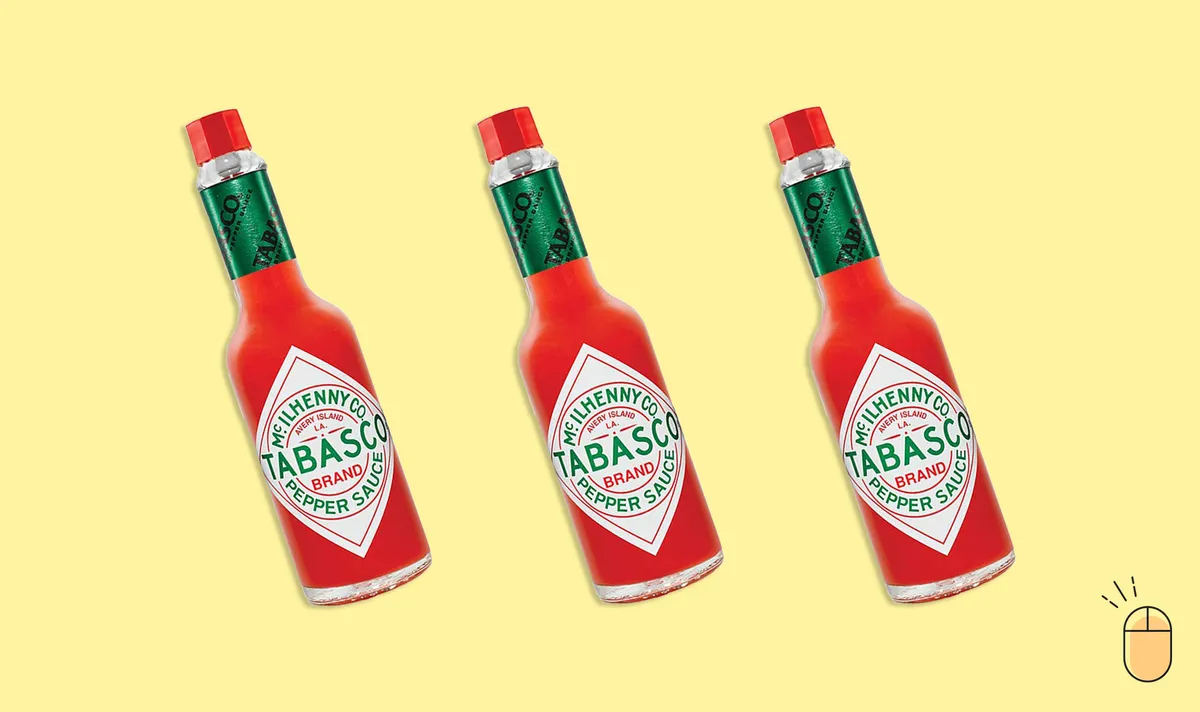
Tabasco Marketing: How The Company Took Advantage of Influencer Marketing
Tabasco sauce has persisted in popularity and marketing for those 150 years, in no part due to their innovative tabasco marketing strategies.
-

How to Properly Use Hashtags on TikTok
The secret to increasing your visibility and growing your following on the platform is to use hashtags on TikTok.
-
How to Boost Your Instagram Engagement Rates
Learn how to boost your Instagram engagement rates for the best Instagram influencer marketing campaign results.
-

How to Advertise on Instagram Effectively
Learn the best tips and tricks on how to advertise on Instagram for your own marketing goals.
-
The Rise of Spotify Influencer Marketing
The rise of Spotify influencer marketing integrates the music industry with music influencers all in one place.
-
How Top Brands Do It: Netflix User-Generated Content Strategy
Explore how top brands like Netflix utilize user-generated content. Learn the tactics behind Netflix's success with user-generated content.
-

Brand Ambassador Marketing is The Next Big Thing
What is brand ambassador marketing? What's the difference between a brand ambassador and an influencer? Why does it matter?
-
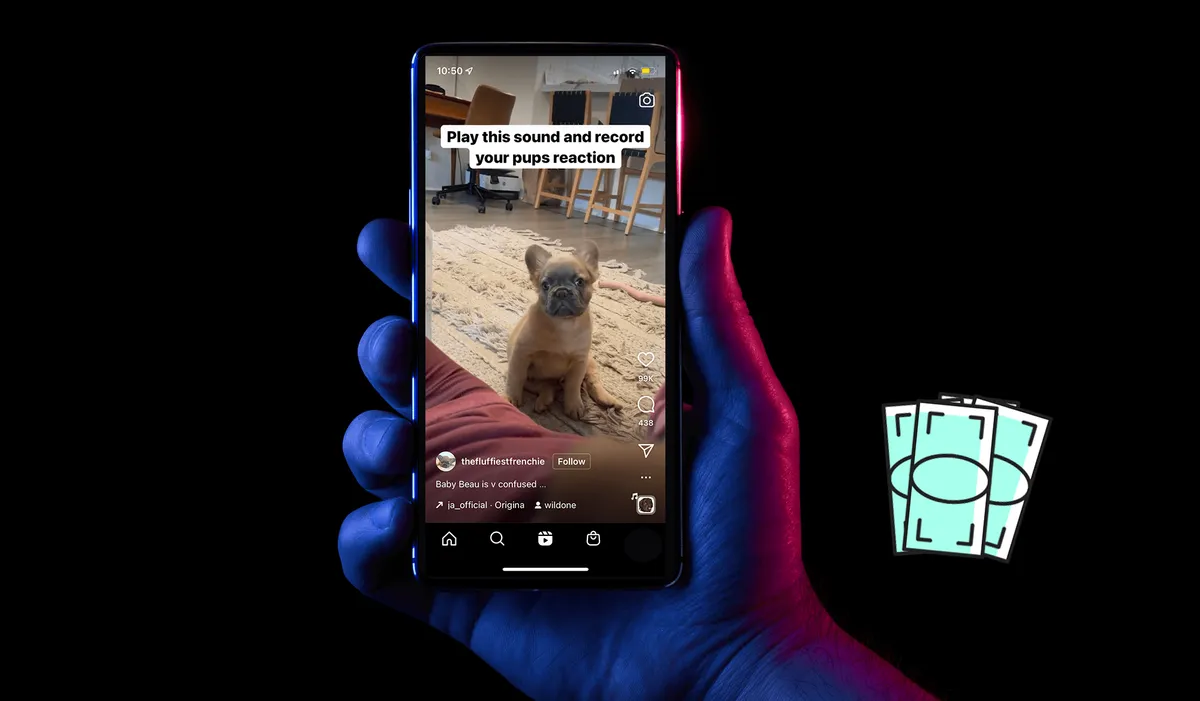
I Made Over $10,000 from the Instagram Reels Bonus Program
Instagram Reels Bonus Program is getting a lot of hype among creators, and, with a shot at $10,000, it's not hard to see why.
-

Creator Earnings Report Breakdown, Where Are We In The Creator Economy?
Where are we with Creator earnings in the booming Creator Economy? Creator earning potential has evolved, so we're asking the source – Creators.
-

Announcing NeoReach Freemium! Free Influencer Marketing Platform
Finding the perfect influencer partner for your campaign is hard, but NeoReach has developed a free influencer marketing platform that makes it easy.
-
Top 10 Entrepreneur Influencers
These top entrepreneur influencers have decades of combined experience and practical knowledge to help you build your business.
-

The Evolution of Influencer Marketing over the Past Decade
The evolution of influencer marketing since its inception has been a marketing and tech sensation. Look back to understand the success it is today.
-
11 Influencer Marketing Statistics You Should Know (Updated for 2021)
Is influencer marketing a bubble or the next big thing? These 11 influencer marketing statistics show this strategy is more than just a trend.
-
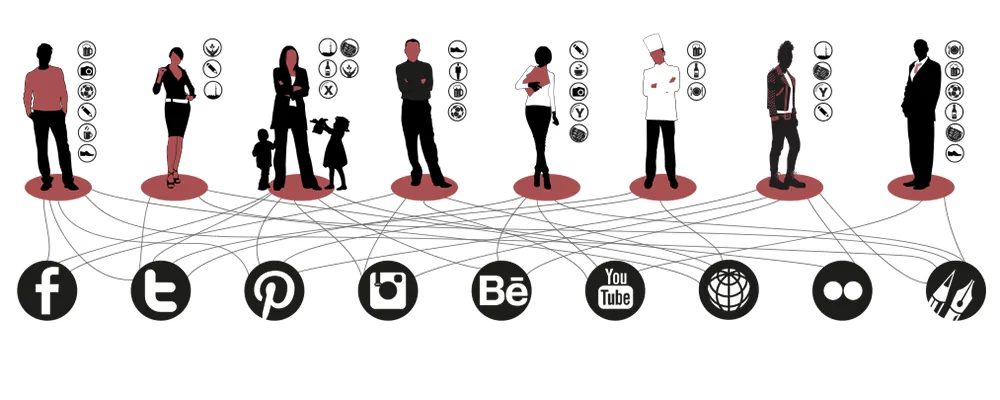
Who is an influencer?
Who is an influencer? What are the different types of influencers and how can you leverage each type for your influencer marketing?
No articles match your filters yet. Try clearing a filter.
Insights, answered
How we publish, what we cover, and how to put the same intelligence to work for your brand.
Connect with usCreator-economy strategy, platform shifts, campaign benchmarks, and the data behind what actually drives results, written by the senior team running programs every day, not a content desk.
Regularly, as the market moves. Platforms, formats, and creator behavior change fast, and we publish when there's something useful to say rather than to fill a calendar.
Yes. A strategy call gets you category benchmarks and a read on your exact audience, pulled from our database of 250M+ creators with 400+ data points each.
Where we cite numbers, they come from programs we've run or from our creator-intelligence platform, measured, not estimated. We're careful to separate proven results from industry commentary.
Book a strategy call. A senior strategist scopes the right mix of creators, channels, and measurement around your objective in the first 30 minutes.