




Top Influencer Marketing Agencies for AI Companies

Last Updated: September 13th · 10 Agencies ranked

Steph Payas
Written by Steph Payas
Chief Marketing Officer
Brian Sorel
Reviewed by Brian Sorel
Chief Operating Officer
About

More AI brands are showing what influencer marketing can achieve. Think Lovable, Gamma, Fyxer and Instantly: companies using product education, creator advocacy and social proof to build demand.

We see the same shift in our own pipeline. Across our 100 most recent inbound enquiries, almost one in five involved an AI company or AI-focused campaign. We saw direct demand from 9 AI brands, alongside 4 partner-led AI campaigns.

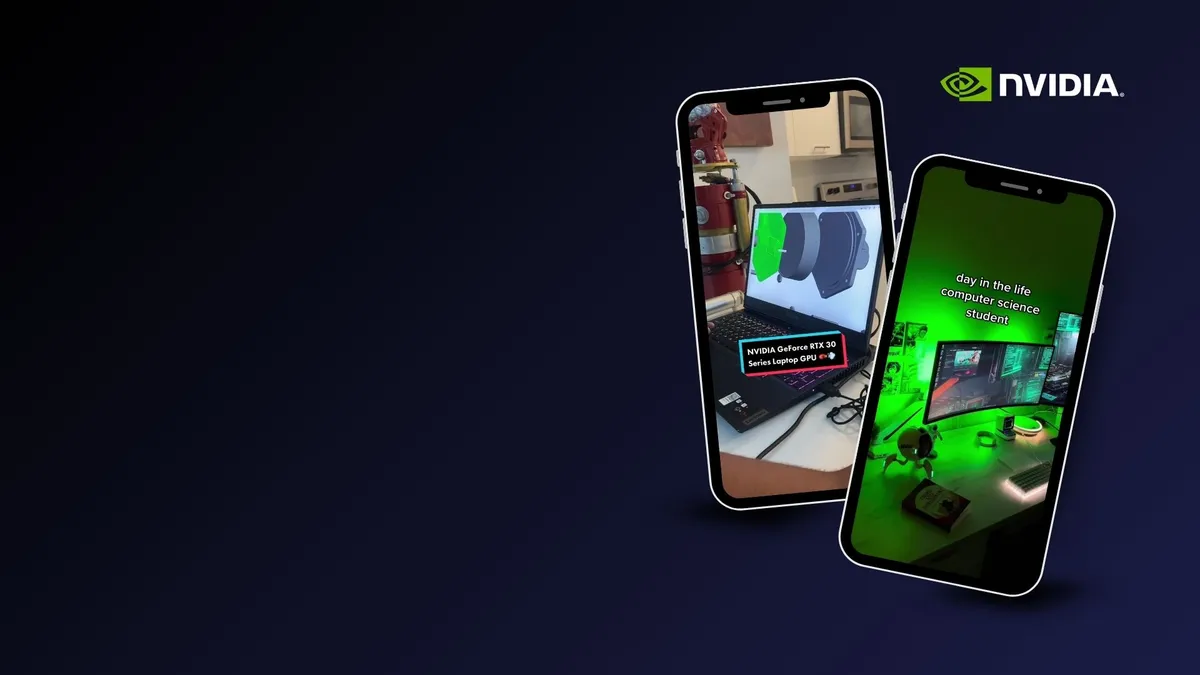
NeoReach has worked with technology and AI brands for more than a decade, including NVIDIA across multiple campaigns. That experience has taught us that reach alone is not enough for a B2B AI product. The agency must understand the technology, find creators the intended buyer already trusts and turn complex capabilities into content that shows the product working.

Recent briefs increasingly ask for developer-creators, engineers, operators and credible category specialists. Buyers want dedicated YouTube demonstrations, X and LinkedIn distribution, recurring UGC and full campaign management. Several explicitly rejected generic ad reads. They wanted creators to open the product, use it in a genuine workflow and explain why it matters.

That is the standard we used to evaluate the agencies in this list.

Overview
#AgencySpecialityScoreLocation (HQ)
2 The Goat Agency logo The Goat Agency London Multi-platform activations 61 /100 LondonUnited Kingdom
3 Monks logo Monks London Production-led experiences 59 /100 LondonUK
4 HireInfluence logo HireInfluence Los Angeles Experiential activations 52 /100 Los AngelesCA
5 House of Marketers logo House of Marketers London TikTok mobile acquisition 51 /100 LondonUK
6 Stride Social logo Stride Social London High-volume TikTok creator and ambassador campaigns 36 /100 LondonUnited Kingdom
7 The Viral App logo The Viral App United States Per-view UGC creator campaigns for mobile apps 31 /100 United States
8 SocialTag logo SocialTag Mumbai AI product launches with tech creators 28 /100 MumbaiIndia
9 Playkit logo Playkit San Francisco Creator-run persona accounts on TikTok for apps 27 /100 San FranciscoUnited States
10 Clickstrike logo Clickstrike United States X launch amplification for AI companies 26 /100 United States
11 Media Glitch logo Media Glitch Prosper YouTube creator demos with tracked signups 23 /100 ProsperTexas, United States
The Goat Agency logo

The Goat Agency

61 /100
London, United Kingdom 750 people across 41 markets

The Goat Agency runs social-first influencer campaigns with paid media built in, from New York and London, for technology, consumer and gaming brands.

Its AI work is the enterprise launch to a technical audience. For IBM's Granite, the company's large language model for enterprise, creators on Instagram, LinkedIn, TikTok and YouTube took the model to developers and C-suite buyers, with paid distribution behind the posts. The page prints the split: 43M impressions, 9M engagements and 68K link clicks, 59K of them paid. For Dell, a campaign on the power of Dell's AI across the UK, France, Germany and the US ran 30 pieces of content to a 16% engagement rate, at a CPM 65% below the KPI, which is a media-cost saving rather than a return.

That record answers the LinkedIn ask in our enquiries, and the category-specialist ask, with creators briefed to a developer and decision-maker audience and the paid layer planned from the start. The impressions on both cases include that paid amplification.

Best for an AI model or enterprise AI company that wants developers and decision-makers reached with paid media behind the creators.

Score breakdown
Creative Quality 17/25
Client Impact 23/25
Industry Recognition 3/25
Revenue & Growth 18/25

Services The Goat Agency offer

  • Ambassador Program Management
  • Custom Technology & Platform Development
  • Event & Experiential Activations
  • Influencer Campaign Management
  • Influencer Campaign Strategy
  • Influencer Content Briefing
Monks logo

Monks

59 /100
London, UK Global network, production-led

Monks is a marketing and technology services company working across social, media, data and production, with offices in every region.

Its AI work is the flagship launch, with creators as a layer inside a bigger production. For Google's Gemini and its Nano Banana image model, a session with the racing driver Oscar Piastri became a launch video that invited influencers to have their fans run the same prompts, and the campaign reports 162M views across all its phases. For Samsung's Galaxy AI launch, a tease that withheld the device itself, local creators produced faux out-of-home content that took 4.9M views on Samsung's own Instagram account, beside a hero film at 108M views there and 20M on Samsung's YouTube channel. Those are brand-channel views, and the page reports them as such.

Monks sells the launch push at production scale, with creators, media and production under one roof, to a large AI company taking a model or a feature to a mass audience.

Best for a large AI product launch that wants a production-led campaign with creators as a layer inside it.

Score breakdown
Creative Quality 21/25
Client Impact 19/25
Industry Recognition 5/25
Revenue & Growth 14/25

Services Monks offer

  • Affiliate & Performance-Based Programs
  • Co-Creation & Product Collaboration
  • Community Management
  • Custom Technology & Platform Development
  • Influencer Campaign Management
  • Influencer Campaign Strategy
HireInfluence logo

HireInfluence

52 /100
Los Angeles, CA Full-service, experiential activations

HireInfluence runs creator campaigns from offices in Austin, Los Angeles and New York, for consumer, entertainment and technology brands.

Its AI case on its own site is the Grammarly programme. It positioned the writing tool for students and professionals across a full academic season, from back-to-school through midterms and finals, and carried the launch of Grammarly's ToneAI feature along the way. The agency recruited a cohort of lifestyle, education and science-and-technology creators on YouTube, TikTok and Instagram, college students and NCAA athletes among them. The page reports 214M impressions, 23.5M reach and 33.1M video views from 133 influencers, and values the programme at $15.9M of earned media, a modelled figure rather than spend or revenue.

HireInfluence sells the season-long programme, a calendar of creator content rather than a one-off, cast from education and science-and-technology creators as well as lifestyle ones, to an AI feature going into a product people already use.

Best for an AI feature launch inside an established product that wants a large creator cohort run across a season.

Score breakdown
Creative Quality 14/25
Client Impact 23/25
Industry Recognition 3/25
Revenue & Growth 12/25

Services HireInfluence offer

  • Ambassador Program Management
  • Competitor Influencer Audits
  • Compliance & Disclosure Management
  • Content Repurposing & Editing
  • Custom Technology & Platform Development
  • Event & Experiential Activations
House of Marketers logo

House of Marketers

51 /100
London, UK Founded by former TikTok staff

House of Marketers runs TikTok-first creator campaigns with paid media behind them, from London, for consumer brands and apps.

Its AI record is consumer apps and a device, each reported as a funnel. Artisse, an AI image generator, took 30+ influencers on TikTok and Instagram to 8M+ video views and 18K+ app installs at a $2.50 cost per install. Stickerbox, a voice-activated device that turns spoken prompts into stickers, produced $100K+ of revenue in its opening 10 days and $300K+ within 90 days at a 6X blended return on ad spend, creator and paid spend together. Hint, an astrology app the agency calls AI-built, took 16 videos to 200K+ landing page views and 1,500+ paying subscribers at a $30 cost per acquisition. McAfee's campaign for its AI Text Scam Detector, an AI feature inside security software, drew 7.4M+ organic video views from 23 creators at a £0.0075 cost per view.

House of Marketers sells TikTok and Reels UGC as paid acquisition, reported down to installs, subscribers and revenue, to a consumer AI app or device at launch.

Best for a consumer AI app or device that wants TikTok creators run as paid acquisition and measured on installs, subscribers and revenue.

Score breakdown
Creative Quality 12/25
Client Impact 22/25
Industry Recognition 4/25
Revenue & Growth 13/25

Services House of Marketers offer

  • Ambassador Program Management
  • Community Management
  • Competitor Influencer Audits
  • Content Repurposing & Editing
  • Influencer Campaign Management
  • Influencer Campaign Strategy
Stride Social logo

Stride Social

36 /100
London, United Kingdom 35+ people, creator-founded

Stride Social is a creator-founded influencer agency with a London office. It runs high-volume TikTok campaigns and ambassador programmes for apps and consumer hardware.

Its AI work is generative consumer apps on TikTok, reported on views and cost. Glam AI, an AI photo and video generator and beauty editor, activated 25 creators for 1.2M total views across the campaign content at a $17 CPM, which the page values at $55K of earned media, a modelled figure rather than revenue or spend. Overdub, an AI music and covers generator on a limited budget, ran the ambassador model instead: 9 ambassadors posting a video a day for 30 days, 270 pieces of UGC in a month, 210K+ unique views and an estimated 9K clicks to the app, estimated being the page's own word.

Stride sells recurring TikTok UGC from a cast it recruits itself, as a campaign or as the ambassador model, to an AI photo, video or music app that wants volume reported in views and cost.

Best for an AI photo, video or music app that wants a TikTok creator or ambassador programme reported on views and cost per thousand.

Score breakdown
Creative Quality 12/25
Client Impact 16/25
Industry Recognition 0/25
Revenue & Growth 8/25

Industries Stride Social serve

  • Technology & SaaS
  • Ecommerce & DTC
  • Consumer goods

Platforms Stride Social cover

  • TikTok
  • Instagram
  • YouTube
  • LinkedIn
The Viral App logo

The Viral App

31 /100
United States 11-50 people, UGC growth engines for consumer apps

The Viral App is a US agency that builds creator engines for consumer mobile apps, paid on a per-view CPM.

Cal AI, an AI calorie tracker, ran 500+ creators and 1,500+ videos a month at peak to 1.5B+ total views, and the page prints the client's $30M+ annual recurring revenue and 5M+ users beside those figures as the client's own results, with no attributed share published. Stimuler, an AI English speaking coach, took 45 Latin American creators to 100M+ organic views. VibeCode, an AI app builder, reached $1.3M in annual recurring revenue in 2.5 months on 36M views from 40 creators. Knowt, an AI study app, ran 864 videos for 7.8M views at a $0.93 CPM. Superapp, an AI app builder for iOS, was a pure X campaign: 34 creators and 2.22M views across 2 cycles at an $11.07 blended CPM, down to $7.81 in the second.

The Viral App sells always-on UGC, creators posting daily on TikTok and Reels as a standing programme, with X as a second channel, to a consumer AI app with product-market fit.

Best for a consumer AI app with product-market fit that wants a creator engine at volume, priced per view.

Score breakdown
Creative Quality 14/25
Client Impact 16/25
Industry Recognition 0/25
Revenue & Growth 1/25

Industries The Viral App serve

  • Technology & SaaS
  • Education & edtech
  • Health & wellness
  • Sports & fitness
  • Finance & fintech
  • Entertainment & media
  • Gaming & esports

Platforms The Viral App cover

  • TikTok
  • Instagram
  • YouTube
  • X (Twitter)
  • Facebook
SocialTag logo

SocialTag

28 /100
Mumbai, India Creator-led media company for tech and AI launches

SocialTag is a creator-led media company in Mumbai that runs tech and AI creators for AI product launches: YouTube for deep demos, Instagram for reach, and LinkedIn and X for the builder audience.

Its AI clients are AI-native products, OpenAI among them. The ChatGPT campaign reports 1M+ views and impressions, printed as a blended figure, and 50K+ audience interactions, the agency's own phrase for engagement. Emergent, an AI platform for building software, took 10M+ views across all phases of its programme. Solid, an AI app builder, put 10 builders on X and Instagram to build with the product, for 3M+ views and impressions and 150K+ interactions. Higgsfield's AI video generator drew 2M+ organic views, and TopView's AI ad tool and OpenArt's image platform report 285K+ and 46K+ views.

SocialTag's published work answers the asks in our enquiries almost line by line: category-specialist creators, X and LinkedIn distribution to builders, YouTube demonstrations, and the product used inside a real workflow, which is what Solid's builders did.

Best for an AI model, video or builder platform that wants tech creators demonstrating the product across YouTube, Instagram, LinkedIn and X.

Score breakdown
Creative Quality 12/25
Client Impact 14/25
Industry Recognition 0/25
Revenue & Growth 2/25

Industries SocialTag serve

  • Technology & SaaS

Platforms SocialTag cover

  • Instagram
  • YouTube
  • LinkedIn
  • X (Twitter)
Playkit logo

Playkit

27 /100
San Francisco, United States 11-50 people, tech UGC for consumer apps

Playkit is a tech UGC agency in San Francisco that grows consumer apps on TikTok through creators who build dedicated accounts around a single product and post every day.

Its AI cases are reported as stat tiles: creators, days, views and CPM, with the per-video breakdown beneath. Cantina AI, an AI video generator, took 10 creators through a 30-day campaign to 68M+ total views, 30K downloads and a $0.67 CPM, with the best video at 14.9M views on its own. Coconote, an AI note taker, ran 10 creators for 60 days to 15M+ views at a $3.82 CPM, with the best video at 8M.

Playkit sells always-on TikTok UGC from persona accounts that post daily, reported in downloads and CPM campaign by campaign, to a consumer AI app that wants its product inside a creator's own account rather than a sponsored slot. The same model runs Playkit's language, dating and study apps, so an AI product joins a system the agency already operates at scale.

Best for a consumer AI app that wants creator-run persona accounts on TikTok, reported on views, downloads and CPM.

Score breakdown
Creative Quality 12/25
Client Impact 10/25
Industry Recognition 0/25
Revenue & Growth 5/25

Industries Playkit serve

  • Technology & SaaS
  • Education & edtech
  • Health & wellness
  • Ecommerce & DTC

Platforms Playkit cover

  • TikTok
  • Instagram
Clickstrike logo

Clickstrike

26 /100
United States Marketing agency in the Nowbound network, focused on AI companies

Clickstrike is a marketing agency in the Nowbound agency network whose stated focus is AI companies. Its craft is the launch on X: a founder's announcement, quote-retweets from hand-picked researcher and builder accounts that follow it, press held for the same moment, and sponsored YouTube walkthroughs behind it.

Patronus AI's announcement of its Digital World Models reached 202,844 total views with 12 creator quote-retweets, on $0 of paid media and at a $36.97 CPM; the 1.47M combined creator audience the page prints is a follower sum rather than reach. Anam AI's real-time avatar model launch took 500K+ views on X and trended there. Neverbell, a financial intelligence skill that runs inside AI agents, reached 688K+ total campaign views against 153% of its view goal, from 30 tracked creator posts and the brand's own launch posts together, with 50 earned media placements counted separately.

Clickstrike sells the launch day on X, with researcher and builder accounts as the specialists, to an AI model, agent or infrastructure company launching to developers and researchers.

Best for an AI model, agent or infrastructure company launching to developers and researchers on X.

Score breakdown
Creative Quality 12/25
Client Impact 14/25
Industry Recognition 0/25
Revenue & Growth 0/25

Industries Clickstrike serve

  • Technology & SaaS
  • B2B & professional services
  • Finance & fintech

Platforms Clickstrike cover

  • TikTok
  • YouTube
  • LinkedIn
  • X (Twitter)
Media Glitch logo

Media Glitch

23 /100
Prosper, Texas, United States Full-funnel marketing for AI and SaaS products

Media Glitch is a full-funnel marketing agency in Prosper, Texas. It sells creator campaigns for AI and SaaS products beside paid media and search, and its creator work is long-form YouTube demos and build-alongs, each with a tracked link.

The chain from view to click to signup is published for Rocket.new, Emergent.sh and ImagineArt on a single results page. Rocket.new, an AI app builder, tracked 3,000+ signups from 3 videos that drew 1.4M+ views and 8,600+ link clicks, about 35% of which converted. Emergent.sh, an AI platform for building apps, tracked 5,000+ signups from 3 videos that drew 1.2M+ views and 17,800+ link clicks, inside a pipeline of 60+ collaborations. Command Code, a coding agent, took 89.2K views to 80%+ of video visitors entering the paid plan. ImagineArt's image and video suite produced 5,200+ link clicks from 1.4M views. The signups are tracked-link counts.

Of the asks buyers put to us, it answers YouTube demonstrations, the product used inside a real workflow, since a build-along is the creator building with it, performance reporting by tracked link, and the long-term programme, in Emergent.sh's continuous pipeline.

Best for an AI builder or developer platform that wants long-form YouTube demos with tracked signups.

Score breakdown
Creative Quality 10/25
Client Impact 11/25
Industry Recognition 0/25
Revenue & Growth 2/25

Industries Media Glitch serve

  • Technology & SaaS
  • B2B & professional services

Platforms Media Glitch cover

  • TikTok
  • Instagram
  • YouTube
  • LinkedIn
  • X (Twitter)

How to brief an influencer marketing agency for an AI product

The enquiries we read share a shape. The buyer has a product that is hard to explain, wants creators the audience already trusts, and wants a number at the end that is not a view count.

Brief the creator as a specialist, not a presenter

A category-specialist or developer creator needs the product, not a script. Give them access before the brief, the workflow the product replaces, and the output a sceptical viewer will want to see first. The casting shows in the published cases: SocialTag's Solid campaign put 10 builders on X and Instagram to build with the product, and Clickstrike's Patronus AI launch ran on 12 quote-retweets from hand-picked researcher accounts. Ask any agency for the creator list from its closest AI case and how each creator was chosen.

Match the format to the moment

An X push fits a launch to developers and researchers. Clickstrike took Patronus AI's announcement to 202,844 views on $0 of paid media, and Anam AI's launch to 500K+ views. A YouTube demonstration fits a tool a viewer has to see built. Media Glitch tracked 5,000+ signups for Emergent.sh from 3 videos. Recurring UGC fits a consumer app that needs volume: Playkit's Cantina AI ran 10 creators for 30 days to 68M+ views and 30K downloads, and Stride Social's Overdub put 9 ambassadors on a video a day for 30 days. Ask which format the agency's closest AI case used and what it was measured in.

Check that one partner covers every job

The buyers who asked for one partner listed the jobs: creator sourcing, negotiation, production and performance reporting. Ask how the creators on the last AI case were found, who negotiated and contracted them, who produced or approved the content, and what the report looked like. An agency that does every job answers with a list, a contract shape, a production process and a report. An agency that outsources a step will name the partner or go vague.

Budget attention for a programme, not a post

Several of the briefs we read wanted a long-term programme. That costs attention on the client side: someone to approve creators weekly, answer product questions, issue access, and refresh the brief when the model updates. HireInfluence ran 133 creators across an academic season for Grammarly, and Media Glitch's Emergent.sh pipeline ran 60+ collaborations. Neither runs itself.

Measure past the view

The cases here report in different units, and the unit is the first thing to ask about. Media Glitch prints the chain for Rocket.new: 1.4M+ views, 8,600+ link clicks, 3,000+ signups. House of Marketers reports Artisse at 18K+ installs for $2.50 each and Hint at 1,500+ paying subscribers at a $30 cost per acquisition. Ask for the unit, the tracking behind it, and whether the headline number is a platform figure or a blend.

Deal-breakers

An agency with no AI client on its own site. A report that stops at views for a conversion product. A follower sum, an earned media value or a client's own revenue presented as what the campaign delivered. And a quote that puts creator fees and the agency fee on a single line.

Frequently asked questions

Connect with us

We read our recent inbound enquiries from AI companies. They asked, most often, for credible category specialists and developer creators, then for X and LinkedIn distribution, YouTube demonstrations, a launch-day push, a long-term creator programme, and one partner to manage creator sourcing, negotiation, production and performance reporting. Nobody asked for paid amplification. The products were consumer AI apps, developer tools and APIs, and AI hardware. The common thread was a creator who can open the product and use it on camera, in front of an audience that would know if they were faking it.

The AI enquiries we read brought budgets from $5,000 tests to programmes above $150,000, as the senders entered them on our form. We print those and no other prices, because they are what buyers wrote rather than what any agency charges. A $5,000 to $10,000 budget buys a test of one format with a small cast of creators. Above $150,000 buys a programme: a standing roster, a content calendar and a reporting line. Whatever the budget, ask the agency to put creator fees and its own fee on separate lines, so quotes can be compared like for like across a shortlist.

It splits by product. Consumer AI apps ran on TikTok and Instagram Reels: Playkit's Cantina AI and Coconote, The Viral App's Cal AI and Knowt, Stride Social's Glam AI and House of Marketers' Artisse report from there. Developer tools and agent platforms ran on X and YouTube: Clickstrike's Patronus AI and Anam AI launches were quote-retweet pushes on X, and Media Glitch's Rocket.new and Emergent.sh programmes were long-form YouTube demos with tracked links. SocialTag's Solid launch ran on X and Instagram, The Goat Agency's IBM Granite campaign added LinkedIn for developers and executives, and Monks put its Gemini work on Instagram Reels and YouTube Shorts. That matches the enquiries, which asked for X and YouTube more often than TikTok.

In whichever unit they tracked, and each entry names it. Views and impressions are the floor. Media Glitch reports tracked link clicks and signups. Playkit reports downloads on Cantina AI, 30K of them. House of Marketers reports installs and a cost per install on Artisse, paying subscribers on Hint, and revenue on Stickerbox. The Viral App prints a client's annual recurring revenue beside its views. Clickstrike measures an X launch in views, quote-retweets and CPM. HireInfluence and Stride Social add an earned media value, which is a modelled figure rather than money. Ask an agency which unit its closest AI case used, and who measured it, before comparing it with anyone else's.

Yes, in creators, format and price. The consumer apps here ran short videos at volume on TikTok, priced per view: Playkit took Cantina AI to 68M+ views from 10 creators in 30 days at a $0.67 CPM, and The Viral App ran 864 Knowt videos for 7.8M views at a $0.93 CPM. The developer tools ran fewer, longer pieces to a technical audience at a higher CPM: Clickstrike's Patronus AI launch came in at $36.97 on 12 creator quote-retweets, The Viral App's Superapp campaign on X at $7.81 in its second cycle, and Media Glitch's Command Code programme took 89.2K views to 80%+ of viewers entering the paid plan. Judge a developer campaign on what viewers did.

The cases on this page range from a single launch day to a standing programme. Clickstrike's Neverbell launch was built around a single day on X. Playkit ran Cantina AI for 30 days and Coconote for 60. Stride Social's Overdub ambassadors, 9 of them, posted a video a day for 30 days. House of Marketers reports Stickerbox at $100K+ of revenue in its opening 10 days and $300K+ within 90. VibeCode, on The Viral App's programme, reached $1.3M in annual recurring revenue in 2.5 months, and Cal AI peaked at 250M+ views a month. A month shows whether creators move the product. The briefs that asked us for a long-term programme were describing what comes after.

By client, case by case. We read the case pages each agency publishes and kept the ones with creator campaigns for AI clients that carry a result a reader can check on the agency's own site. We count a company as an AI client when its product is AI, when it is launching an AI product or feature, or when it makes AI hardware. We left out agencies whose AI work was paid media, search or app-store placements without creators, creator marketplaces whose own pitch is that they replace an agency, and agencies that show AI results only as blurred logos and a sales call. Each figure was read at the page that published it.

Because we publish it. Our card sits above the ranking and carries no score, so it cannot be engineered to finish first. The agencies below are scored on the same measures in the same order, from their own published case pages. Our card is written from our own published NVIDIA case studies, linked on the card, and it says what those campaigns were: consumer launches for the maker of AI hardware, reported in platform figures.

The go-to brief for ambitious marketers.

Creator-economy insights, benchmarks, and original reports. Straight to your inbox.

By subscribing, you agree to our Privacy Policy.

You're in.

Watch your inbox — the next brief is on its way.

Ranking methodology explained

Every agency on a NeoReach ranking is scored out of 100. On this list that is four dimensions worth 25 each: three read off public records, one judged against a written rubric. A low score means the public record behind an agency is thin, which is not the same as saying its campaigns are weak. Plenty of good agencies publish very little.

Every ranked agency is scored out of 100 on creative quality, client impact, industry recognition, and revenue and growth, with equal weight on each. They are the tests behind the evaluation sentence in the introduction. Creative quality asks whether the work makes a complex AI product understandable. Client impact asks whether it was credible and commercially relevant enough to produce adoption, demand and growth a reader can check on the agency's own site. Industry recognition and revenue and growth ask whether the agency is built to keep doing it.

Client impact, industry recognition, and revenue and growth come from public records: the AI clients an agency publishes work for, how many of its cases carry a result a reader can check, its awards and press, and its team size, tenure and offices. Creative quality is the single judgement in the model. We made it against a written rubric, applied to every agency in the same order.

To be included, an agency has to publish creator campaigns for AI clients on its own site, and we read every figure on this page at the page it came from, in September 2026. An AI client is a company whose product is AI, a company launching an AI product or feature, or a maker of AI hardware. We found the agencies by reading client lists case by case, not by how a directory tagged them. We left out creator marketplaces whose own pitch is that they replace an agency, agencies that show AI results only as blurred logos and a sales call, and AI work done with paid media, search or app-store placements and no creators. Where a figure is a media value, a blended return, a follower sum or a client's own revenue, we label it as that where it appears.

We publish this page. Our card sits above the ranking and is neither ranked nor scored on it.

Why these 4 for this list

The briefs asked for creators who can explain an AI product, and for signups rather than views. Creative quality tests the first: can the creator make the product understandable inside a real demonstration or workflow. Client impact tests the second: was a result measured and published, and is it a signup, a download or a tracked click rather than a view count. Industry recognition is the outside view of the work. Revenue and growth is whether the team can run the long-term programme the briefs asked for, after launch day.

Creative Quality /25
Campaign originality, content innovation and creative execution, read off published case studies, the awards a body of work has taken and the campaign formats an agency actually runs
Client Impact /25
Measurable results delivered to clients: return, engagement, reach, revenue. Counted from the named brands an agency has published work for, how many of its cases carry a quantitative result, and how many client categories that work spans
Industry Recognition /25
Validation from outside the agency: awards weighted by tier, platform partnerships, tier-one press and conference presence
Revenue & Growth /25
Business scale and trajectory: team size band, years in market and office footprint

What is not counted

Anything an agency will only say in a pitch. Unpublished results, client logos with no campaign behind them, and awards entered but not won. Where an agency has nothing a dimension can count, it lands on that dimension's floor, and its entry says so.

The rubric is fixed, not set against whichever agency happens to lead. The same record earns the same points for every agency on the page, NeoReach included.