What to automate, what creators should control, and how to tell whether the extra output earns its keep.
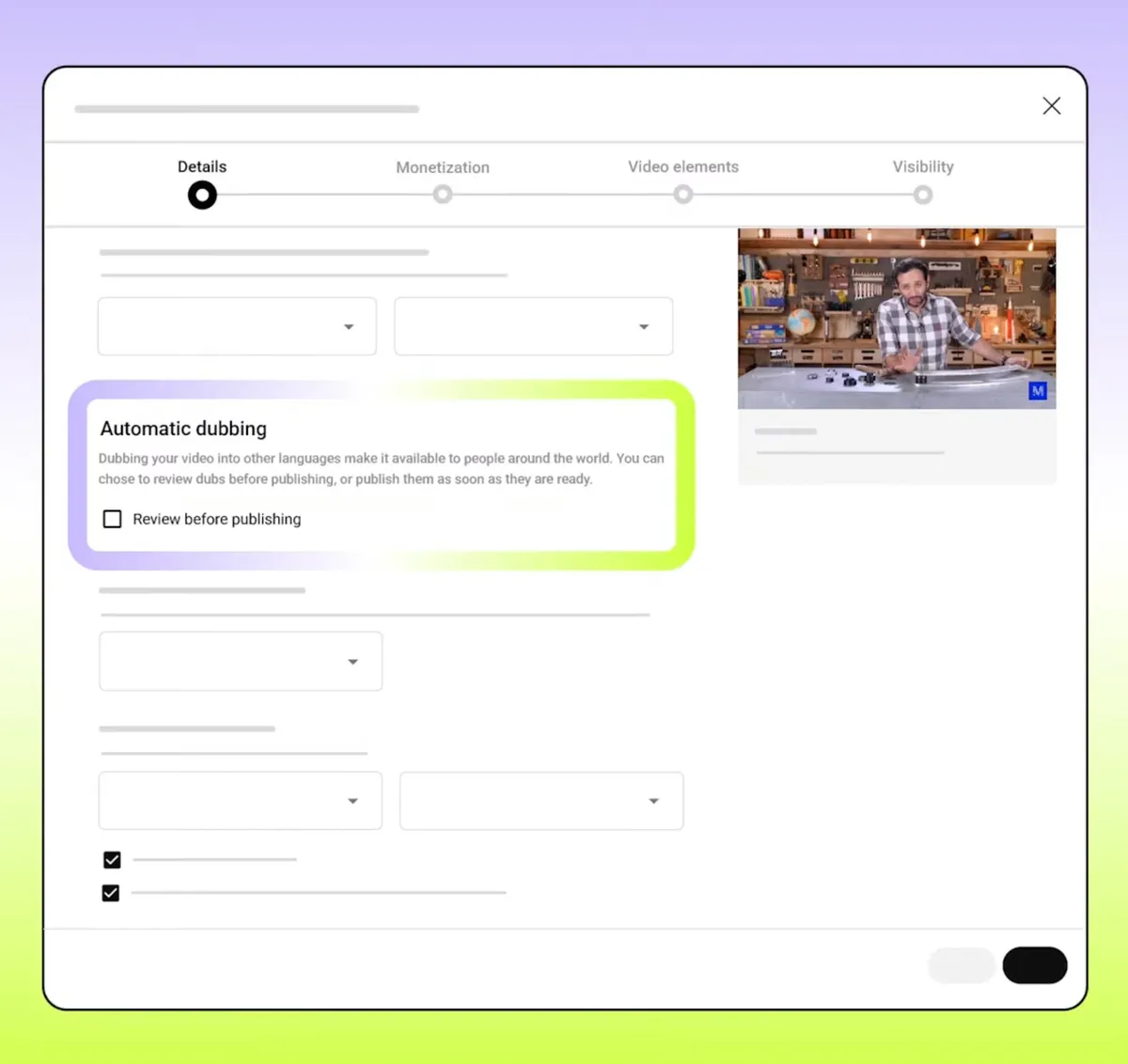
A creator can record once and publish in languages they don’t speak. Someone on your team still has to approve what the audience hears.
Look at the small review checkbox in YouTube’s auto-dubbing illustration. That is a surprisingly good place to start your AI strategy.
Make approved content the unit of progress
Your team may already be using AI to shortlist creators, draft briefs, edit assets or summarize results. The useful question for 2027 is where those tools improve the work enough to justify changing the process. A faster first draft helps. A faster first draft followed by six rounds of corrections deserves a closer look.
AI in influencer marketing means using machine-learning or generative tools to assist decisions, production, distribution and measurement across a creator campaign. Those uses have different consequences. Screening audience data affects who gets hired. Dubbing changes what a creator appears to say. Generating a product scene changes what the audience sees. A report summary changes what your next budget decision rests on.
We recommend judging each use against the job it is meant to improve. Count approved, usable deliverables; include the time spent checking and correcting them; then examine the relevant audience or business result. Keep those measures separate. You should be able to explain whether AI saved production effort, improved campaign performance, both or neither.
There is a second question that often gets mixed into the first: how do you market an AI product through creators? NeoReach’s inbound enquiries and campaign work help answer that. They also show why “AI marketing” is too vague to put on a brief without another sentence.
46% were using AI; another 29% were still planning
The IAB’s 2025 creator-advertising study provides a useful baseline. Among 453 U.S. advertising decision-makers, 46% reported current AI use for creator content or work processes. Another 29% planned to use it within 12 months.
- 46%of U.S. advertising decision-makers reported current AI use for creator content or work processes
- 29%planned to use it within 12 months
- 453U.S. advertising decision-makers surveyed
The survey ran from July 28 to August 12, 2025, among buyers planning at least $1 million in total annual advertising spend and $100,000 in creator spend. It describes a selected, comparatively well-funded group. It also predates this guide: planned adoption is not proof that deployment happened in 2026.
For an enterprise team, the practical response is to inventory actual use before buying another platform. Ask which tasks already involve AI, which systems receive campaign information and who checks the output. A discovery tool purchased centrally and a producer quietly using a dubbing tool create different approval needs. “We have an AI policy” does not tell you whether either workflow is working.

Show data
Share of respondents | |
|---|---|
Current use | 46 |
Planned use | 29 |
Interested | 17 |
No plans | 8 |
Then identify the bottleneck. If creator selection is slow because nobody has agreed on the target buyer, more automated recommendations will produce a longer argument. If the brief is settled but the team spends hours checking audience geography, structured screening may be worth testing. Fix the decision that is missing before automating the task around it.
Seven AI enquiries in a 100-submission export
NeoReach’s own enquiry data makes the demand tangible. In an export covering August 28 to October 22, 2026, seven of 100 submitted forms identified a self-described AI brand or an explicit AI-client campaign: five direct brand enquiries and two agency enquiries on behalf of AI clients.
- 7 of 100submitted forms identified a self-described AI brand or an explicit AI-client campaign
- 5direct brand enquiries
- 2agency enquiries on behalf of AI clients
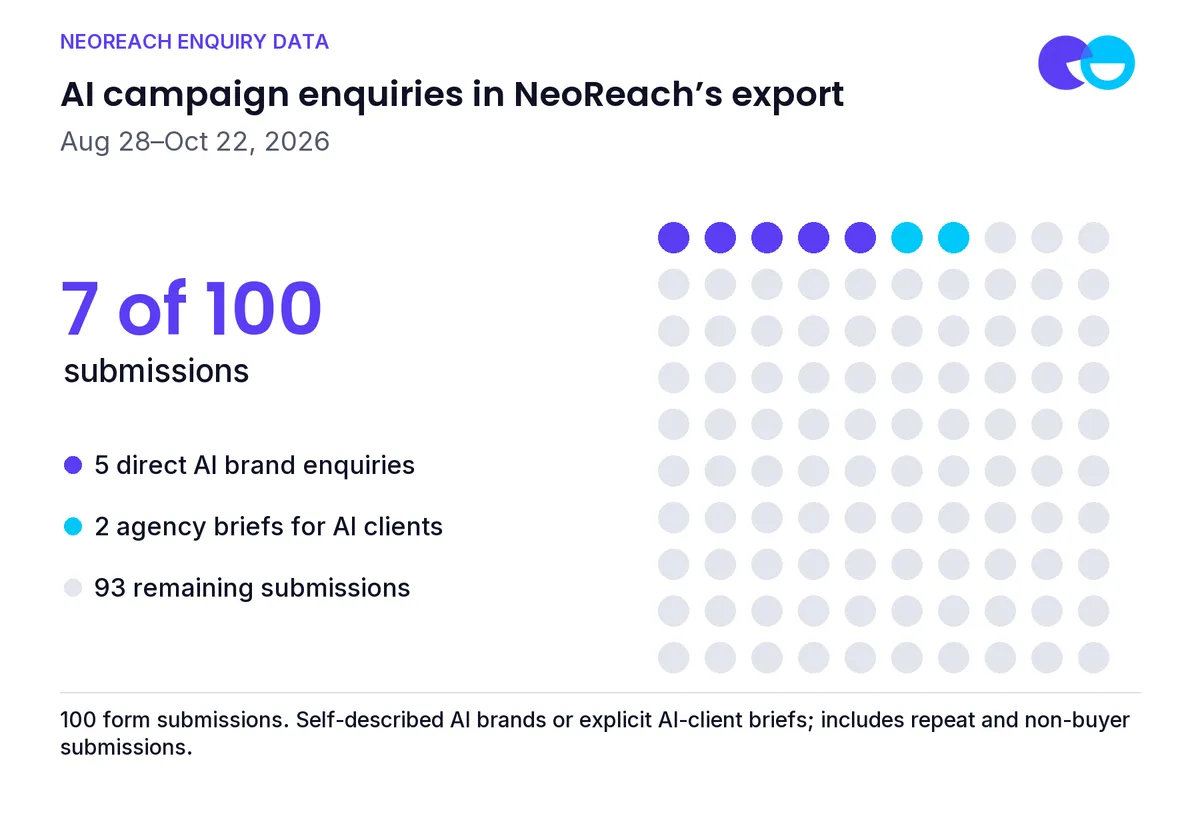
We classified the submitted company descriptions, selected industry and campaign messages. Two direct entries identified AI through their selected industry or company name; the stricter message-only count was five enquiries in total. The denominator retains all 100 submissions, including repeat enquiries, supplier pitches and a test. These are submissions, not 100 qualified leads or 100 unique companies, and one export cannot establish a growth trend.
The briefs are more revealing than the percentage. Across these enquiries, requests included specialist LinkedIn creators, YouTube awareness activity, short-form product launches and paid usage rights. One AI-app brief specifically asked how results would be attributed when the purchase happened through a website subscription rather than an app-store install.
That is a useful correction to the idea that every AI brand needs a viral technology demo. A legal product needs credibility with legal professionals. A consumer video tool needs people to see a result they want to make themselves. An assistant needs to show a task completed convincingly. The creator’s assignment should follow the buying problem.
For marketers at AI companies, put three things in the agency brief early: the task your product performs, the audience qualified to care and the action that counts as adoption. If your revenue event is a paid web subscription, make that explicit before someone optimizes the campaign for downloads you cannot meaningfully measure.
Use AI to produce a shortlist you can challenge
NeoReach’s experience with data-assisted creator selection predates the current wave of generative tools. Our historical materials described AI-supported selection and audience-fraud analysis in 2022. Today, the NeoReach API provides creator and audience data, matching and authenticity-related capabilities. They do not make every creator recommendation automatically correct.
A useful shortlist should explain why each person is there. Ask for the relevant audience location, evidence of subject knowledge, examples of comparable content and any uncertainty in the data. A model-generated biography is easy to read. The underlying post that demonstrates expertise is much more useful when you have to defend the choice.
For a developer product, inspect whether the creator actually explains implementation choices. For an AI video app, inspect whether they can show an output and the steps needed to reproduce it. For a business workflow, look for informed audience questions about cost, integration or suitability. Follower count can tell you scale; it cannot answer those questions.
Have the person responsible for casting review a defined sample of recommendations, including some the tool ranked lower. Record why they accept or reject each one. This exposes recurring mismatches: the right topic with the wrong audience, relevant past work with little current activity, or a polished demo format that cannot accommodate the product’s limitations.
Measure how many proposed creators meet the brief and how long it takes to reach a defensible shortlist. Do that before claiming the tool has improved campaign ROI. Selection quality is an intermediate result; sales depend on much more than who made it through a search filter.
Faster production still leaves an editing job
In Adobe’s 2026 Creators’ Toolkit research, 93% of creators said creative AI helped them produce content faster. Yet 57% said outputs typically needed moderate or extensive editing before sharing. Speed and revision can coexist quite happily. Your production budget needs room for both.
Show data
Share of creators | |
|---|---|
Say AI speeds production | 93 |
Say outputs need moderate or extensive editing | 57 |
The Harris Poll surveyed more than 16,000 income-generating creators across eight countries in May 2026. These are self-reported experiences; the release does not disclose the exact base for each question. The two percentages answer separate questions. Neither tells you how much time your campaign will save.
For a pilot, record the minutes spent generating, selecting, editing and approving an asset. Include rejected versions. If the production team generates twenty alternatives but the brand team has to inspect all twenty, you may have moved the workload rather than reduced it. The approval queue does not care how impressive the demo looked.
NeoReach’s Facetune brief put rejection into the workflow
Our December 2023 Facetune campaign promoted AI Selfies Christmas Card presets. The brief asked creators to supply their own selfies and choose generated holiday-card results for publication. The brief asked for clear input photos, allowed refinement with other editing tools and explicitly instructed creators to discard results that looked wrong or unlike them.

An original creative from NeoReach’s December 2023 Facetune AI Selfies campaign. This is an AI-generated feature output selected for the campaign, not a newly photographed portrait. Image: NeoReach campaign archive.
The updated campaign workbook records 24 posts, 1,680,036 reported impressions and 65,960 engagements across Instagram and TikTok. Those are distribution and interaction results from one historical campaign. The records do not isolate paid from organic delivery or report installs, subscriptions or sales. They also do not test whether the review instruction caused better performance.
- 24posts across Instagram and TikTok
- 1,680,036reported impressions
- 65,960engagements
The brief assigned a clear division of work: the product generated options; the creator was responsible for judging whether they were suitable to publish. It gave creators rejection criteria before publication. That is a concrete production instruction you can adapt, even without claiming it caused the reported results.
Use that approach in your own brief. Specify what an unacceptable output looks like for the product: altered packaging, incorrect product behavior, a misleading before-and-after, an unnatural voice or a likeness the creator does not approve. Give someone the authority to send it back. A vague request to “keep it authentic” leaves everyone guessing at the deadline.
Localize the offer as carefully as the voice
AI dubbing makes language expansion a practical production option. In its February 2026 announcement, YouTube reported that, during December 2025, more than six million daily viewers on average watched at least ten minutes of auto-dubbed content. That establishes use of the feature; it does not establish an advertiser’s incremental sales.
- 6M+daily viewers on average watched at least ten minutes of auto-dubbed content during December 2025
The stronger campaign question is which existing asset deserves a language test. Start with a creator explanation that already answers a relevant buying question. Then check whether the product, offer and destination work in the intended market. A beautifully dubbed video that leads to an unavailable product is an expensive way to say sorry.
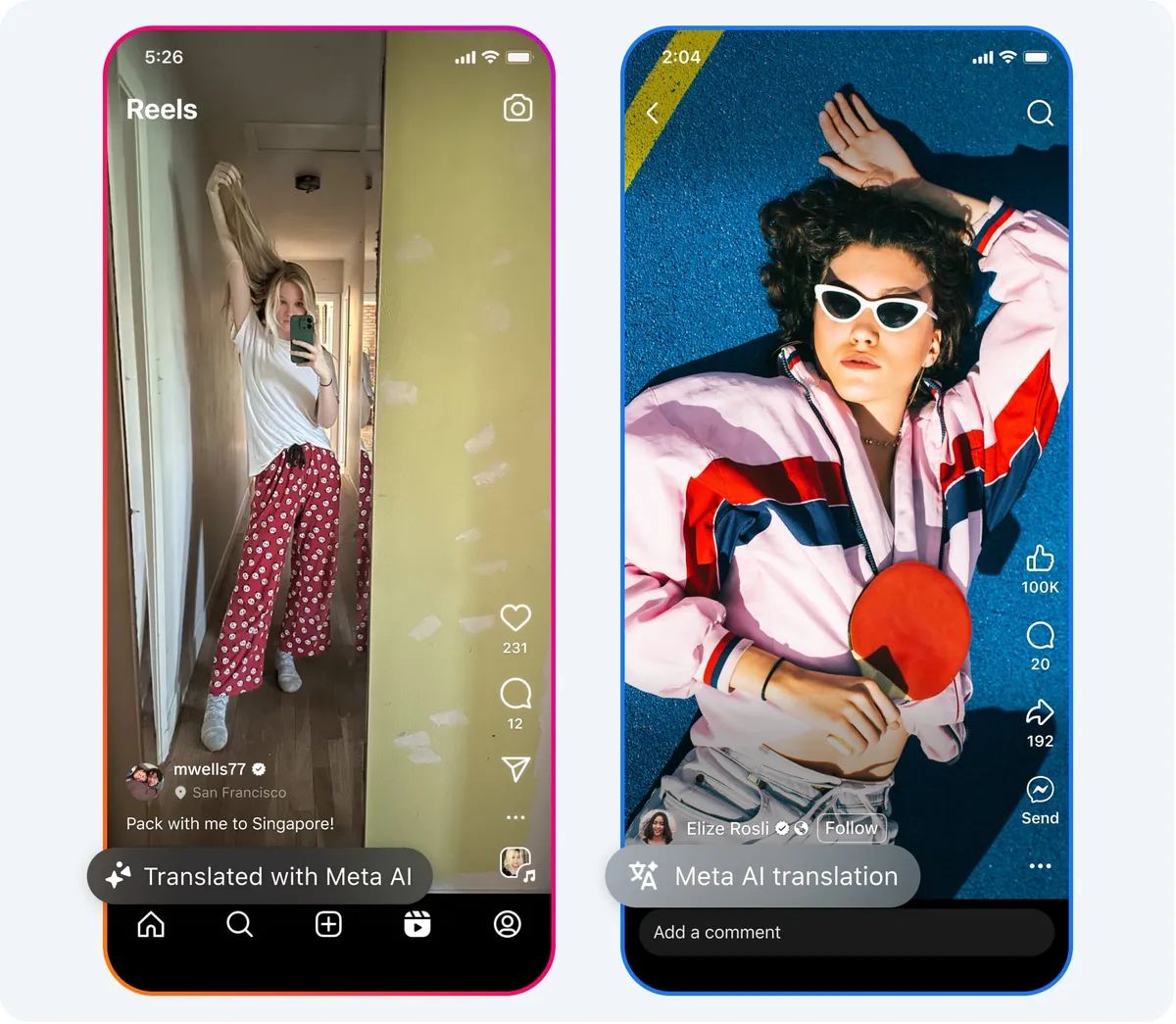
Meta’s official product examples show translation labels. Displayed engagement counts are demonstration UI, not campaign evidence. Image: Meta; original announcement October 2025, updated July 2026.
Meta’s translation announcement illustrates another part of the workflow: making the translation visible to the audience. Its product examples show AI translation labels on Reels. Treat that as useful context for the viewer, alongside the creator’s approval of the translated version.
Before publication, a fluent reviewer should check the product claim, tone, pronunciation and call to action. Review on-screen text as well as audio. Agree the languages and uses with the creator, then check the landing page, local pricing and purchase path. These are specific responsibilities you can assign in the production schedule.
There is a promising, bounded example in TikTok’s VOGGSMEDIA case, first published in November 2024. The agency localized successful English creator content into Spanish. TikTok reports twice the conversions and 50% lower cost per acquisition; its current case panel labels the comparison as business as usual. The test size, period and attribution details are not disclosed, so the figures are a case result, not a forecast for your next market.
- 2xconversions reported in TikTok’s VOGGSMEDIA case
- 50%lower cost per acquisition
The tactic is worth testing: take an asset with a clear job, adapt it for a defined market and measure the local response. Keep conversion volume and conversion rate distinct. If you change spend, audience, offer and language at once, the resulting CPA may inform your media decision, but it will not tell you how much AI alone contributed.
A generated product scene still needs a truthful product claim
Generation tools widen the range of assets a team can produce. TikTok’s Symphony image-to-video demonstration shows a product image being turned into a moving scene with background and prompt choices. That can be useful for exploring a product presentation. It does not show that a creator used the product or experienced the advertised result.
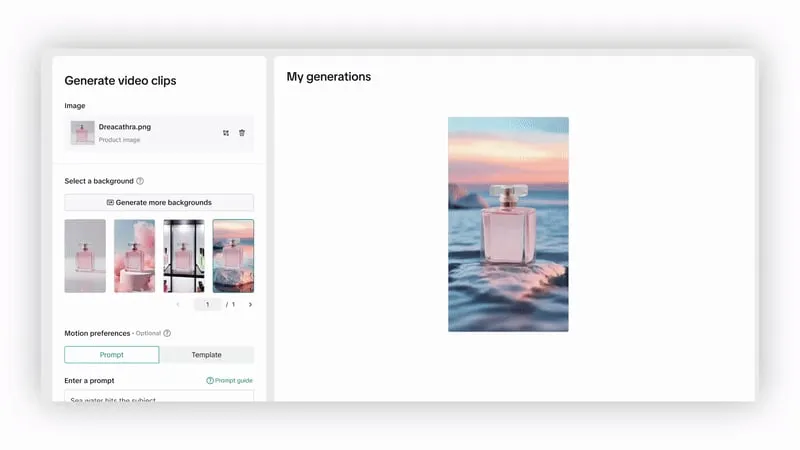
A still from TikTok’s Symphony image-to-video demo, June 2025. It illustrates production, not a creator testimonial or campaign result. Image: TikTok for Business.
Keep that distinction explicit in the content plan. A generated product shot, a translated creator recording and a creator’s hands-on review perform different jobs. If the selling point depends on actual experience, commission the experience and preserve the evidence. Do not let a convincing visual become an unsupported testimonial.
NeoReach’s NVIDIA student campaign offers a useful older example of showing technology in context. The 2022 GeForce RTX 30 program connected laptop capabilities to student projects. Four creators produced content across TikTok and YouTube, with 2,810,024 reported campaign video views.
- 4creators produced content across TikTok and YouTube
- 2,810,024reported campaign video views
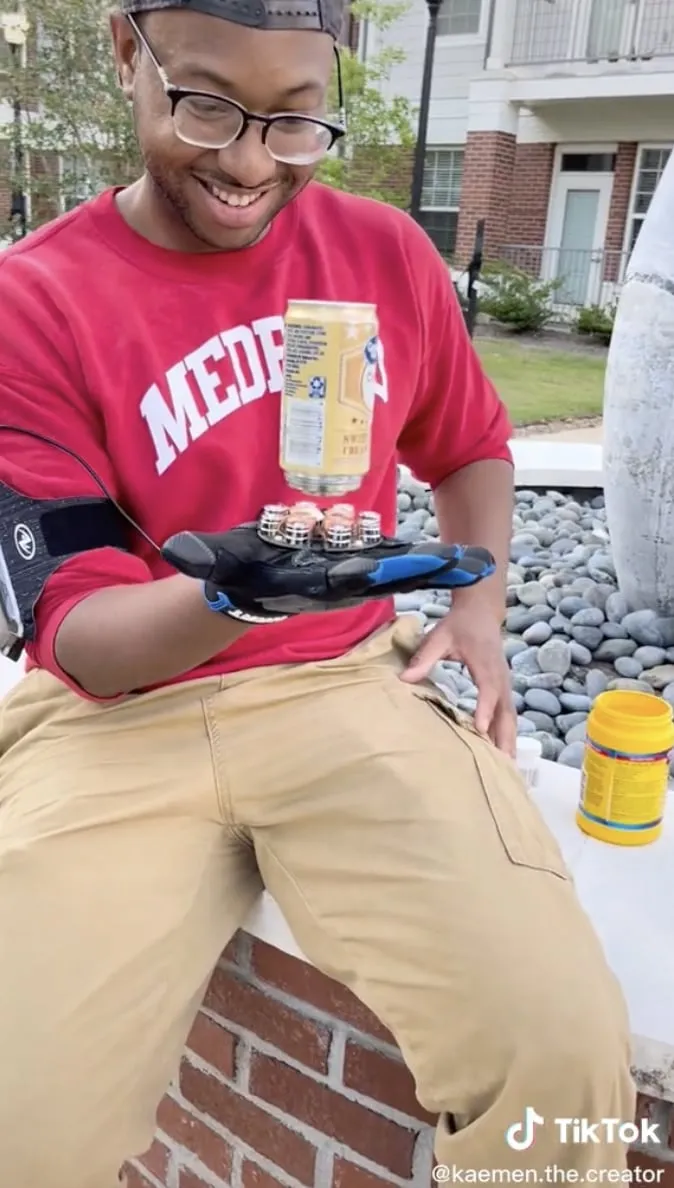
The campaign predates this guide and does not demonstrate that AI ran the marketing or caused sales. Its relevance is the creative assignment: put the technology to work on a task the audience recognizes. For an AI product today, the equivalent might be editing a real clip, building a small application or completing an administrative task with visible inputs and an inspectable result.
Give the creator enough access to discover where the product is useful and where it needs explanation. Agree which claims must be demonstrated, which edits can simplify the story and which steps the audience needs to reproduce it. If an impressive result depends on extensive cleanup, the brief should address how the content communicates that work.
Choose variations around a specific question: whether a different opening makes the task clearer, whether a closer product view helps explain a feature, or whether a localized explanation reaches the intended buyer. Producing fifty versions is a production count. The marketing value depends on what you learn or improve.
Run one pilot with a real comparison and an approval owner
Start with a repeatable task your team already performs. Choose an AI-assisted version and a normal-workflow comparison with similar complexity. Define the approval standard before either begins. Otherwise a faster result can win simply because you quietly accepted lower quality.
Match the pilot to a decision you can measure
Pilot | Primary measure | Approval responsibility |
|---|---|---|
Creator research | Time to a shortlist that meets the brief; acceptance rate of suggested creators. | Casting lead checks relevant posts, audience evidence and reasons for selection. |
Creative production | Total labor and cost per approved, usable asset, including rejected drafts. | Creator and brand reviewer approve likeness, product accuracy and final use. |
Language adaptation | Cost per approved localized asset; market-level campaign results measured separately. | Fluent reviewer checks claims and tone; market owner checks the destination. |
Campaign reporting | Time to a verified report; errors found against original platform or commerce data. | Analyst confirms metric definitions, dates, attribution and calculations. |
Recommended pilot measures, not reported NeoReach performance benchmarks. Use the same approval standard for the AI-assisted and comparison workflows.
For a production test, include tool fees, staff time, creator revision fees and any additional review. Divide the total by approved assets that actually meet the agreed use. Keep the comparable existing-workflow cost beside it. A lower cost per generated asset can hide a very ordinary cost per usable one.
If you also want to test advertising performance, design that comparison separately with your media or measurement partner. Keep the audience, offer, placement and measurement window comparable where possible. For conversion campaigns, examine the relevant acquisition event and downstream quality. For awareness, agree the audience and brand measure. Editing speed cannot stand in for either.
Give the pilot a stop rule. Pause a translation workflow if nobody can approve the language. Pause generation if correcting product inaccuracies erases the time saving. Expand when the workflow consistently meets the quality standard and improves its intended measure. The team should know what decision the evidence will support before the first prompt is written.
CTA: For your next brief, name one task AI can assist, the person who approves the output and the measure that would justify repeating it. NeoReach can help connect that production decision to creator selection, distribution and campaign measurement. Talk to our team about your next influencer campaign with the audience, product task and desired customer action already on the page.