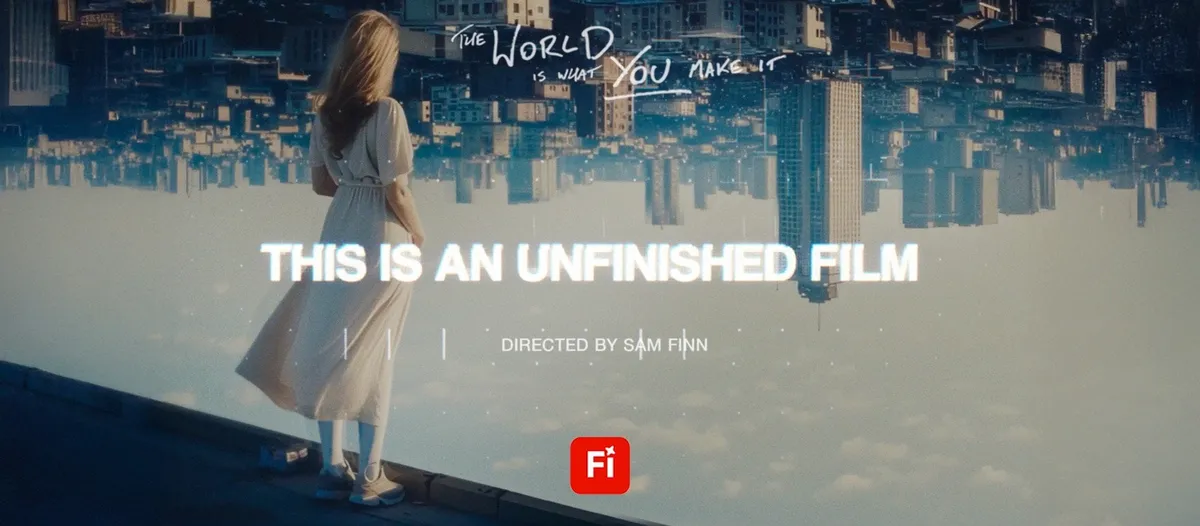
Ten examples of creators making AI capabilities easier to understand, evaluate and use.
Adobe launched a film without an ending. Sam Finn supplied the opening sequence; creators and viewers were invited to finish it with Firefly. The Unfinished Film gave the AI a clear job before anyone had to explain the model.
The idea makes a useful challenge for every AI marketing brief: give someone a reason to use the product, then show enough of the process to make the promise believable.
An AI recommendation needs something the audience can judge
AI marketing has a credibility problem that another adjective will not solve. A polished output is easy to admire. Understanding what produced it, how much work it took and whether you could get something useful yourself is harder. Creators can help close that gap when they have a proper task, enough product access and permission to explain the difficult bits.
This NeoReach selection examines ten creator campaigns and programmes for AI products and capabilities. It draws on documented launches and reporting from 2025 and 2026, plus clearly dated context where a programme began earlier. The order follows the strategic lessons. It is an editorial selection: public reporting does not provide comparable spend, sales or retention data for a defensible ROI ranking.
The cases cover different jobs. A filmmaker can make a tool’s creative possibilities visible. A professional can explain how an assistant changes an ordinary task. An entertainer can give a huge audience a reason to try an unfamiliar product. Those jobs need different briefs and different evidence. Treating every creator as a distribution slot makes the strategy much harder to see.
Use the examples to sharpen your creator strategy. Look for the point at which the product actually contributes, the conditions the demonstration leaves out and the action available to an interested viewer. A believable use case is a stronger starting asset than a list of extraordinary promises.
Inside the campaigns
Adobe gave creators a film to finish
Salesforce put Slackbot inside the puzzle
Google gave AI search a local story
Microsoft matched AI to Jane Lu’s working life
Notion made AI part of the project
Gamma explained the presentation workflow
ElevenLabs built referrals around useful tutorials
Perplexity started with the question
Ray-Ban Meta gave AI a familiar setting
Samsung connected creator stories to trials
Adobe gave creators a film to finish
Adobe launched The Unfinished Film in July 2025 with director Sam Finn. The assignment was deliberately incomplete: download his opening sequence and use Firefly to decide what happened next. Four invited creators supplied their own interpretations, alongside behind-the-scenes material and practical tips. Noémie Pino combined physical claymation with digital tools. Phil Cohen brought a fashion and visual-effects sensibility. The same starting point could become very different work.
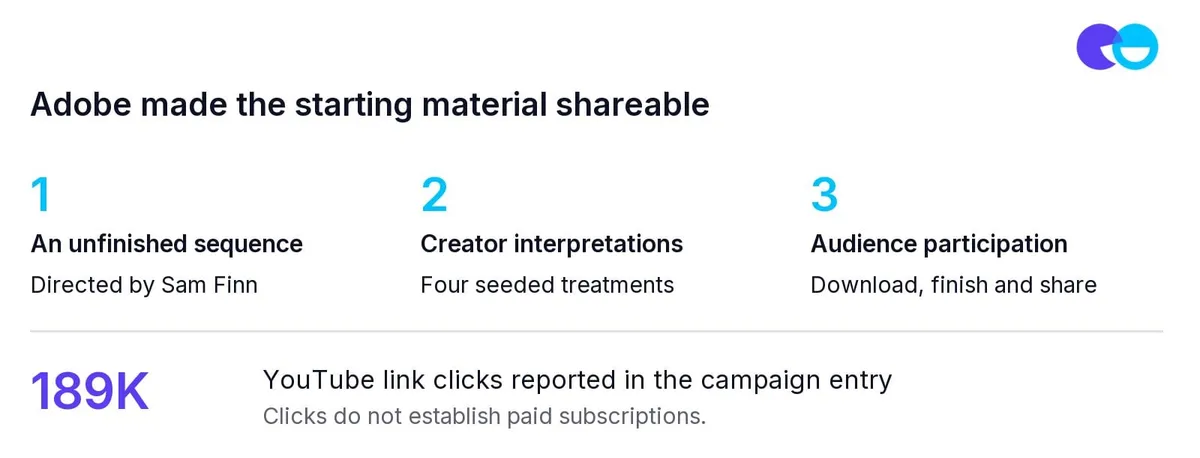
Our reading of Adobe’s brief and the campaign entry. Clicks do not establish subscriptions.
Adobe’s award submission reports 189,000 YouTube link clicks across the campaign. That is evidence of onward interest, rather than a count of paying customers or completed remixes. The submission describes paid, earned and owned distribution; it does not isolate an organic creator effect. Those boundaries matter when the number travels into a strategy deck.
- 189,000YouTube link clicks reported in Adobe’s award submission
The interesting brief decision is how much Adobe left unresolved. A finished brand film gives the audience something to admire. An unfinished sequence gives an interested filmmaker something to do. For your own AI campaign, a shared starting asset can also make the demonstration easier to judge: viewers can compare the creator’s choices with the material they began with. Suddenly the creative direction is visible.
This approach is particularly useful when your audience worries that automation will make everybody’s output look the same. Commission contrasting interpretations and let each creator explain a consequential decision. Show where they rejected an output, changed direction or used another tool. An impressive final frame earns attention; understanding the choices behind it gives someone a reason to believe they could make work they actually want to put their name on. Consider commissioning a short explanation of one failed attempt as well as the final reveal. The revision can teach a prospective user more than another immaculate montage.
Build the audience handoff into production. Check that the source asset is available, the tutorial matches the current product and a newcomer can complete a small version of the task. Measure downloads, first attempts and finished exports separately. A click is where the experience begins, not where your adoption dashboard should stop. For the next brief, replace the invitation to explore endless possibilities with one unfinished problem worth solving. The blank canvas already has plenty of competitors.
Salesforce put Slackbot inside the puzzle
For its February 2026 Super Bowl activation with MrBeast, Salesforce made an AI agent part of a $1 million puzzle challenge. Players could use Slackbot to test ideas and develop theories without being handed the answer. In its customer account, Salesforce reports that more than one million players used the agent’s guidance. The campaign offered an actual interaction with the product, alongside the spectacle.
- $1MPuzzle challenge in the February 2026 Super Bowl activation
- 1M+Players used the agent’s guidance (campaign participation measure)
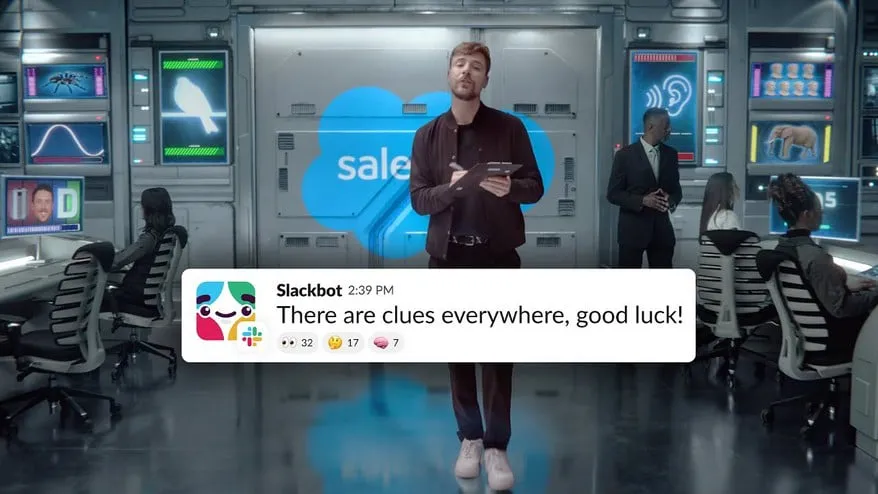
A puzzle gives participants a reason to use Slackbot. Campaign frame: Salesforce / Beast Industries.
That is a specific adoption result. It records people using an agent for the challenge; it does not identify qualified enterprise buyers or new paying customers. The same account describes infrastructure capable of supporting 1.5 million simultaneous users. Capacity is a different measure from the number of people who participated. Keep those labels intact when the case reaches the board deck.
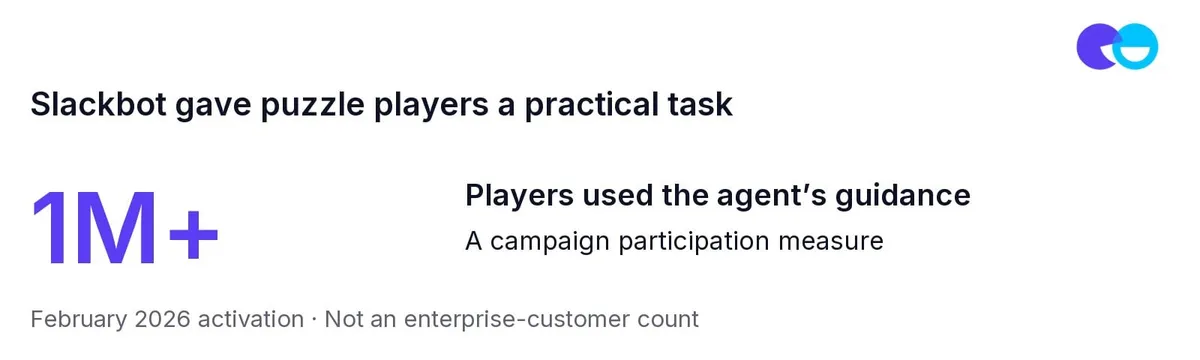
Participation reported by Salesforce. This is a campaign participation measure, not a count of qualified buyers.
The useful design choice was the agent’s limited job. It had to help participants progress while preserving the game. That gives a viewer a much clearer reason to interact than an open invitation to “ask our AI anything”. The creator supplies motivation, the challenge supplies context and the assistant has a task a participant can recognise. A commercial product needs that relationship too, even when the incentive is finishing work rather than winning a prize.
For an enterprise AI launch, commission a challenge that reflects a buyer’s actual difficulty. It might involve finding an answer across scattered material or choosing between several imperfect options. Provide an appropriate environment and decide what a successful interaction means before filming. An employee-facing product will need a different experience from a public competition; the principle worth transferring is the clarity of the job.
Then separate participation from qualification. Track whether people complete the task, what help they need and whether they return for a relevant use. Report the audience profile alongside the totals. A creator can make a million people curious, but the next budget decision may depend on a much smaller group with the problem your product solves. Connect the experience to your measurement plan before a spectacular participation figure becomes the only number anyone remembers.
Google gave AI search a local story
Google’s June 2026 Indonesian AI Mode campaign put NPD’s Mario Caesar, Niky Putra and Kak Kev inside five mockumentary episodes. According to creative director Manisha Sharma’s campaign account, Volt co-wrote the series with the trio and director Aco Tenri. Behind The Perfect Hit MV used the local idea of “ribet”, or everyday complexity, to introduce AI Mode’s handling of longer questions. This was Google Search’s Gemini-powered feature, rather than a standalone Gemini app promotion.
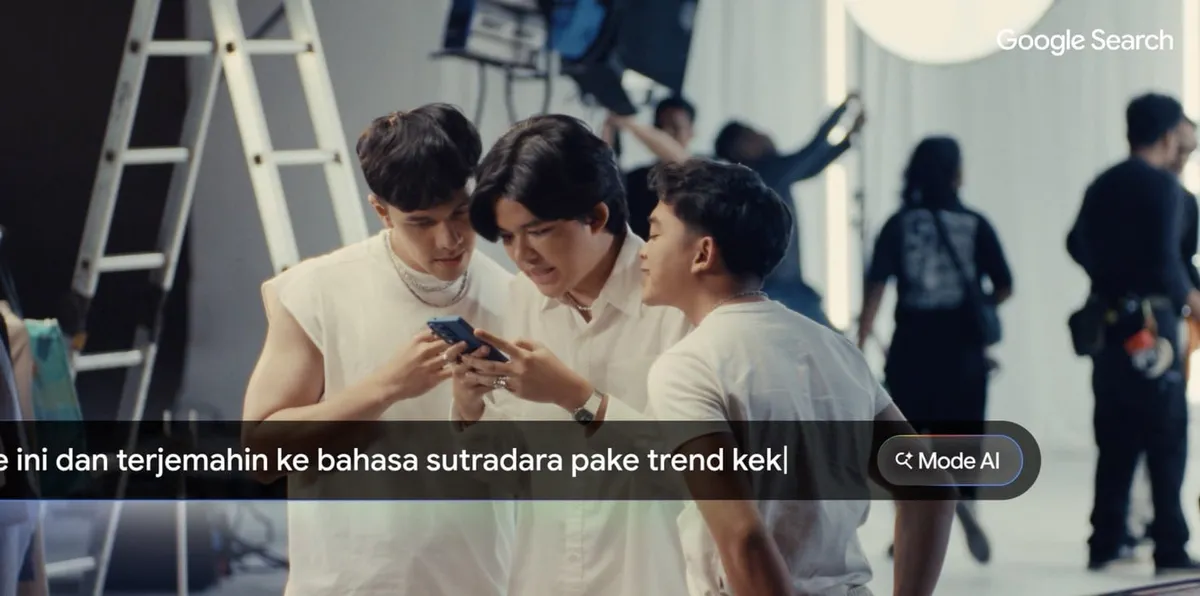
NPD’s creator-led mockumentary put an AI Mode question inside the story. Image: Google / NPD / Volt, via Manisha Sharma.
The public account documents the creative approach and June launch, but publishes no view total, trial conversion or sales result. Five episodes tells us the size of the commission. It does not tell us whether five episodes were the right media investment.
The transferable decision is to develop the question with the people who will ask it on camera. AI brands often arrive with immaculate prompts that no human has ever typed before their second coffee. A creator can identify the awkward wording, missing context and small frustrations that make a request recognisable. That is useful product communication: the audience has to recognise a reason to ask before it can care about the answer.
Give the creator more influence than a final script review. Ask them to bring several situations their audience already discusses, then test the product against those situations before choosing the story. Keep the prompt visible long enough to read. If the answer requires a follow-up, let the follow-up remain in the edit. Compressing every interaction into an instant triumph can remove the very detail that helps a viewer try it successfully.
For a multi-market campaign, this changes the creator production plan. Reserve time for local development and product testing rather than treating localisation as a last-minute subtitle job. A scene can be funny in one market and feel painfully imported in another. Your creators should be able to tell you that before the shoot.
The next brief should name one audience question, the product behaviour needed to answer it and the next action after watching. Assess comprehension and first-use completion alongside reach. The most useful creative review question is simple: would someone watching know what to ask the product tomorrow?
Microsoft matched AI to Jane Lu’s working life
Microsoft Australia’s July 2025 Copilot+ PC campaign starred Showpo founder Jane Lu, known to her audience as The Lazy CEO. After a post about a water-damaged laptop, Microsoft supplied a Lenovo replacement; Lu’s paid partnership post acknowledged the collaboration. Giant Squid then built a day-in-the-life film around “Work Smarter, Live Lazier”. Scenes included French translation during a video call and finding a previously seen dress. No quantified campaign performance is disclosed in the launch coverage.
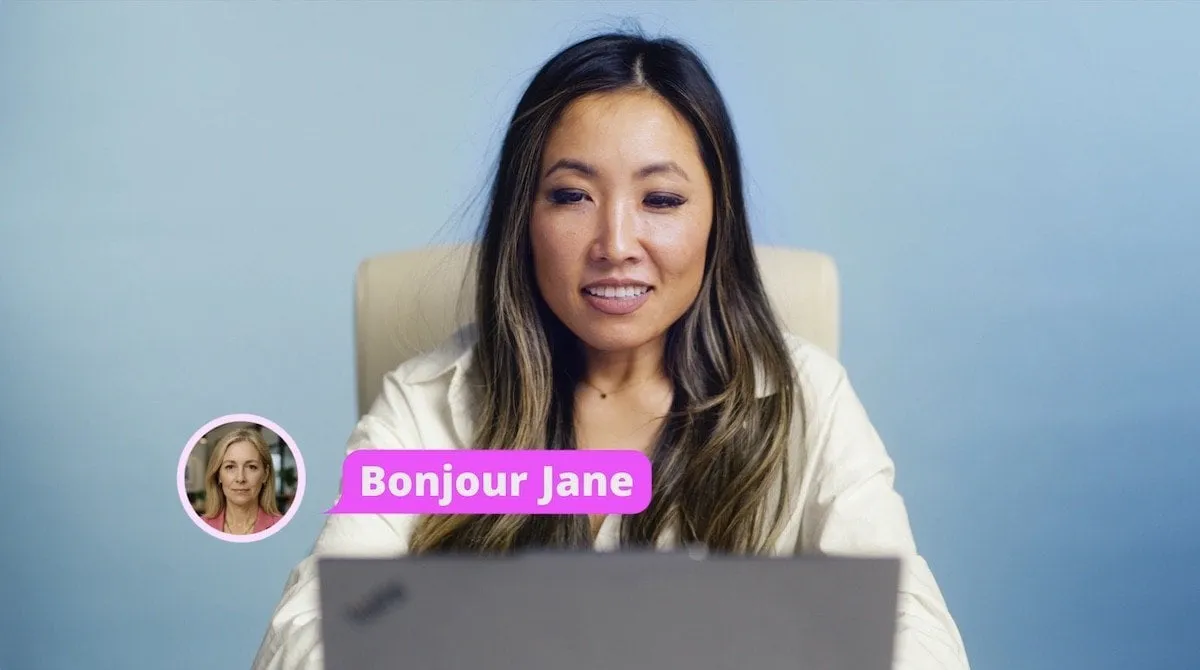
Jane Lu’s campaign film demonstrates a French translation use case on a Copilot+ PC. Image: Microsoft / Giant Squid / Jane Lu, via Campaign Brief.
There is a useful fit between the product promise and the creator’s established persona. The audience does not need a newly invented reason for this person to care about getting work done efficiently. For a productivity brand, that is a better casting question than whether a creator has posted about AI recently. Look for someone whose existing content already exposes the problem your product is supposed to solve.
This also gives the creative team a way to organise a feature-heavy brief. Choose a recurring situation in the creator’s working life, then decide which capability has a credible role within it. A feature without a situation is very easy to cut. A feature that helps resolve the story has a reason to stay. You can make an audience understand the appeal of translation without opening a lecture on the underlying model.
Keep a distinction between the campaign film and product proof. An edited demonstration can introduce a benefit, while a follow-up walkthrough explains setup, supported conditions and what happens when a task becomes less tidy. Commission those assets together. The audience member who enjoys the joke and the buyer checking compatibility may need different content from the same partnership.
For the next brief, ask the creator to identify the task they would genuinely like to spend less time doing. Test it on the actual device before promising a result. Then measure visits to the relevant product information, qualified enquiries or attributable purchases according to the buying journey. Avoid presenting generic engagement as proof of productivity. Your audience has enough work already; the campaign should make the practical benefit easier to evaluate, not give them another claim to decode.
Notion made AI part of the project
An AI agent is an abstract proposition until someone gives it work. Notion’s January 2026 Builder Series approached that problem through creators’ ambitions for the year. In Danielle Ito’s launch account, Jon’s Originals and Juan Dussan were among the early partners. The shared brief put the creator’s project at the centre and required Notion Agent to feature. It did not publish campaign reach or conversion results.
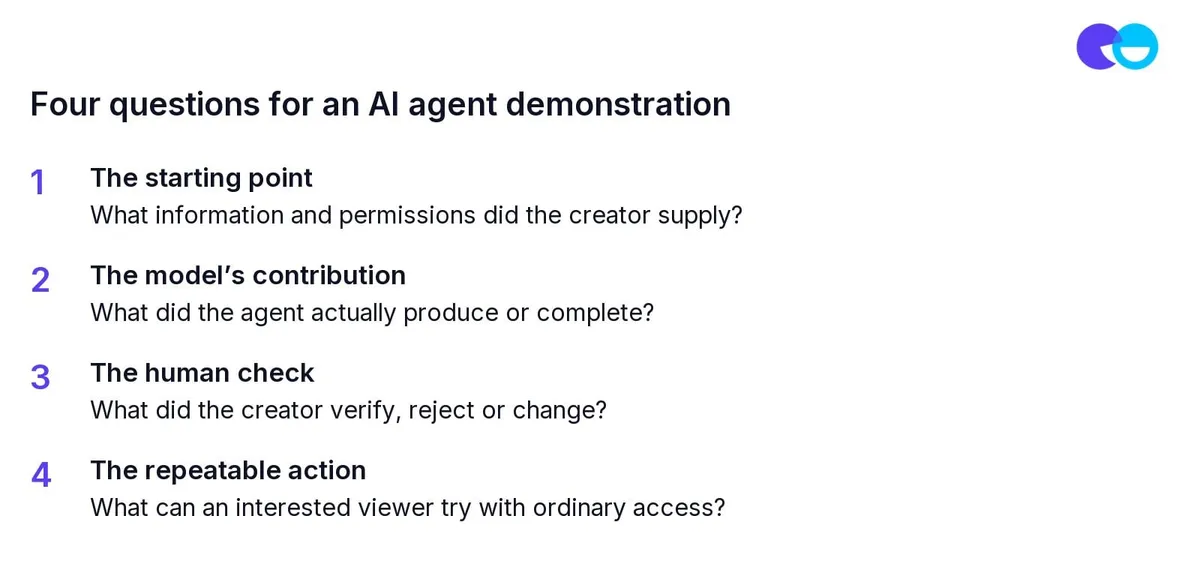
NeoReach review questions for an AI demonstration. This is our planning guidance, not Notion’s original brief.
That brief is useful because it gives two interests a place in the same story. The audience has a reason to care about what the creator is building. The brand has a specific capability it needs people to understand. The creative work lies in connecting them convincingly. A mention of an agent over attractive project footage would satisfy a very modest compliance check while leaving the viewer no wiser about the software.
The review should therefore focus on a decision or action. What did the tool help organise, retrieve or complete? What information did it need? What did the creator still have to decide? These are questions for the brief and rough cut, rather than claims about every Builder Series execution. Answering them makes a demonstration easier to interpret and prevents the software from receiving credit for work the person actually did.
Choose partners whose ongoing projects create that opportunity naturally. A creator already documenting a build can show a recurring task in context. Someone meeting the product for the first time may need more onboarding and a smaller assignment. Budget for the level of familiarity the story requires. Asking for a personal account of a workflow the creator has never used is an avoidable problem.
For your own launch, give the audience an equivalent starting point: a template, a sample task or a clearly described workflow. Measure whether new users complete that first action and what happens in their next session. A flattering endorsement can generate a visit. The more demanding question is whether the visitor can turn the creator’s example into useful work. That question belongs in your SaaS creator strategy, alongside the content deliverables.
NeoReach put output review in the Facetune brief
An AI image that looks almost like the creator can still be the wrong image to publish. Our December 2023 Facetune campaign treated that judgement as part of the work. The AI Selfies brief asked creators to supply clear selfies, review the generated Christmas-card results and discard outputs that looked wrong or unlike them. It allowed refinement with other editing tools.

An original AI Selfies holiday-card result from NeoReach’s December 2023 Facetune campaign. This is a generated feature output selected for the campaign.
The updated campaign workbook records 24 posts, 1,680,036 reported impressions and 65,960 engagements across Instagram and TikTok. These historical results do not isolate paid delivery or establish installs, subscriptions or sales. They also do not show that the review instruction caused a performance improvement.
- 24Posts
- 1,680,036Reported impressions
- 65,960Engagements across Instagram and TikTok
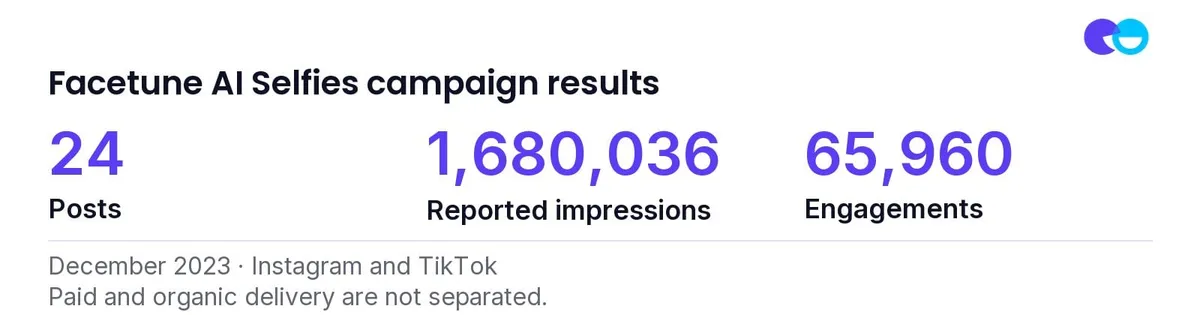
Updated workbook totals for NeoReach’s December 2023 Facetune campaign. Reported impressions retain the source’s metric label. No installs, subscriptions or revenue are established.
The useful distinction is the responsibility assigned before publication. The app generated options; the creator had criteria for choosing what could represent them. An approval process that only asks whether an asset looks polished could miss a poor likeness or a misleading result.
Carry that into your next AI-product brief. Define an unacceptable output, identify who can reject it and budget time for another attempt. If the demonstration requires correction, preserve the steps a new user would need to know. A creator should not discover the quality standard after the post is already live.
Gamma explained the presentation workflow
A presentation tool has an awkward marketing problem: most people understand the promise immediately. They would quite like their next deck to take less time. The difficult part is showing that the output will be useful once their own information, revisions and colleagues enter the picture. That is where a patient creator demonstration can earn its fee.
On 13 July 2026, the Kevin Stratvert channel published a Gamma-sponsored tutorial, hosted by Nick Brazzi. The video explained generating a presentation, importing a document and revising the result. It also connected presentation building to the information people already have in documents and email. Its description explicitly identified Gamma as the sponsor and supplied a creator-specific product link. The video showed 37,534 public views when checked on 11 November 2026; that is one video’s viewing count, with no published conversion result.
- 37,534Public views of the Gamma-sponsored tutorial, checked 11 November 2026
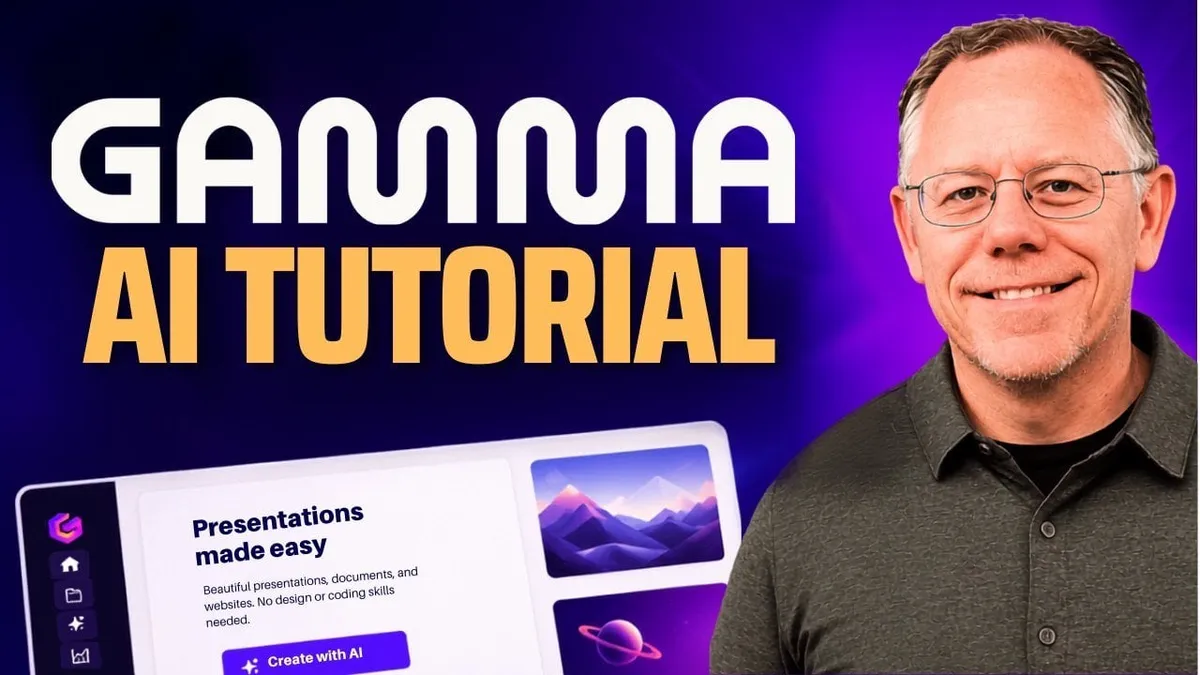
Nick Brazzi hosts the Gamma-sponsored presentation tutorial on the Kevin Stratvert channel, July 2026. Image: Kevin Stratvert / YouTube.
The useful creative decision was to give the product an ordinary job. A marketer can recognise the distance between a folder of source material and a deck someone is prepared to present. Explaining that journey makes the recommendation assessable. It also creates room for the questions that a glossy transformation clip tends to skip: what information goes in, what needs correcting and what the presenter can change.
There is a compatible principle in founder Grant Lee’s account of Gamma’s early creator partnerships: he personally helped early partners understand the product. Product fluency gives creators more to work with than approved adjectives. For enterprise buyers, it can also expose whether a demonstration resembles the work they actually need to complete.
For a similar campaign, we would commission the same business task from three relevant specialists: a sales educator, an independent consultant and an internal communications creator. Give each a realistic source pack and a clear audience. Ask them to explain the edits they make, including where the first draft needs judgment. Those differences should shape the creative rather than being ironed out in approvals.
Connect each demonstration to the source template or starting document shown on screen. Then measure whether referred users complete and revisit a presentation. A large pool of registrations can conceal a very small pool of people who found the tool useful. The campaign brief should identify that useful moment before the creator presses record.
ElevenLabs built referrals around useful tutorials
Some AI creator content becomes obsolete before the invoice is paid. Tutorials have a different opportunity: they can remain useful whenever someone encounters a specific problem. ElevenLabs’ affiliate work shows how that practical intent can become part of a creator acquisition programme, while still requiring a clear distinction between referrals and revenue.
In a creator profile first published in April 2025 and updated in 2026, ElevenLabs reports that educator Greg Preece refers thousands of users each month through its affiliate programme. The company did not publish an exact count or define how many became paying customers. His approach centred on educational YouTube content and an accessible affiliate link. It is a company-reported example of one partner, rather than a benchmark for everyone who joins.
There is also a dated example of the teaching itself. Preece’s Eleven v3 tutorial, published 23 August 2025, walked viewers through generating voiceovers, choosing the model and controlling delivery. His written walkthrough explained features including audio tags and multiple speakers. The content addressed decisions a prospective user would face inside the product.
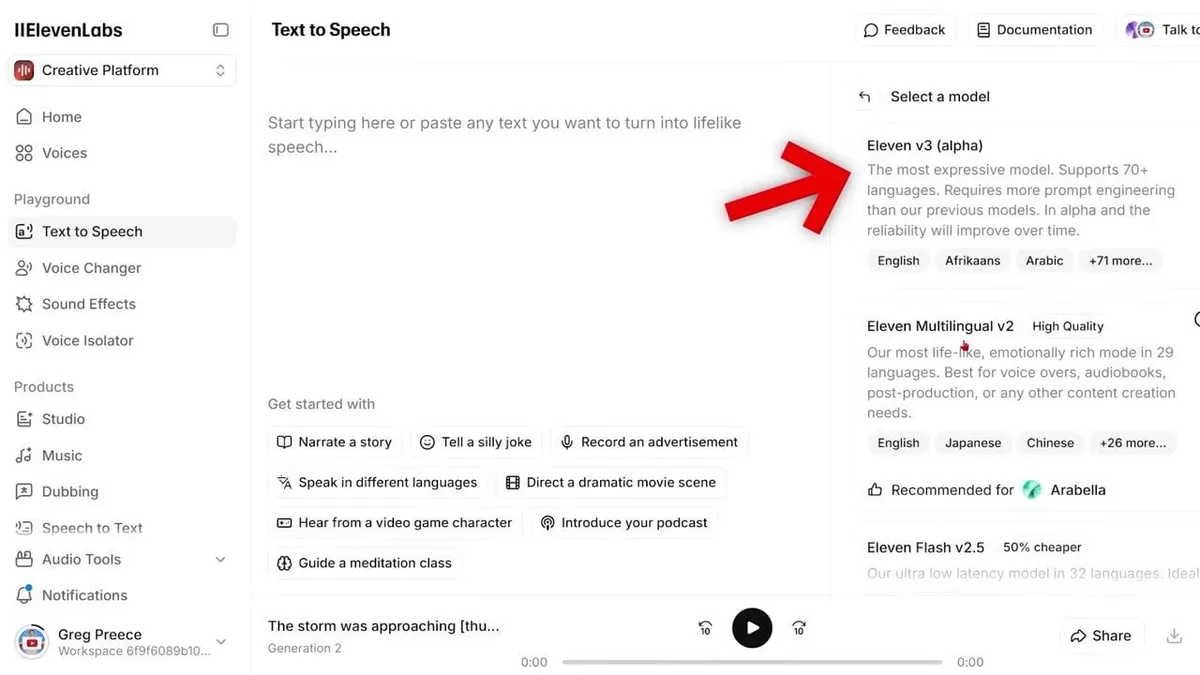
A frame from Greg Preece’s August 2025 ElevenLabs tutorial shows the model selection step. Image: Greg Preece.
That matters because an impressive voice sample leaves a lot unanswered. A buyer still needs to know whether the tool can deliver the tone their project requires, how to revise a disappointing take and how much control they retain. A creator who can explain the controls helps the audience evaluate the product with more useful information than a polished audio reveal alone.
Our recommendation is to organise this kind of programme around recurring user questions. Commission separate lessons for the first voiceover, revisions to emotional delivery and a conversation involving several speakers. Give each lesson a clear starting point and a finished output. An affiliate link should sit beside the material needed to reproduce the demonstration, so viewers can continue the task while their interest is specific.
Then maintain the content. Interface changes, new model names and altered controls can turn a good tutorial into a frustrating first experience. Include a review schedule and a paid update allowance in the partnership. Measure referred users through their first completed project and subsequent use, alongside commission costs. The commercial question is whether the teaching brings in customers who can use the product successfully. A link click tells you the explanation earned attention; product behaviour tells you whether it helped.
Perplexity started with the question
A research assistant becomes easier to understand when the question comes first. SG Social Branding’s 2026 Perplexity programme used campus interviews, street-style conversations and creator podcast production. The agency describes three New York interviewers, three campus creators and an eight-creator podcast shoot. Those groups may overlap, so they should not be added into a claimed unique roster. The case does not disclose campaign-wide viewing or acquisition results.
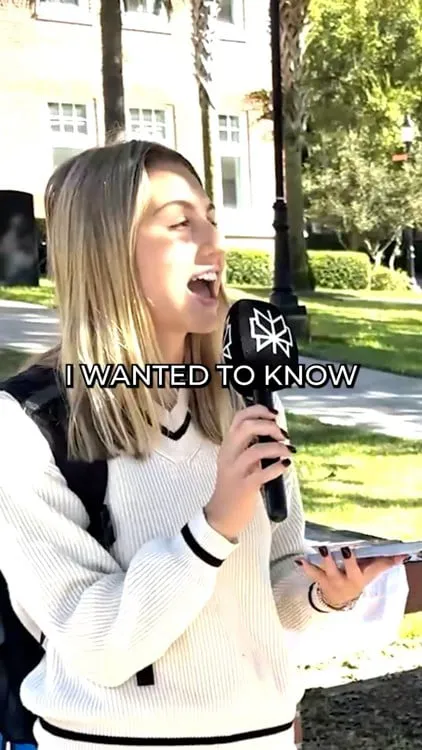
The format gives a broad AI product a specific point of entry. A participant’s question supplies the subject and the interviewer can ask the follow-up that makes it interesting. That can be more approachable than a tour of a search interface. The visible interview is still selected and edited content, however; it cannot establish how a representative sample of customers would react.
For marketers, the harder part is choosing a question that produces a meaningful demonstration. A response can sound impressive while leaving accuracy or usefulness unresolved. Ask creators to keep enough of the interaction on screen for the audience to judge the answer. With a research product, that might include opening a cited source, comparing alternatives or acknowledging what still needs checking. Those are recommended execution choices, not reported results from this campaign.
Build a small set of questions around the work your intended users actually do. Give each creator a subject they understand well enough to interrogate the response. That familiarity matters: someone who can recognise an incomplete answer can make a more informative video than someone whose only reaction is surprise. Review the product interaction before commissioning a large volume of clips.
The destination should continue the same question or task where possible. Track the first completed search and subsequent use as well as the click. If the content earns attention but the product experience loses people, another hook may not solve the problem. Use the comments to locate the sticking point and commission an explanation around it. The creator’s job can extend beyond introduction into the first few minutes of a new user’s experience.
Ray-Ban Meta gave AI a familiar setting
RV Mendoza’s May 2026 Ray-Ban Meta Reel used his Better Than Everyone comedy format for a nature hike. He asked the glasses about plants, captured his view and sent a photo without taking out his phone. The edit alternated between the glasses’ perspective and his reactions. Mendoza developed, scripted, performed, filmed and edited the piece. His case study records 3,639 visible likes and 172 comments, reviewed on 27 July 2026. Some comments expressed purchase interest; that is not a verified sales count.
- 3,639Visible likes on the Reel, reviewed 27 July 2026
- 172Comments on the Reel, reviewed 27 July 2026

The demonstration has a small, recognisable motivation: wanting to know what you are looking at. That makes it useful for marketers selling unfamiliar hardware. A specification list asks people to work out where the device belongs in their life. A well-chosen moment lets them evaluate a particular use. Here, the creator’s curiosity supplies the reason to ask a question and the comedy supplies a reason to keep watching.
There is also a production lesson in showing both the user and the experience. A point-of-view shot can show what the device captures, but the creator’s response explains why the interaction matters to them. When briefing tech creators, plan those perspectives together. Make the input and response understandable, and label any material edits that change how a viewer would judge the experience. A slick cut should not accidentally promise a faster or more reliable product.
Choose a low-stakes demonstration where the audience can assess usefulness without assuming the device is an authority on everything. Identifying something on a walk is a different proposition from advising someone whether it is safe to eat. Keep that boundary in the brief. A creator’s relaxed tone does not remove the need for accurate product claims.
For a follow-up activation, examine which questions interested viewers ask: price, compatibility, everyday use or a particular feature. Commission the next explanation around those objections. Track product-page behaviour and sales through an appropriate measurement plan, while keeping public reactions in their own category. The practical move is to find one moment where hands-free assistance has a clear purpose. If the creator has to pause their entire life to explain why the device belongs there, the use case probably needs another pass.
Samsung connected creator stories to trials
Samsung’s 2025 Vietnamese Techritage programme connected Galaxy AI with heritage visits, using Grab placements, ride incentives and in-car demonstrations. Its award case, published in May 2026, describes travel creators documenting the experience on TikTok and local celebrities appearing in app advertising. The submission reports 10,000 redeemed ride vouchers and a 56% increase in Galaxy AI search versus the previous month. These are whole-programme results across several channels, not isolated influencer conversions or controlled incrementality findings.
- 10,000Redeemed ride vouchers
- 56%Increase in Galaxy AI search versus the previous month
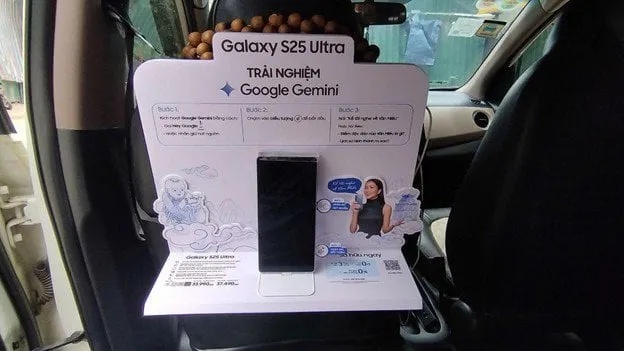
An in-car Galaxy S25 Ultra demo from the Techritage programme, shown in GrabAds’ campaign account. Image: Samsung / GrabAds, via Marketing-Interactive.
GrabAds’ campaign account shows the physical handoff: a passenger could encounter the product in a vehicle, rather than only watch someone else use it online. The AI proposition was placed in a cultural activity people could actually undertake.
For a brand planning an experiential creator campaign, that handoff deserves as much thought as the hero content. A creator may make an activity desirable, but the audience still needs a practical way to participate. Decide where a viewer can try the product, what the trial will involve and whether the experience remains understandable without a presenter beside them. A QR code is a route to an experience; it is not the experience itself.
Local relevance also needs a harder test than a recognisable landmark in the background. Ask the creator what a visitor would genuinely want to know or do there, then test the product against that task. Let cultural specialists review sensitive context. Showing an AI feature in a local setting can introduce its usefulness, but the setting alone cannot prove cultural understanding or accuracy. The demonstration must carry that argument.
The measurement design should reflect the journey. Record exposure, booking or redemption, actual product interaction and subsequent interest separately. In this case, a redeemed ride voucher does not tell us how many passengers completed an AI task or bought a phone. For your own programme, decide how those transitions will be observed before the first creator visit. Use a comparison group where practical if the commercial question is incremental demand. The strategic opportunity is to make creator content an invitation to a useful experience, with enough operational detail that the invitation survives contact with real customers.
Brief the demonstration around what the audience needs to believe
The strongest common lesson is about evidence. These campaigns give an AI product a context in which someone can see, try or discuss its contribution. The formats vary because the uncertainty varies. A creative tool needs to show what people can make. An assistant needs to show a useful action. A product with access to sensitive work needs a credible account of how someone uses it.
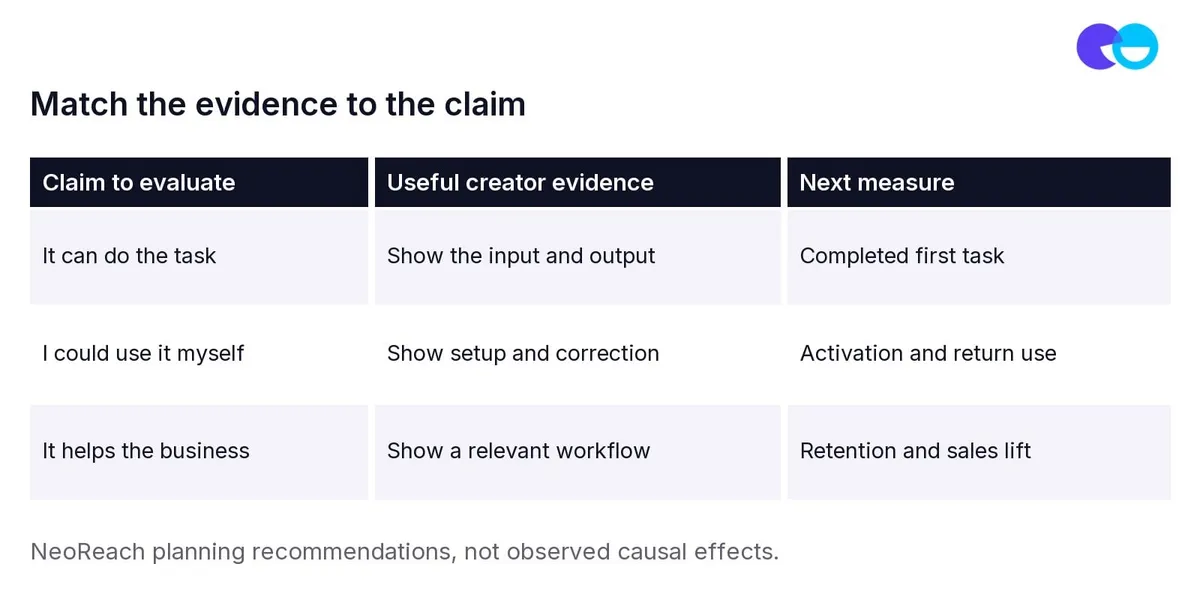
NeoReach planning guide. The proposed measures are not campaign results or evidence of causation.
Start with the buyer’s unresolved question, then choose a creator who can investigate it. Ask what would make the answer believable on screen. That might be a visible input, an unglamorous setup step or a comparison with the creator’s existing process. Keep the scope manageable enough that the audience can follow what happened. A clear demonstration of one valuable task often teaches more than a rapid tour of everything the model could theoretically do.
Make the division of work visible. Record the tools, preparation and human decisions behind the result, particularly where editing could make a long process appear instantaneous. Give creators a route to resolve product issues and enough time to use the product before recommending it. Accuracy and personality can coexist; the factual boundary should be clear while the creator’s explanation remains their own.
Agree the next action and the reporting window with the product team. Content viewing, trial activation and repeated use answer different questions. Report each against the relevant population, and avoid turning a platform interaction into a customer count. If you need an incremental revenue claim, plan the appropriate comparison rather than expecting a referral link to supply one.
Finally, review what people could not reproduce. The failed first attempt, repeated support question or confusing step can tell you what the next creator asset should explain. Build that follow-up into the programme. An AI campaign earns more than attention when it helps the right person form a realistic expectation and then experience the promised value. That is a practical standard for AI-focused influencer work.