
Ten creator campaigns that made technology easier to understand, try and put to work.
Lenovo gave artists a laptop and a project worth showing: make football-inspired work for a Mexico City showcase. Gawx and Vexx helped lead the challenge. Lenovo reported 25.6 million-plus views for the 2026 World Stage chapter of Creator Odyssey in July’s results.
That gives a tech marketer a more interesting starting question than how many features will fit into a 30-second script.
The useful comparison is what each creator helped the buyer understand
This NeoReach selection examines ten technology campaigns with documented activity in 2026, reviewed through 11 November. It covers consumer devices, creative software, AI tools and connectivity. The order follows the marketing decisions the cases illuminate. It is an editorial selection, not a revenue ranking: public reporting varies too much to put an early TikTok view count and a global campaign total on the same leaderboard.
Some campaigns below report substantial viewing or participation. Others earn their place through a distinctive execution whose commercial results remain private. We say which is which. We also draw on NeoReach’s earlier NVIDIA and Sony work to show how these planning choices look in practice; those examples retain their original campaign years.
Read the cases with one question in mind: what could a prospective customer judge after seeing this content that they could not judge before? The answer might be image quality, workflow fit, usefulness around the house or the confidence to try a tool. That is a more productive starting point for a creator brief than asking everyone to make an innovative product sound innovative.
Inside the campaigns
Lenovo made the project the product demo
Samsung matched creators to product features
Adobe gave creators a place to show what the software could do
O2 gave satellite connectivity a reason to matter
Logitech put the mouse inside the working day
eufy made household routines the demo
Notion started with what the creator wanted to build
Salesforce made trying the software part of the entertainment
Perplexity put people's questions in front of the camera
Canva made the idea visible before revealing the tool
Lenovo made the project the product demo
For Creator Odyssey: World Stage, Lenovo gave Gawx and Vexx a bigger role than delivering a sponsored introduction. They led a 2026 creative challenge in which artists used Lenovo Yoga Aura Edition laptops to make football-inspired work, culminating in a Mexico City showcase. The roster included Maria Kallevik, Shutter Authority, Elliotisacoolguy, Erik Does VFX and Isaac Carlton. The audience could follow a project toward a reveal. The laptop had something to do throughout the story.
The chapter produced eight YouTube videos and more than 90 social posts. In Tubefilter’s July account, Lenovo reported 25.6 million-plus views, more than 400,000 watch hours and 367,000-plus engagements for World Stage. Those figures describe this chapter, not the whole Creator Odyssey programme that began in 2024. They show substantial content consumption; the public account does not connect them to laptop purchases or disclose the paid distribution split.
- 25.6M+Video views, Lenovo World Stage (2026 chapter only)
- 400K+Watch hours
- 367K+Engagements
Results reported for the 2026 World Stage chapter in Tubefilter, 19 July 2026. Paid distribution and purchase outcomes are not disclosed.
The interesting investment is the unfinished work. An audience can care about how an artist gets from an idea to something they are willing to show other people. That gives the product a place inside decisions, revisions and awkward moments that a polished reveal would hide. For a tech marketer, those moments can be useful demonstrations. They also need room to happen. If the finished artwork is predetermined by the brand, the creative journey becomes harder to believe.
The next brief should define the project before the product talking points. Choose a creator with a process their audience already enjoys following, then identify where the device genuinely helps. Fund enough production time to show that process, including a stage where the creator can explain a decision. Plan the final reveal and the follow-up questions together. Keep the finished work accessible after launch, with a clear route to the equipment used. A viewer who returns to understand how an effect was made is giving you a better follow-up brief than “please make another unboxing”.
NeoReach put student projects at the centre of its NVIDIA brief
A technical specification needs a reason to matter. In our NVIDIA campaign, creators used GeForce RTX 30 Series laptops to build science and engineering projects for an audience of students. This was a 2022 back-to-school programme, included here as a historical example of the brief behind a useful product demo.
The instruction was “Build Something Awesome”. Kaemen Lafleur’s execution included a gloved-hand project that appeared to levitate a can. The laptop belonged to a task the audience could follow. That gave the creator something more interesting to film than a list of processor specifications, while keeping the product’s purpose visible.
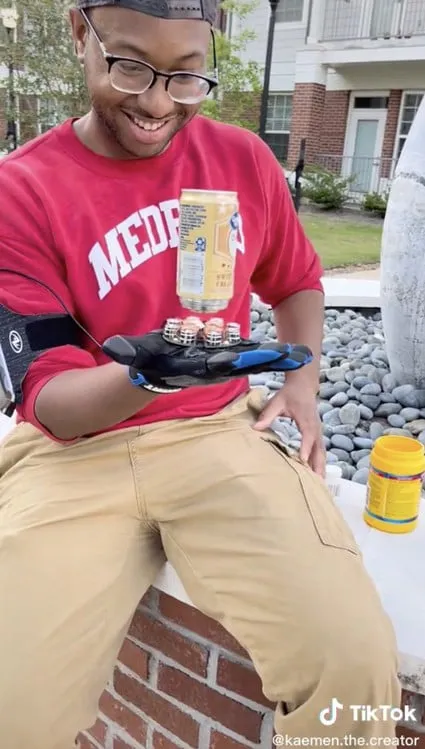
Four creators delivered four posts: three TikToks and one dedicated YouTube video. The recap recorded 2,810,024 video views. Paid support separately recorded 5,782 clicks; that is a traffic result, not a purchase count. The total view figure does not provide a reconciled paid/organic split.
- 2,810,024Video views, NVIDIA back-to-school programme (paid/organic split not reconciled)
- 4Creator posts (published August–September 2022)
- 4Creators
- 5,782Clicks recorded by paid support (traffic, not purchases)
For a hardware brief, start with what the intended buyer wants to make, finish or improve. Agree which product capabilities the task needs, then let the creator develop the execution. Keep enough of the process on screen for viewers to understand the product’s role. A striking final reveal can earn attention; the steps before it help someone judge whether the same tool belongs in their own setup.
Samsung matched creators to product features
Samsung brought approximately 140 creators from 35 countries to San Francisco for TeamGalaxy Connect, a three-day event beginning on 25 February 2026. The programme organised content around camera, gaming and sound. Mohamad Sofian made visual-effects content featuring the Galaxy S26 Ultra’s camera and AI capabilities. Filmmaker Monique Yvonne discussed a film she had shot with the device. Gaming creators joined the PlayGalaxy Cup, whose official livestream recorded 16.77 million views, according to Samsung. That figure belongs to the livestream, rather than the entire creator summit.
- ~140Creators at TeamGalaxy Connect
- 35Countries represented
- 16.77MViews of the PlayGalaxy Cup official livestream (livestream only)
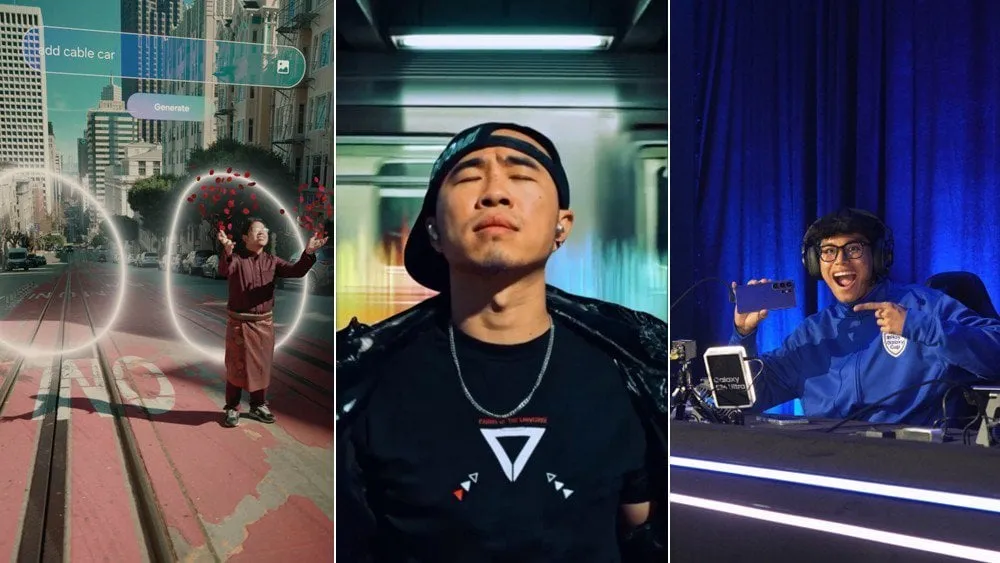
Different creators made different product uses visible. Original montage: Samsung Global Newsroom.
A phone launch can quickly become a competition to repeat the same specifications in different outfits. Samsung’s structure offers a more useful starting point: assign the feature to someone whose audience already cares about the task. A filmmaker can make image quality tangible through a finished scene. A gaming creator can put a device inside a format people already watch. The point is to make the benefit easy to recognise before asking anyone to remember its technical name.
This changes creator selection. The brief needs more than a category label and an audience size. Look at how the creator explains things, what they regularly make, and which questions their viewers ask. A brilliant entertainer may still need a separate technical session before using an unfamiliar feature on camera. Product access matters here: enough time to try the device, find something interesting and decide how to show it. An event invitation alone cannot do that work.
For the next launch, ask every proposed creator to describe the moment their audience should understand. It might be a difficult shot becoming achievable or a specific game running as expected. Agree what viewers will actually see and what claims the demonstration can support. Then report content consumption alongside product-specific questions and visits to the relevant feature page. The livestream’s scale is useful context; without disclosed sales or a paid distribution breakdown, it cannot tell you which feature convinced someone to switch phones.
NeoReach planned Sony coverage before CES
A trade-show floor can give creators access to extraordinary products and very little time to explain them. For Sony at CES 2023, NeoReach planned the announcement narrative before the event, then brought a production crew and creators to film, edit and publish from Las Vegas. This historical example ran around the January 5–8 show.
The “1 Minute Report” series turned individual exhibits and milestones into short explanations. Creators covered products including PlayStation VR2, a Spatial Reality Display prototype and AFEELA. Denver McQuaid interviewed Sony Honda Mobility’s Jun Koketsu about the vehicle prototype. That access supplied something an ordinary launch announcement could not: a person asking questions beside the thing being discussed.
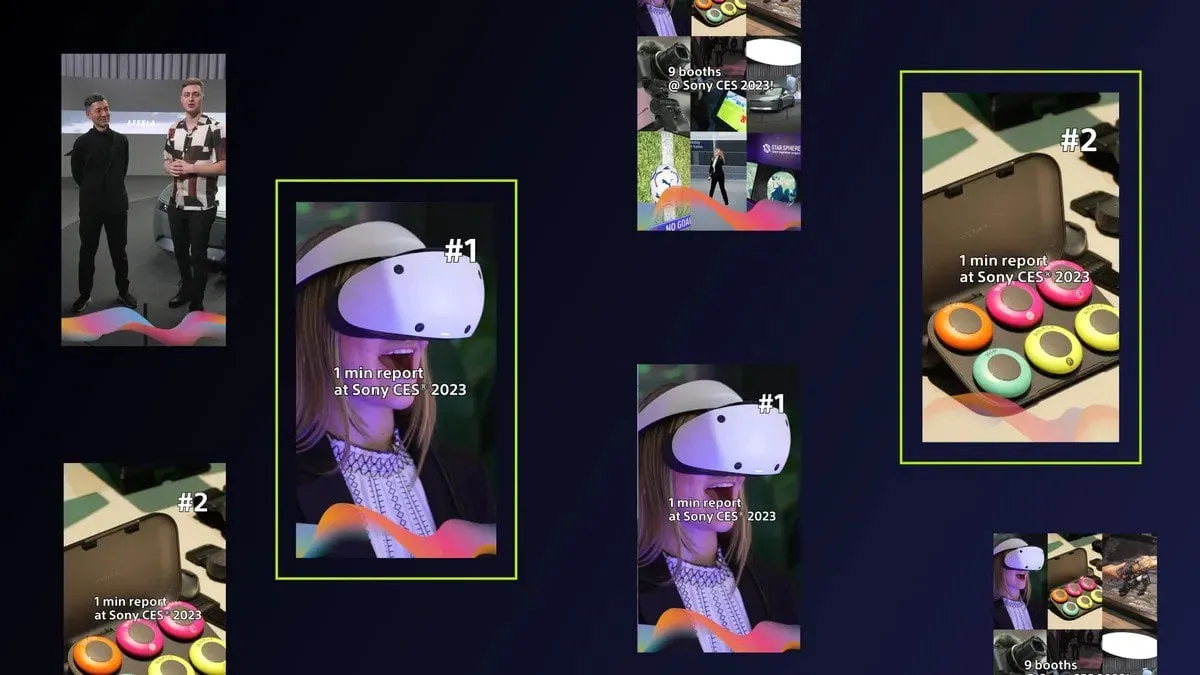
Creator reporting from Sony at CES 2023. Official campaign collage: Sony / NeoReach.
The case reports over 75 million views, over 1.4 million engagements and more than 1,000 shares across the programme. Content ran on Sony’s global accounts and received amplification through its channels. These are campaign totals, with no disclosed paid/organic split; they should not be described as organic reach from the creators’ own audiences.
- 75M+Views across the Sony CES 2023 programme (campaign total)
- 1.4M+Engagements
- 1,000+Shares
Before your next event, choose the questions each creator should help answer and arrange access to the people or products needed to answer them. Book editing capacity alongside filming. Assign someone to clear factual claims quickly. A useful report published while buyers are following the launch has a different job from a polished recap that arrives after the conversation has moved on.
Adobe gave creators a place to show what the software could do
Adobe made the product demonstration big enough to stop people in Times Square. Its May 2026 Firefly showcase included work from 23 invited influencers, who produced more than 70 assets around Webby Creator Weekend. Twenty self-serve stations let visitors transform a selfie, then see the result on large screens. Adobe reports production and participation figures, without disclosing subscription or revenue lift.
- 23Invited influencers in the Firefly showcase
- 70+Assets produced
- 20Self-serve selfie stations
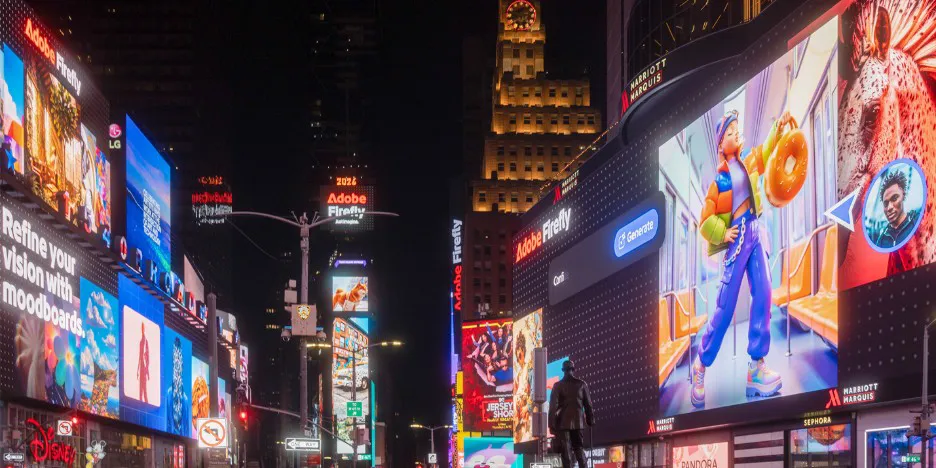
The May 2026 Firefly showcase in Times Square. Photograph: Adobe.
The useful move was giving creative work a destination. An AI-tool tutorial often ends with a generated image sitting in a browser tab. Here, the output became part of an exhibition. Creators had something to make and something to show their audience; visitors could attempt a small version themselves. The related Webby programme included Brandon Baum, Valerie Zhang and Pablo Rochat discussing creative AI, with Adobe ambassadors helping attendees use Firefly. Product access had human support attached.
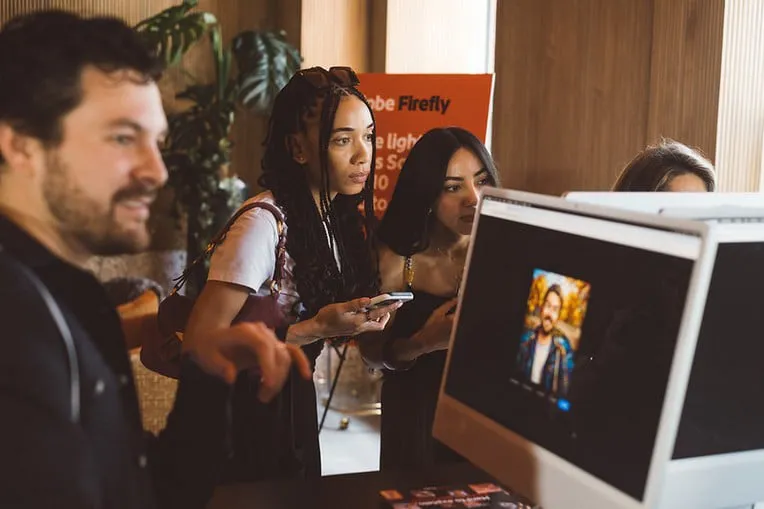
Hands-on Firefly use at Webby Creator Weekend. Photograph: The Webby Awards / Adobe activation.
For a software marketer, that support is worth putting in the budget. Giving someone a login does not mean they can produce a convincing demonstration by Friday. A creator needs enough time to discover where the tool helps, which settings matter and where a human decision changes the result. Ask to see that process. A finished asset can attract attention, but the audience also needs a believable route from its own starting point to something useful. Otherwise, the demo can feel like a magician protecting the trick.
Your brief could commission one finished project, a short explanation of the important decisions and a template or starting file followers can use. Give the work a relevant destination: an industry event, a customer showcase or a curated online gallery. Choose creators whose output your buyers would actually want to make. Then track what happens after the applause: people starting the workflow, completing it and returning. The expensive screen is optional. A clear connection between creator skill, product action and a result people want is the part to preserve.
O2 gave satellite connectivity a reason to matter
O2 made a difficult product benefit easy to follow: find KSI somewhere ordinary mobile coverage could not help. Its Sidemen partnership extended the March 2026 launch of O2 Satellite into a familiar hide-and-seek format. The campaign entry reports more than 5.7 million views for the 90-minute YouTube feature.
- 5.7M+Views of the 90-minute O2 x Sidemen YouTube feature
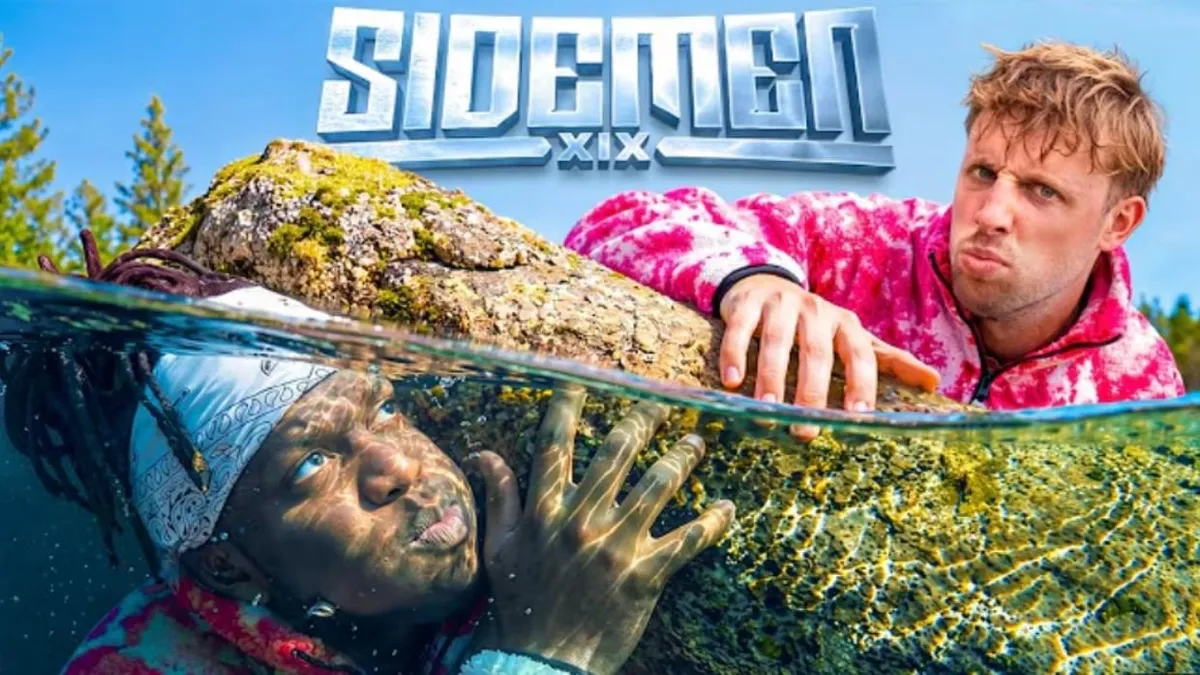
A technology demo inside a game. O2 / Sidemen, via Creative Salon.
The phone supplied maps, messages and clues that allowed the game to progress. That made connectivity observable as a useful capability. Viewers did not need to understand the satellite infrastructure before understanding why a working connection mattered to the people on screen. A technical explanation could follow an established reason to listen.
The production also offers a useful answer to a familiar approval argument. In Creative Salon’s interview, O2 and VCCP describe briefing the creators on how the service worked, setting boundaries and keeping a more scripted explanatory section inside the wider entertainment. The spontaneous parts could remain spontaneous. Accuracy did not require every reaction to pass through the brand’s script template.
This was a larger media plan around one idea, with material for Shorts, other social platforms and paid advertising. The reported feature views should stay attached to that feature; they are not subscription sales or the total audience for every edit. For a telecoms buyer, device compatibility, coverage conditions and pricing still need to be checked after the entertainment has done its job.
When you brief a complicated technology, identify the situation in which its advantage becomes visible. A weak signal, a demanding render or a repetitive administrative task creates a concrete test. Ask the creator which existing format can hold that test without breaking what their audience enjoys. Agree on the factual explanation and any limitations before production, then let the rest of the story move. After viewing, test whether people can describe when the feature would help them. If all they remember is that someone hid in a forest, the next edit has a very specific job.
Logitech put the mouse inside the working day
Logitech’s MX Master 4 creator activity makes a useful smaller counterpoint to the big launch spectacles. In February 2026, SocialChain put creators to work across video editing, data analysis and graphic design, showing features including the customisable Actions Ring and haptic feedback. Graphic designer Jaden Coyer was its featured example. The agency reported 30,000 combined TikTok views in an early progress update, with more content still to come. This was a 2026 activation for an existing product, rather than the mouse’s original market debut.
- 30,000Combined TikTok views in SocialChain's early progress update
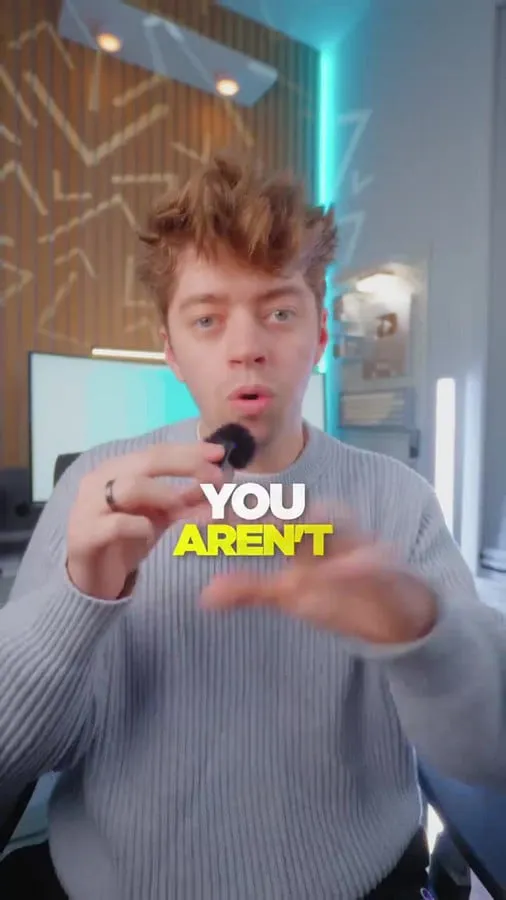
Thirty thousand views will not win a shouting match with a celebrity livestream. It can still be an interesting campaign to study. A specialist tool needs the right person to explain the interruption it removes. “Customisable controls” is a feature description. Seeing a designer use a control at the precise moment they need it gives that description a job. The viewer can compare the demonstration with something they already do, which makes the decision less abstract.
That places real demands on the brief. The creator should understand the workflow well enough to explain what changed and what still takes effort. Ask for a task they perform regularly, the software they use and the part of the process they find irritating. Then test whether the product addresses that problem before building the creative around it. A staged productivity claim is easy to film. An accurate, useful example takes a little more homework.
For the next specialist-device campaign, commission one clear task per creator and preserve enough screen detail for the viewer to follow. Let people see the action and its result before introducing another feature. Avoid invented minutes-saved claims; a measurable improvement needs an appropriate comparison. Track questions about setup, compatibility and use alongside visits to the product information. SocialChain’s early view count has no disclosed conversion result or paid distribution breakdown. Its value here is the planning approach: let an experienced user make a technical feature understandable in context.
eufy made household routines the demo
A husband promises to clean up after suhoor. A host needs the house ready for roughly 20 guests. These were situations in eufy’s March–April 2026 creator campaign across the UAE, Saudi Arabia and Qatar. Boomerang’s case study describes 11 lifestyle creators producing 16 assets, with Instagram Reels extended onto TikTok by five participants. Abdullah and Yasmeen used a comic cleanup exchange; Sarah Al Ghamdi showed a full-home reset. The agency reports 8.68 million views and 187,500 interactions across the campaign.
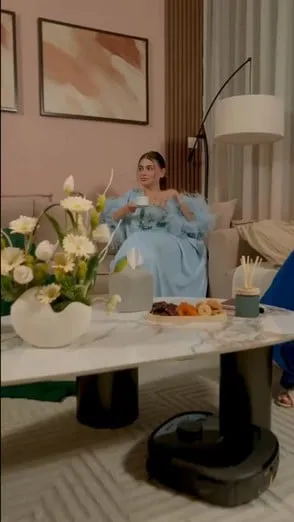
The product enters when the situation makes its usefulness obvious. Guests arriving soon, a meal to prepare and a mess still waiting on the floor are easier to recognise. The joke gives the content a reason to move; the visible cleaning task gives the product a reason to be there.
- 8.68MReported views, eufy GCC creator campaign (March–April 2026, agency-reported)
- 187.5KInteractions
- 16Content assets from 11 creators
March–April 2026 campaign totals reported by Boomerang. The view count is not unique reach; sales and paid/organic allocation are undisclosed.
The campaign also offers a practical way to localise a brief. Boomerang set the message and reviewed concepts while creators developed their own situations and dialogue. For your team, that means asking what the household moment looks like in the target market before prescribing the opening shot. Let the creator explain the social detail. Keep product claims precise, particularly if a comic scene could imply that the device performs a task it cannot actually handle.
The reported views are a distribution result, with no disclosed sales measurement or paid versus organic split. A useful next step would be to examine which comments ask about a real buying barrier: floor type, maintenance, noise or suitability for the home. Commission follow-up demonstrations around those questions and make the answers available near the product page. Someone enjoying a cleanup joke has not necessarily decided to invite a robot into their living room.
Notion started with what the creator wanted to build
Notion’s January 2026 Builder Series started with a question creators could answer in their own way: what were they excited to build that year? In her launch account, influencer marketing lead Danielle Ito named Jon’s Originals and Juan Dussan among the first partners. Short videos and owned editorial content followed creators’ ambitions across different disciplines. The campaign’s reach and conversion results are not public. What is public is unusually useful for a marketer: the creative brief, including its specific requirement to feature Notion Agent.
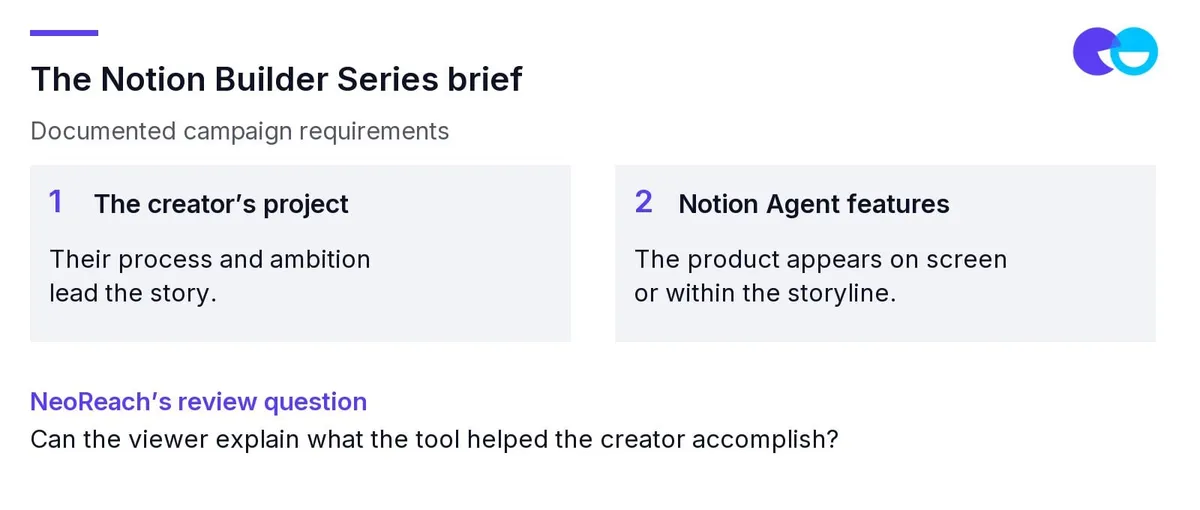
NeoReach analysis of the Builder Series brief, shared by Danielle Ito in January 2026. The final review question is our recommendation.
That requirement gave the brief discipline. The creator’s project supplied the story, while the product had a defined part to play within it. This is helpful for a flexible workspace product because a feature list can leave buyers wondering where to begin. A creator’s specific ambition gives the tool a context: there is something to organise, a decision to make or a piece of work to finish. The audience can recognise the need before learning how the software addresses it.
The trap is letting the ambition become the whole video. An inspiring story about making a film or building a business can perform perfectly well while teaching viewers almost nothing about the sponsor. The brief therefore needs one visible moment where the product helps the project progress. Agree that moment with the creator during onboarding. It might be organising material, retrieving an answer or completing a task. Let the creator choose a credible example from their own work and show enough of it for the audience to understand.
For your next software launch, ask prospective partners what they are already trying to accomplish. Choose a project the product can genuinely support, give the creator time to use it and commission the story around that experience. Review the rough cut for whether a viewer can explain the tool’s contribution. A flattering mention is a low bar. A useful creator partnership should leave a relevant person thinking, ‘I have that problem too,’ with a clear way to try the same action in the product.
Salesforce made trying the software part of the entertainment
A million-dollar puzzle is a very effective way to make people pay attention. Salesforce went further with its MrBeast Super Bowl activation in February 2026: the audience could use Slackbot to help investigate the clues. The brand’s customer story reports that more than one million players relied on Slackbot’s guidance. That is a specific product behaviour to examine, alongside the advertising exposure.
- 1M+Players who relied on Slackbot’s guidance
- 1.5MSimultaneous players the system was designed for (capacity, not actual concurrent users)
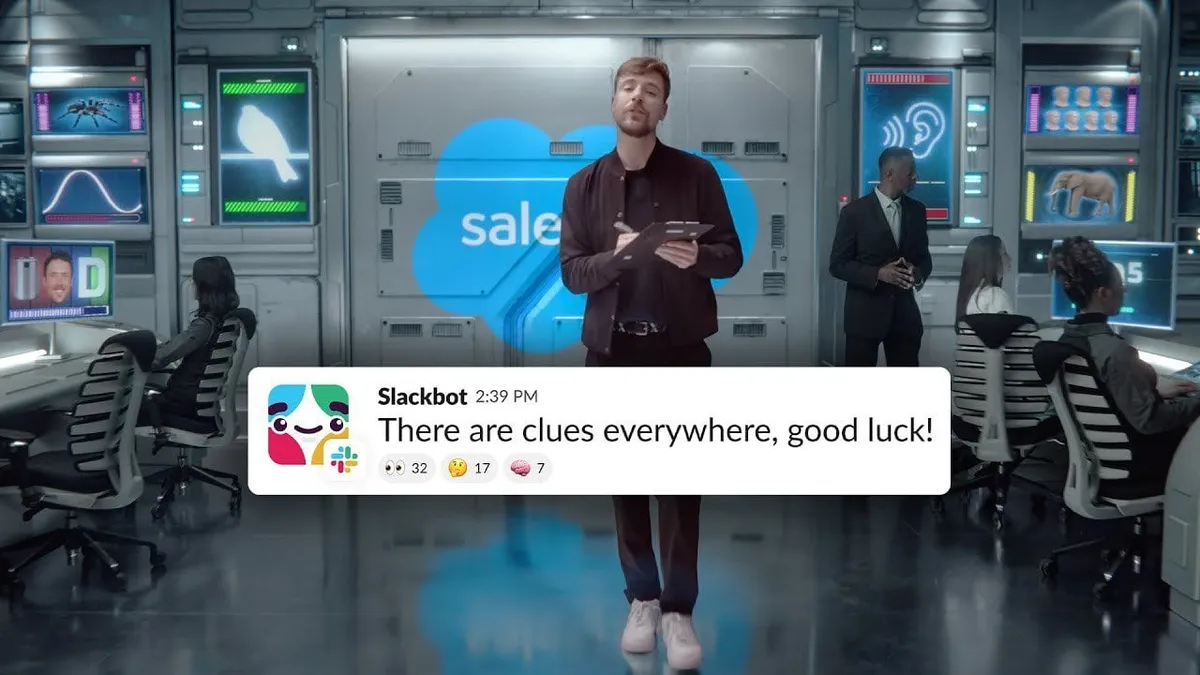
A puzzle gives participants a reason to use Slackbot. Campaign frame: Salesforce / Beast Industries.
The interesting choice is where the demonstration happens. In a conventional sponsorship, the creator explains a tool while viewers watch. Here, a participant could ask the tool questions, test an idea and try again. The audience supplied some of the interaction. For an AI product whose value depends on a conversation, that is a relevant experience to create.
MrBeast also supplied a format his fans understood. The prize, mystery and pursuit of an answer gave people reasons to keep working. That matters for software marketers: a demo needs a task people want to finish. A visitor clicking around an unfamiliar interface has little patience for a product tour that assumes they already care about every feature.
Keep the commercial interpretation disciplined. Prize participants are not automatically prospective Salesforce buyers, and the reported usage does not establish qualified pipeline. The story also discusses a system designed for 1.5 million simultaneous players. That is capacity, not a count of actual concurrent users. Mixing the two would make the results slide look spectacular for the wrong reason.
For a smaller activation, brief a creator to set a task that requires one useful product action. An editing tool could help viewers repair a difficult shot; a planning app could help them build an itinerary. Give participants the starting material and a way to recognise a successful result. Instrument the completed action separately from registrations, then examine return use after the incentive ends. That last step tells you whether the experience introduced a useful habit or simply helped someone chase a prize. Design the support and failure messages too. The most persuasive creator in the world cannot narrate someone through a broken sign-up flow.
Perplexity put people's questions in front of the camera
An answer engine has a ready-made opening: somebody wants to know something. For its 2026 Perplexity work, SG Social Branding deployed three New York interviewers and three creators on college campuses, then supplemented the interviews with UGC and an eight-creator podcast shoot. Public samples show the format in action, including a participant holding a Perplexity-branded microphone. The agency does not publish performance results. These are production counts, and the creator groups may overlap.
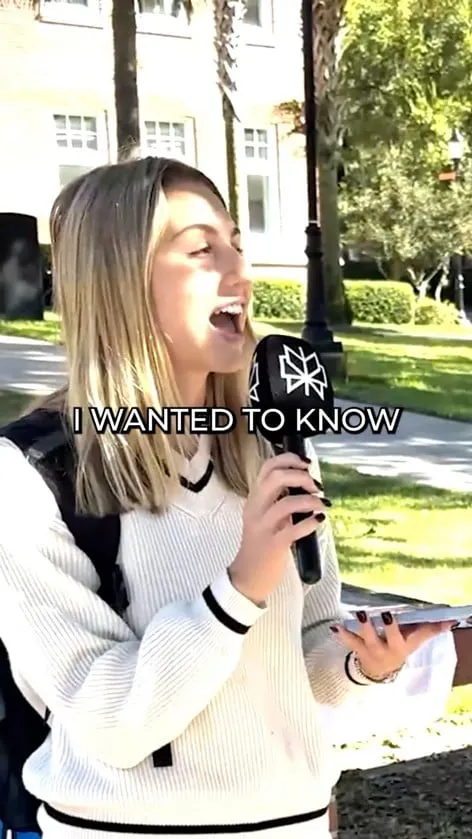
The format can make an unfamiliar product easier to approach. A question supplies the problem in the participant’s own language, and an interviewer can ask the follow-up a viewer might have. Different campuses and different hosts also give the creative team more than one opening to test. That matters when an AI product could theoretically help almost anyone. ‘Anyone’ is a miserable audience brief. A recognisable question gives the recommendation somewhere specific to land.
The execution still needs proof. An excited reaction after a quick answer tells the viewer less than seeing the question, the response and how the person checks whether it is useful. For a research tool, that could mean opening a cited source or identifying what still needs verification. Keep enough context in the edit to make the demonstration credible. A street microphone is a production choice; it does not turn a selected interview into a representative customer study. The brand should own that distinction when deciding what its ad can claim.
Build a small creative test around questions your intended users already ask. Give each interviewer a clear audience and a defined task, then review which questions lead to a useful product demonstration. License the strongest material for paid testing, with the destination continuing the same task rather than dropping everyone onto a generic homepage. Measure the first completed query and subsequent use alongside the media metrics. If people watch the question but abandon the product when they try it, the next improvement belongs in the experience as much as in the next creator brief.
Canva made the idea visible before revealing the tool
A giant squirrel statue is an unusual opening for a software campaign. In late April 2026, one appeared in Brooklyn Bridge Park alongside a fictional movement called the Squirrelites. Canva’s campaign announcement describes themed performances, posters and influencer activity, linking Christian Vierling’s TikTok as an example. The May reveal connected the spectacle to the platform that could create its visual identity and merchandise. Canva has not published outcome figures for this execution. Treat it as a distinctive product-marketing idea, rather than a proven acquisition benchmark.
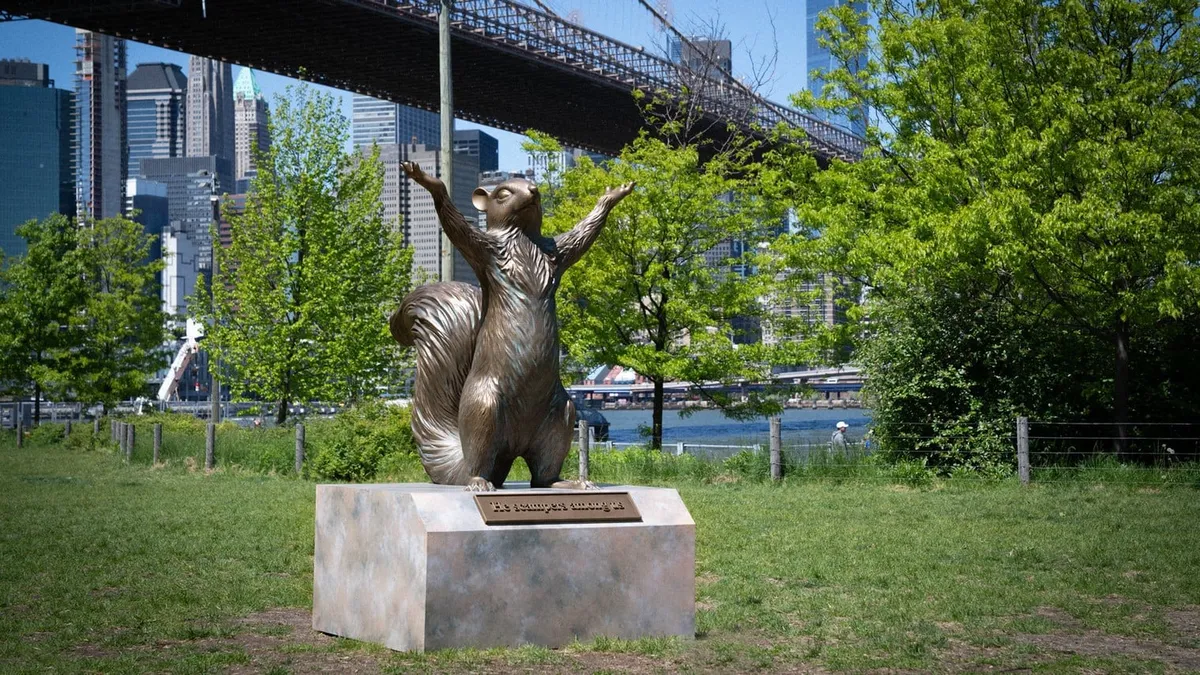
The Squirrelites installation introduced Canva’s fictional movement. Campaign photograph: Canva.
The software had a reason to be in the story. A fictional movement needs posters, social content, logos and things people can wear. Those outputs made several Canva use cases visible before viewers were asked to understand the interface. A themed template collection then offered a practical next step. That connection is the standard to borrow. A curious audience should be able to trace the object everyone is discussing back to something the product helped make.
There is also a fairly obvious failure mode: people remember the squirrel. Just the squirrel. The reveal has to earn its place by demonstrating the relationship between the creative idea and the tool. For a tech brand, this means planning the explanation before approving the stunt. Decide which creator will show the making process, which files the audience can inspect and what they can try themselves. Sponsored creator posts still need clear disclosures; a mystery concept is no exemption from telling people a commercial relationship exists.
You can run a smaller version around a creator’s improbable side project. Commission the identity and launch assets, let followers see the result, then have the creator walk through the decisions that made it work. Keep the project entertaining, but choose outputs your buyers might realistically need. Track interest before the reveal separately from product visits and template use afterwards. The test is whether curiosity survives contact with the software. If the audience wants the finished thing but cannot see itself using the tool, your follow-up content has a job to do.
Write the brief around the proof your buyer still needs
Across these campaigns, the creator’s role changes with the product. A working artist can show an output worth making. A workflow specialist can expose the repetitive step a feature removes. A household creator can place a device inside a recognisable inconvenience. A large entertainment channel can give an unfamiliar capability a plot. Choosing between those roles is a strategy decision, not simply a question of which audience costs less to reach.
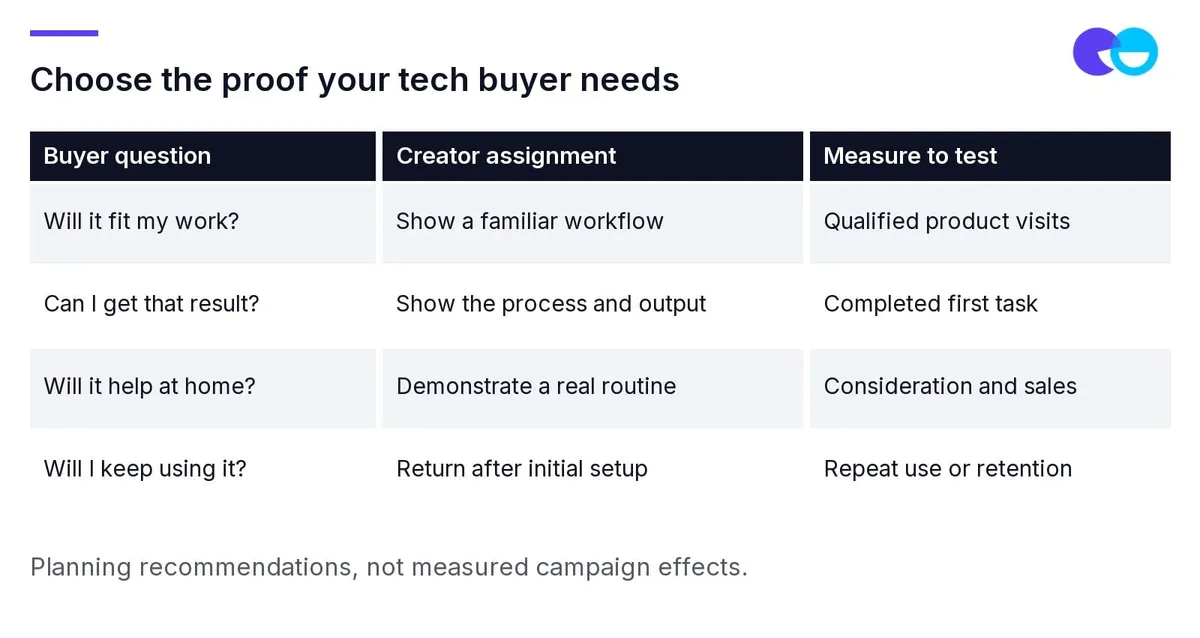
NeoReach planning guide. These are recommended tests, not measured effects from the campaigns above.
Start the next brief by writing the buyer’s unresolved question in their language. “Will I use this after the first week?” needs a different demonstration from “Can this handle the files I work with?” Bring that question to creator selection. Examine the work someone already publishes, the questions their audience asks and the level of explanation they can sustain. A technically impressive creator can still be the wrong person for a beginner’s first purchase.
Give the creator enough access to produce evidence: a realistic task, representative files, an appropriate test period and a contact who can resolve product problems. Agree what has to remain accurate and what the creator controls. For an AI tool, document the setup and avoid presenting a carefully selected output as a guaranteed result. For hardware, retain the conditions that make the demonstration interpretable. You can make a compelling edit without making the product appear magical.
Then choose the next action and the measure that will influence your next budget decision. A product-page visit can help assess research behaviour. A completed first task can help assess activation. Attributed purchases require cost and attribution context; incremental contribution requires a suitable comparison. Avoid asking a view count to answer all three questions. These are different jobs, and your reporting should make them easy to distinguish.
Finally, commission the follow-up before the launch rush eats the calendar. It might address the objection that appears repeatedly in comments, show a second use case or help a new user complete a task. Secure the rights and assign an owner who can move quickly. A campaign that gets someone curious has created useful work for the next piece of content. Make sure there is a next piece.