Choose credible experts, create content buyers can use, and connect attention to a measurable next step.
An expert can make a complicated product feel usable. Turning that interest into a business purchase takes more: the right people have to see it, understand its relevance and carry the argument into their organization.
B2B influencer marketing is a planned collaboration between a business and credible people whose expertise, audience or professional relationships can affect another business's buying decisions. Those people might be developers, industry analysts, practitioners, customers or executives. The work can include product demonstrations, expert interviews, event invitations and substantive commentary.
For your 2027 plan, start with the decision a buyer needs help making. Then choose the expert, content and next step that can move that decision forward. A large audience is useful when the right people are in it. A famous person reading your positioning statement is still reading your positioning statement.
This guide combines original third-party research with NeoReach's Agora, Semrush and NVIDIA campaign records. The recommendation is straightforward: commission useful evidence for a buying group. Agree the intended business action before launch, and distinguish it from the activity you can actually verify.
Vendor preferences form before sales gets a turn
In 6sense's 2025 buyer study, 94% of respondents said their buying group ranked shortlisted vendors before speaking with sellers. The main study covered nearly 4,000 people involved in a B2B purchase of at least $25,000 during the preceding two years. It describes recalled buying behavior, not an experiment in influencer effectiveness.
- 94%said their group had already put shortlisted vendors in order of preference
- ~4,0002025 buyer survey responses; purchases of US$25,000 or more
In 6sense's 2025 buyer survey, 94% said their group had ranked shortlisted vendors before seller contact. The result describes buying behavior, not creator-caused sales.
That timing changes the job of your content. Waiting for a demo request before explaining why your approach deserves consideration leaves earlier evaluation largely to other voices. An expert can explain an unfamiliar category, show how a workflow operates or challenge a flawed requirement while buyers are still forming their preferences.
This is a reason to invest in useful expertise before a sales conversation. It is not permission to count every impression as pipeline. Treat early content and demand capture as connected jobs with different evidence: who you reached, what they learned or explored, and whether a qualified account subsequently acted.
Decide which job you are commissioning before you choose a format. A category explanation may need distribution among relevant professionals. A hands-on tutorial needs a credible demonstration and somewhere to try it. An event invitation needs a working registration journey. "Build awareness and drive sales" is too vague to settle any of those decisions.
The product expert is only part of the buying group
Edelman and LinkedIn's 2025 research found that 55% of hidden decision-makers and 56% of target decision-makers agreed that thought leadership was an important way to vet vendors. Hidden decision-makers represented functions such as finance, procurement or legal; target decision-makers brought expertise in the product or service.
- 55%of hidden decision-makers agreed thought leadership was an important way to vet vendors
- 56%of target decision-makers agreed thought leadership was an important way to vet vendors
- 1,934management-level executives surveyed on LinkedIn in the US study
The US study surveyed 1,934 management-level executives on LinkedIn. Its definition of thought leadership covers free expertise and perspectives, and excludes content people pay to access and material primarily describing products. The finding supports creating substantive content for more than the product specialist. It does not measure the effect of sponsoring a creator.
Your implication is practical: a product champion needs something they can use with colleagues. A brilliant technical demo may answer "Can this work?" while leaving "Who will maintain it?" untouched. Brief the expert on the question their experience allows them to answer. Do not ask one creator to impersonate an entire buying committee.
Start the brief with a buying question

Buyer question | Useful expert contribution | Useful next step |
|---|---|---|
Can this work in our stack? | A practitioner builds a realistic integration and names its limits. | Documentation, a working example or a sandbox. |
Will this change how our team works? | An operator demonstrates the workflow and the effort required. | An implementation outline or a practical workshop. |
Is the business case credible? | An experienced customer explains the inputs and trade-offs behind their decision. | A business-case worksheet with inspectable assumptions. |
What could block approval? | A relevant specialist explains requirements and the questions buyers should ask. | Approved security, procurement or service documentation. |
Illustrative briefing choices, not a fixed buying sequence. The right questions depend on your product, account and purchase.
Use the table to identify a gap in the evidence buyers receive. If sales repeatedly loses momentum on implementation effort, another broad trend interview is unlikely to resolve it. Commission something that lets a buyer inspect the work involved, and give the sales team permission to reuse it.
Choose people whose expertise survives a follow-up question
LinkedIn and Ipsos's 2025 benchmark asked respondents which criteria they considered when selecting B2B influencers. Authenticity and credibility led at 58%, followed by industry relevance at 49%. Subject-matter expertise and brand alignment each registered 47%; audience engagement was 45%.
Show data
Selection criteria reported by respondents | |
|---|---|
Authenticity and credibility | 58 |
Industry relevance | 49 |
Brand alignment | 47 |
Subject-matter expertise | 47 |
Audience engagement | 45 |
In LinkedIn and Ipsos's 2025 survey, credibility and industry relevance led these reported selection criteria. Respondents could select more than one; the selection item had 1,260 respondents.
These are reported selection priorities, not weights for a scoring formula or proof that one criterion produces more revenue. They give you a useful starting question for diligence: what gives this person the authority to explain the problem your buyers face?
Watch their work before reading the media kit. Look for accurate explanations, concrete examples and a willingness to distinguish what they know from what they assume. Review the questions their audience asks and how they answer. An expert who can handle a difficult comment has shown you something a follower total cannot.
Then verify audience fit. Ask for available platform analytics covering location, professional context and engagement, and check how those measures were produced. A technical audience can contain students, enthusiasts, practitioners and buyers at the same time. Do not turn "developers follow this person" into "enterprise decision-makers will see our post."
Match the relationship to the claim. An independent practitioner can test a workflow. A customer can describe an actual implementation, with permission. An employee can explain the product with direct access to the team. A paid partnership or employment relationship should be visible; credibility does not require pretending the commercial relationship is absent.
Demonstrate the job your buyer is trying to finish
NeoReach's 2022 Agora campaign gave developer creators a concrete task: show how to build a real-time experience using Agora's SDKs, APIs and UI Kits. The recap describes walkthroughs of adding video chat to an application, supported by content across YouTube, TikTok and Twitter.
Anjali Tewani shows Agora documentation during a developer-focused TikTok execution. The campaign's paid-click result covers the wider program, not this individual post.
- 3.1M+impressions reported by the Agora program
- 5.2Kpaid clicks, reported separately
The program reported 3.1 million-plus impressions and, separately, 5.2 thousand paid clicks. Both figures are rounded in the recap. The material documents delivery and traffic; it does not provide verified signup, activation or pipeline totals.
The creative choice is more useful than a broad claim that developers like creators. A visible implementation gives the audience something to inspect. They can see the interface, the steps and the result. It also creates a sensible destination: the documentation or environment required to repeat the task.
For a comparable brief, name the task, product version, prerequisites and evidence the creator should show. Give them access and a technical contact. Review accuracy without scripting every opinion. Let them explain a limitation if it matters to the task. A demo that breaks under the first sensible question is an expensive way to start a conversation.
NVIDIA showed what a laptop could help students build
NeoReach's NVIDIA back-to-school campaign used student-relevant science and engineering projects to show what GeForce RTX laptops could enable. Four creators delivered three TikToks and one dedicated YouTube video; the recap reported 2,810,024 campaign views.
- 2,810,024campaign views reported in the NVIDIA recap
- 4creators delivering three TikToks and one dedicated YouTube video
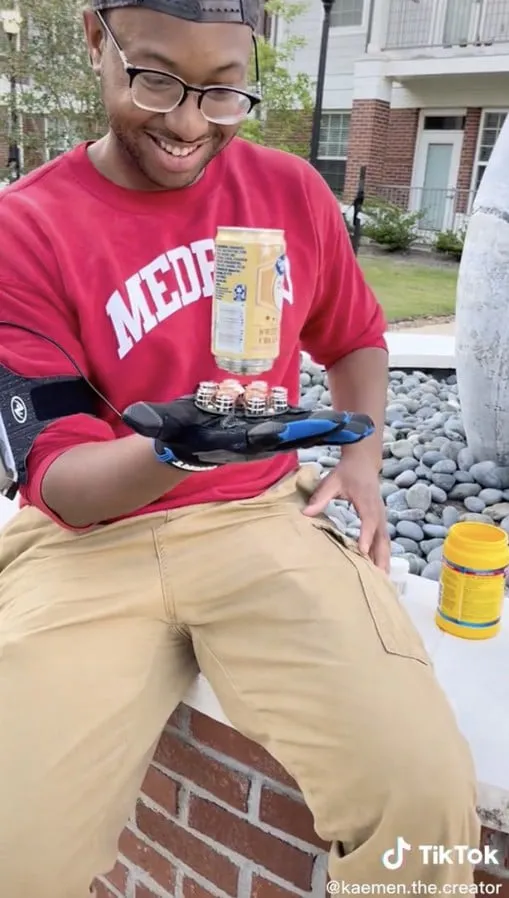
This was a student campaign, not an enterprise procurement program. Its transferable lesson is the brief: show a recognizable task, rather than asking the audience to admire a specification. For a B2B product, replace the student project with work your intended practitioner actually performs. Test that adaptation; the NVIDIA view total does not establish B2B demand.
Three Semrush creators supplied 89.6% of reported clicks
NeoReach's February 2023 Global Marketing Day campaign for Semrush promoted a professional event to digital, social, brand and SEO marketers. The recap reports 1,125,251 impressions. Its nine creator rows sum to 3,112 link clicks.
- 1,125,251impressions reported in the Semrush Global Marketing Day recap
- 3,112link clicks summed across nine creator rows
Show data
Reported link clicks | |
|---|---|
Denée Tamia Seaton | 1093 |
Mila Holmes | 981 |
Mia Salas | 713 |
Lucas O'Keefe | 282 |
Adam Stewart | 18 |
Jennifer Velazquez | 14 |
Sophie Miller | 5 |
Kaylee Lee | 4 |
Rachael Higgins | 2 |
Denée, Mila and Mia accounted for 2,787 of 3,112 reported link clicks. All nine creator rows are shown. Deliverable packages differed, and the recap does not provide completed registrations or the paid allocation.
Denée Tamia Seaton, Mila Holmes and Mia Salas accounted for 2,787 clicks, or 89.6% of that reported total. The other six rows remain visible in the chart because the spread matters. A campaign-level total alone would hide how concentrated the traffic was.
Do not turn this into a universal ranking of creators. Their deliverable packages differed, and the record does not establish comparable paid support or exposure for each. Clicks are also not event registrations. The data justify investigating why contribution varied; they do not isolate the cause.
For your next program, preserve results at creator and placement level. Review the hook, audience, offer, link route and distribution behind each result. Then compare the completed business action where you can. Renewing everyone because the campaign average looked healthy is a very tidy way to avoid learning anything.
An event invitation and a product demo need different next steps
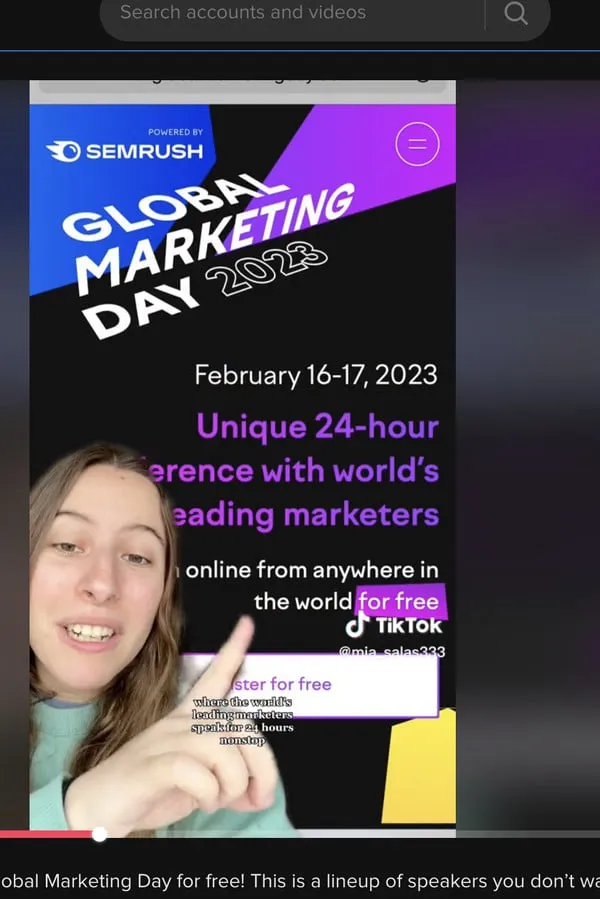
The Global Marketing Day creative shown here makes the event and its free access visible. That is useful context for a registration decision. It should lead to a page that states the agenda, timing and eligibility, then records a completed registration. The campaign's click count cannot fill that last field for you.
- 413 of 441reported BuzzGuru campaign clicks supplied by Brock Johnson's Instagram Story
- 93.7%of reported campaign clicks from one Story placement
A separate NeoReach BuzzGuru campaign makes the placement issue clear. Brock Johnson's Instagram Story supplied 413 of 441 reported campaign clicks, or 93.7%. His Reel reported substantially more reach and zero clicks. This was not a controlled format test, and the recap does not establish trial starts. It shows why the action route deserves its own line in the brief.
Choose the destination around the question the content has earned. A developer who has just watched an integration may want the sample code. A marketing manager exploring a new process may want a workshop. A buyer evaluating fit may be ready for a demonstration with their own requirements. Sending all three to the same generic contact form discards that context.
Before launch, have someone outside the campaign team follow the journey on a phone. Check the link, the promise, any sign-in requirement and the final confirmation event. Assign an owner to fix each break. This is a more useful dress rehearsal than watching the approved video one more time.
Budget for expertise, distribution and reuse
Price the work you actually need: product access, research, preparation, production, revisions and audience distribution. A creator explaining a technical workflow may need more preparation than someone sharing an event invitation. Treat the brief and the fee as connected decisions.
Agree separately on reuse. Specify where the content may appear, how long it may run, whether edits are permitted and whether sales can use it with prospects. Include paid amplification, exclusivity and any use of the creator's name or likeness in the agreement. A successful post is a poor moment to discover that nobody bought the rights to promote it.
A fixed fee can pay for defined work; a performance component can reward an eligible outcome where the parties can verify it. Choose the arrangement to fit the work and the measurement. The campaign records in this guide do not support a claim that a particular payment model produces better B2B results.
Keep creator production costs and media spend visible in the budget. If distribution changes materially between two posts, acknowledge it before calling one creator more effective. Agora's recap explicitly describes paid support behind much of its TikTok delivery; those results should not be presented as organic reach alone.
Platform mechanics belong in the plan, too. LinkedIn's current Thought Leader Ads guidance requires author permission to sponsor a post. Single-image and video versions do not have a CTA button; a URL can be placed in the introductory text. Check eligibility and format rules again when launching in 2027.
Make the relationship clear to the audience. For US-facing endorsements, FTC guidance calls for material connections to be disclosed clearly with the endorsement, including in the video itself where relevant. Build disclosure and claim review into production, with the requirements for each market checked before publication.
Keep traffic, product adoption and pipeline separate
The NeoReach cases answer useful but different questions. Agora documents technical demonstration and paid traffic. Global Marketing Day documents event promotion and creator-level clicks. BuzzGuru identifies a strong traffic placement. None of those records supplies the completed commercial journey.
Build the missing connections before the campaign. Use consistent creator and placement identifiers in links and landing analytics. Agree with the product or revenue team what counts as a meaningful next event, how accounts will be matched and which time window you will report. Do not make the influencer team reverse-engineer the CRM after the wrap deck is due.
Match the commercial claim to the record
Claim you want to make | Evidence required |
|---|---|
We reached relevant people. | Platform delivery plus available audience or account-fit evidence; distinguish paid and organic. |
People took the intended action. | Completed registrations, qualified demo requests or another defined event, with duplicate and quality checks. |
The product attracted useful evaluation. | A meaningful product-use event, such as a completed integration or activated workspace, defined with the product team. |
The program contributed to pipeline. | Matched accounts and accepted opportunities under a stated attribution rule, time window and treatment of other marketing touches. |
The program created additional revenue. | A credible incremental comparison, such as an appropriate holdout, plus reconciled revenue and cost data. |
These are reporting requirements, not measured conversion stages. Choose claims your data can support.
A campaign-linked opportunity is evidence of an association under your attribution rules. It is not automatically an opportunity the campaign created. Similarly, adding every creator touch to the full value of an account can count the same pipeline several times. Report the account once in the program total and explain how credit is assigned.
Keep cost definitions equally clear. A paid-media cost per click excludes other costs unless you explicitly add them. If finance wants a cost per accepted opportunity, use the agreed program costs and accepted opportunities in the same scope. There is no useful shortcut from an impression total to ROI.
Run a pilot that can change the next budget decision
Start with a buyer question your team cannot currently answer well in content. Pull it from sales calls, product onboarding or a recurring objection. Name the audience, the next useful action and the person responsible for recording it. That gives the pilot a commercial purpose before a creator is booked.
Commission a small set of credible experts with enough common ground to learn from the results. Keep the core buyer problem and destination consistent where possible, while allowing each expert to explain it naturally. Record differences in audience, deliverables and paid distribution so a performance difference has context.
Write down the next investment decision before publication. For a developer product, it might depend on qualified visitors reaching a defined activation event. For an event program, it might depend on completed registrations and attendance from the intended audience. Use your economics and baseline to set the requirement; do not borrow an unrelated campaign's click rate.
Review quickly enough to repair broken journeys and weak explanations. Review long enough to observe the outcome your purchase cycle allows. An early pilot can justify improving a demo or retaining an expert before it can establish incremental enterprise revenue. Give those decisions their own evidence, rather than declaring victory at one end or failure at the other.
CTA: Build a B2B creator strategy with NeoReach.
How to read the evidence
Prepared for 2027 planning using evidence available on October 21, 2026. Third-party surveys describe different populations and should not be pooled. LinkedIn/Ipsos surveyed 1,500 senior B2B marketers across six countries in March-April 2025; the selection-criteria item has 1,260 respondents and allows multiple answers. The sample is not representative of all B2B marketers.
Edelman/LinkedIn's US fieldwork ran March 17-April 3, 2025; item-specific subgroup sizes are not reported. The 6sense study concerns recalled purchases of at least $25,000, with exact overall sample size and field dates not disclosed in its public methodology. These studies are sponsored research, not causal tests of creator campaigns.
NeoReach examples retain their original 2022-2023 scope. They are selected examples, not a pooled performance benchmark. Campaign impressions, video views and clicks remain separate measures. Historical platform executions illustrate planning choices; they are not a statement that every placement works the same way in 2027.