














Table of Contents
In 2026, the global shift toward mindful consumption is less a trend and more a fundamental lifestyle movement. Driven by Generation Z and Millennials, the “sober-curious” trend has transformed January from a month of abstinence into a lucrative marketing opportunity. For brands, success no longer depends solely on offering a non-alcoholic alternative. It certainly calls for a sophisticated, celebratory approach. This analysis explores creating creative Dry January marketing campaigns that connect with health-conscious audiences and convert participants into loyal customers year-round.
2026 Demands A New Dry January Marketing Strategy
The broad scope of the sober movement indicates it is not a niche sector. Awareness of Dry January is maintained by 35% of adults in the United States, with one in five participating regularly. This demographic is driven by clearly articulated reasons that extend well beyond a mere post-holiday detoxification.
- Health and Wellness: Participants consistently report improved sleep, better focus, and mental clarity. For many, abstaining from alcohol is a core component of a broader, holistic wellness routine.
- Financial Wellness: With rising costs, many younger consumers view cutting back on alcohol as a direct way to save money and prioritize financial health.
- Social Acceptance: Non-alcoholic options have gained social acceptance as sophisticated, stylish alternatives, normalizing the choice to abstain in public settings.
For brands, this requires Dry January marketing to shift its focus from what consumers are foregoing (alcohol) to what they stand to gain (health, community, and refined flavors).
2026 Creative Pillars for Next-Level Dry January Marketing
To capture the attention of a highly engaged audience, brands must adopt a strategy that blends cutting-edge digital trends with authentic wellness narratives. The most effective campaigns for 2026 will focus on three core pillars:
1. The Functional Beverage Boom
The market is rapidly progressing from simple mocktails to functional beverages — drinks enhanced with adaptogens, prebiotics, vitamins, and minerals. These products appeal directly to health-conscious consumers by offering tangible benefits (e.g., gut health, calmness, focus) that are not attainable through alcohol.
- Strategy Focus: Your Dry January Marketing should position your product not as a replacement for alcohol, but as a tool for wellness.
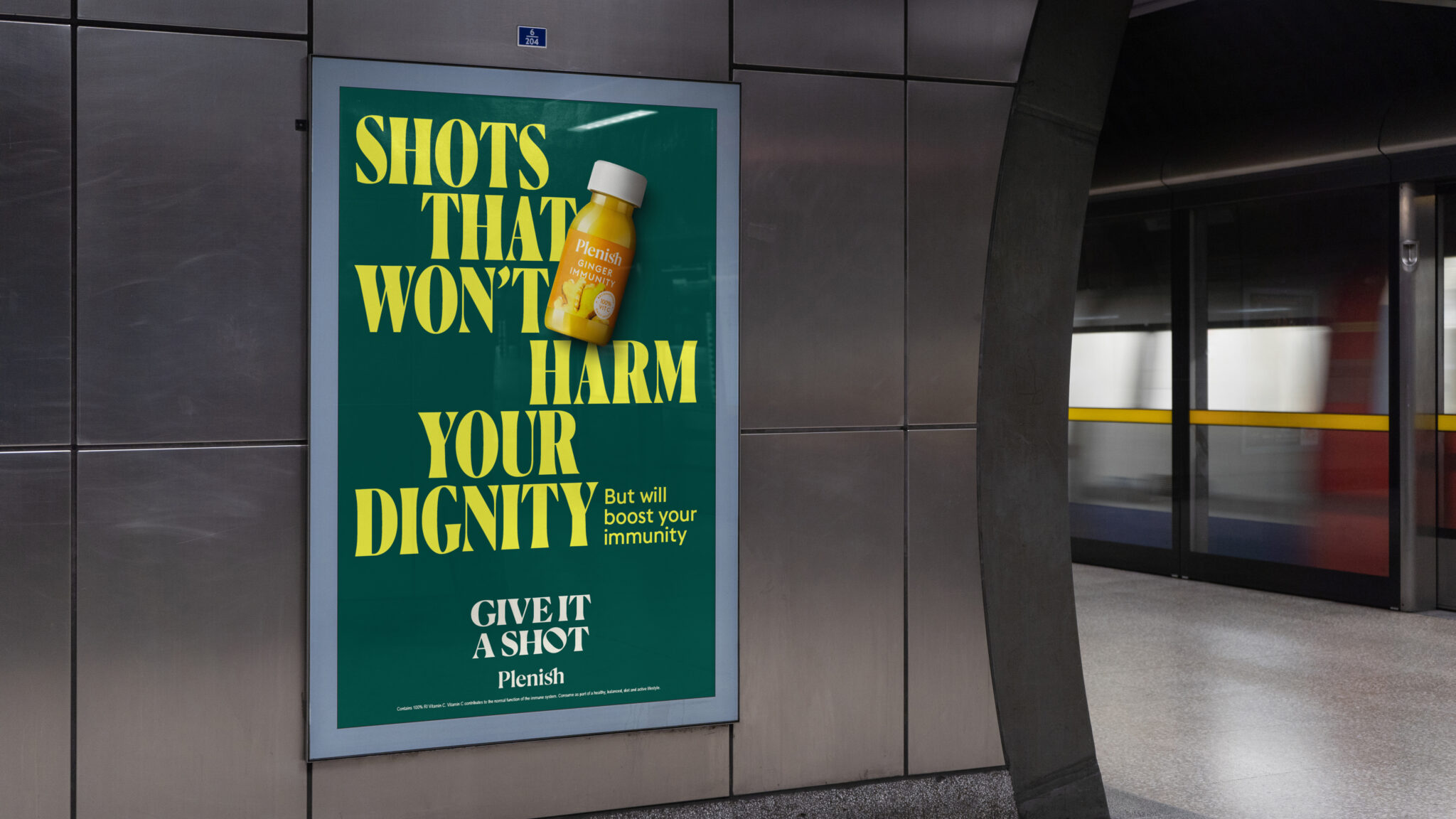
- Case Study: Instead of just showcasing a low-alcohol beer, a brand like Plenish successfully leveraged the campaign by promoting their wellness shots with witty copy that focused on the positive outcome: “Shots that definitely won’t harm your dignity, your relationship with your boss, or lead to regretful late-night ex-texts.” This humor, combined with a health focus, drove engagement.
2. Non-Beverage Brand Hijack Campaigns
Dry January presents an opportune occasion for brands not involved in the sale of beverages. Successful campaigns in 2025 have demonstrated that any brand associated with wellness, financial savings, or the adoption of new habits can participate. The key element is establishing a clever and authentic connection.
- Strategy Focus: Frame your product as a reward or a better-for-you alternative to a celebratory ritual.
- Case Study: Walkers Crisps ran a playful campaign featuring actor Danny Dyer serving up “pints of crisps,” positioning their “Better For You” range as the perfect 0.0% alcohol snack alternative. Likewise, Marks & Spencer focused on mental well-being, introducing a “Brain Food” selection to shelves, making a direct link between sobriety and cognitive health.
View this post on Instagram
3. ‘Connectioneering’ and AI Personalization
The marketing trends projected for 2026 emphasize “Connectioneering” — the engineering of immediate, personal relatability that mirrors the audience’s real-life experiences. Within the scope of Dry January marketing, this entails utilizing artificial intelligence to deliver highly personalized recommendations and developing content that aligns with the social challenges associated with sobriety.
- Strategy Focus:
- Community: Create social scripts and content that normalize declining a drink and focus on the joy of socializing without alcohol.
- AI for Experience: Leverage AI to create personalized experiences, such as the innovative mocktail sommelier chatbot Olivier introduced by Olipop, which crafts recipes based on available ingredients.
- The Key Takeaway: The goal is to make the audience feel seen and supported, reinforcing that their choice is empowering rather than restrictive.
View this post on Instagram
Tactical Must-Haves for Your 2026 Dry January Marketing Campaign
A successful campaign requires a multi-platform approach, moving beyond simple ads to create interactive, shareable experiences.
- Engage Micro-Influencers and Wellness Experts:
- Partner with registered dietitians, fitness coaches, and mindful living creators (micro-influencers often convert 4x better than celebrity macro-influencers).
- Focus on authentic content that integrates the product into their healthy routine, providing practical tips and recipes rather than just product promotion.
- Create Experiential Kits and Bundles:
- Offer “Dry January Survival Packs” that include your non-alcoholic product, along with wellness-focused items such as fitness trackers, high-end mixers, or cozy self-care accessories. Athletic Brewing Company successfully used this tactic with their “Dry January Party Pack.”
- Offer significant discounts, such as the 25% off subscriptions used by Ghia, to secure commitment for the 31 days.
- Challenge Social Norms with Witty Creative:
- Use bold, visually engaging out-of-home (OOH) advertising and digital content to challenge the stigma around not drinking. Lucky Saint’s London Underground campaign, which achieved 67 million impressions, proves the power of high-impact, public visibility in normalizing the sober choice.
- Heineken’s 0.0 Reasons Needed campaign is a masterclass in this, advocating for the freedom to choose their non-alcoholic beer without any required justification.
- Optimize for “Sober Search” Intent:
- Ensure your Dry January Marketing content directly targets search terms like “non-alcoholic cocktail recipes”, “alcohol alternatives”, and “Dry January benefits”.
- Optimize product landing pages and blog content for these high-intent keywords to capture users actively seeking solutions throughout the month.
- Emphasize Digital Tracking and Community:
- Encourage the use of apps and tracking tools such as Try Dry®. These apps enable consumers to quantify their success (e.g., money saved, calories reduced).
- Tie your brand’s giveaways and promotions to these tracking milestones to create a sense of shared community and achievement.
Beyond January: Sustaining Engagement for Long-Term Loyalty
One of the biggest pitfalls in Dry January Marketing is failing to retain the newly acquired customers in February. Brands must plan for post-January engagement to sustain momentum year-round.
- Embrace “Damp January” and “Sober September”: Acknowledge that not everyone opts for 31 days of complete abstinence. By promoting a “mindful moderation” approach, sometimes called “Damp January,” you expand your audience. It provides an accessible entry point for your brand.
- Highlight Year-Round Scenarios:
- Use influencers to show your product in daily moments. For example, on a Monday night or at work lunch. It can also be a post-gym recovery drink, not just at parties.
- This shifts the perception from a one-off resolution to an integral part of a balanced, successful lifestyle.
- Implement Automated Care Sequences:
- For email marketing, use customer data to transition from “Dry January tips” to “Wellness in Spring” content.
- Send personalized care sequences that celebrate milestones beyond the 31 days, reinforcing the long-term health narrative and encouraging subscription sign-ups.
Using compelling storytelling, wellness, and community engagement, brands can boost dry January sales and build lasting connections. The future of mindful drinking focuses on making elevated, intentional choices rather than on restriction.